Category: Uncategorized

  • How the Soul Prepares for Incarnation

    How the Soul Prepares for Incarnation

    Birth appears to us to be the beginning of a person. We watch the body form, a child enter the world, and a personality gradually take shape. But if consciousness exists before physical life, then birth is preceded by another process: the soul’s preparation for incarnation.

    In my understanding, the soul does not fall into a body by accident or suddenly awaken at the moment of birth. Preparation unfolds in stages: reviewing previous experience, learning, coordinating with the soul group, choosing the conditions of a new path, directing part of consciousness toward incarnation, and gradually connecting with the developing organism.

    This is not like completing an earthly application or writing a detailed script for a future life. The soul prepares a setting for experience that cannot be gained while remaining in the world of the soul.

    Returning home after a completed life

    Between incarnations, the soul exists at the third energy level—the realm I call its home. After physical death, it reunites with its larger self and regains access to a broader field of memory.

    The completed life must first be understood. The soul sees not only the events but also their consequences: how its decisions affected other people, which qualities it developed, where it acted automatically, and which questions remain unresolved.

    This is not a trial in which someone else delivers a verdict. The soul itself perceives the life more completely than it could while embodied. Self-deception becomes harder because it sees the entire system of relationships and motives rather than one isolated scene.

    A period of recovery, connection, and learning follows. In the world of the soul, there is no need to leave immediately for another life.

    Preparation does not happen in isolation

    The soul is connected with its soul group—those with whom it has shared many incarnations. Together with teachers, the group considers the experience it has accumulated and possible directions for further development.

    My book describes a place where souls arrive as a group or individually to examine possibilities and coordinate roles. Human language makes this sound like a meeting, but the actual perception is far more expansive. Information may be received as a whole, together with an understanding of possible relationships, difficulties, and purposes.

    Roles are neither rewards nor punishments. A person’s earthly position says nothing about the value of the soul. Wealth, fame, and power do not make an incarnation more successful, and a modest life does not indicate a lower level of development.

    What matters is the quality of the experience and what the soul can unfold through it.

    Choosing a world and a form of life

    Incarnation is not limited to Earth or to a human body. In my view of reality, there are different worlds, levels of density, and forms of life. The soul chooses an environment suited to the experience it needs and to its readiness.

    A dense physical world imposes strict limits. Matter changes slowly here, the length of life is limited, and memory of our immortal nature is almost entirely closed. That is precisely why earthly experience is so intense.

    Other worlds may operate according to different laws, and embodied beings there may retain more memory and exert a stronger influence on the energy around them. Greater possibilities, however, require a different level of maturity.

    The form of life is also chosen for experience rather than prestige. Human incarnation is only one possibility within the enormous diversity of the Universe.

    Why the entire soul does not enter the body

    According to the information I have received through my research, only part of the soul’s energy connects with the body during a human incarnation. In my book, I describe it as a small percentage of the whole—most often about five to ten percent, and no more than twenty percent.

    These figures cannot be measured with a physical instrument, so I use them as a model of proportion rather than a laboratory measurement. The central point is that the earthly personality carries a real part of the soul, but not its full scope.

    If the full power and memory of consciousness entered a dense body, the balance of the experience would be disrupted. A person would be able to influence physical experience too easily, and the new personality would not develop its own independence.

    The larger part of the soul remains in the soul’s world and maintains an unbroken connection with the incarnated part. This is what we may perceive as the Higher Self.

    Lowering frequency and approaching matter

    To connect with a physical organism, the soul must bring its qualities closer to dense reality. I describe this as lowering the vibrational frequency of its energy. I am not referring to sound or to a reading from an ordinary instrument. I mean a change of state that enables consciousness to interact with matter.

    This is a gradual process. The soul does not suddenly become trapped inside a completed body. It directs part of its attention toward the future incarnation and begins building a connection with the organism.

    The part of the soul that remains outside the body does not disappear or continue an unrelated life as if no incarnation were taking place. It stays focused on its earthly part, maintains continuous connection, and receives the experience flowing from it.

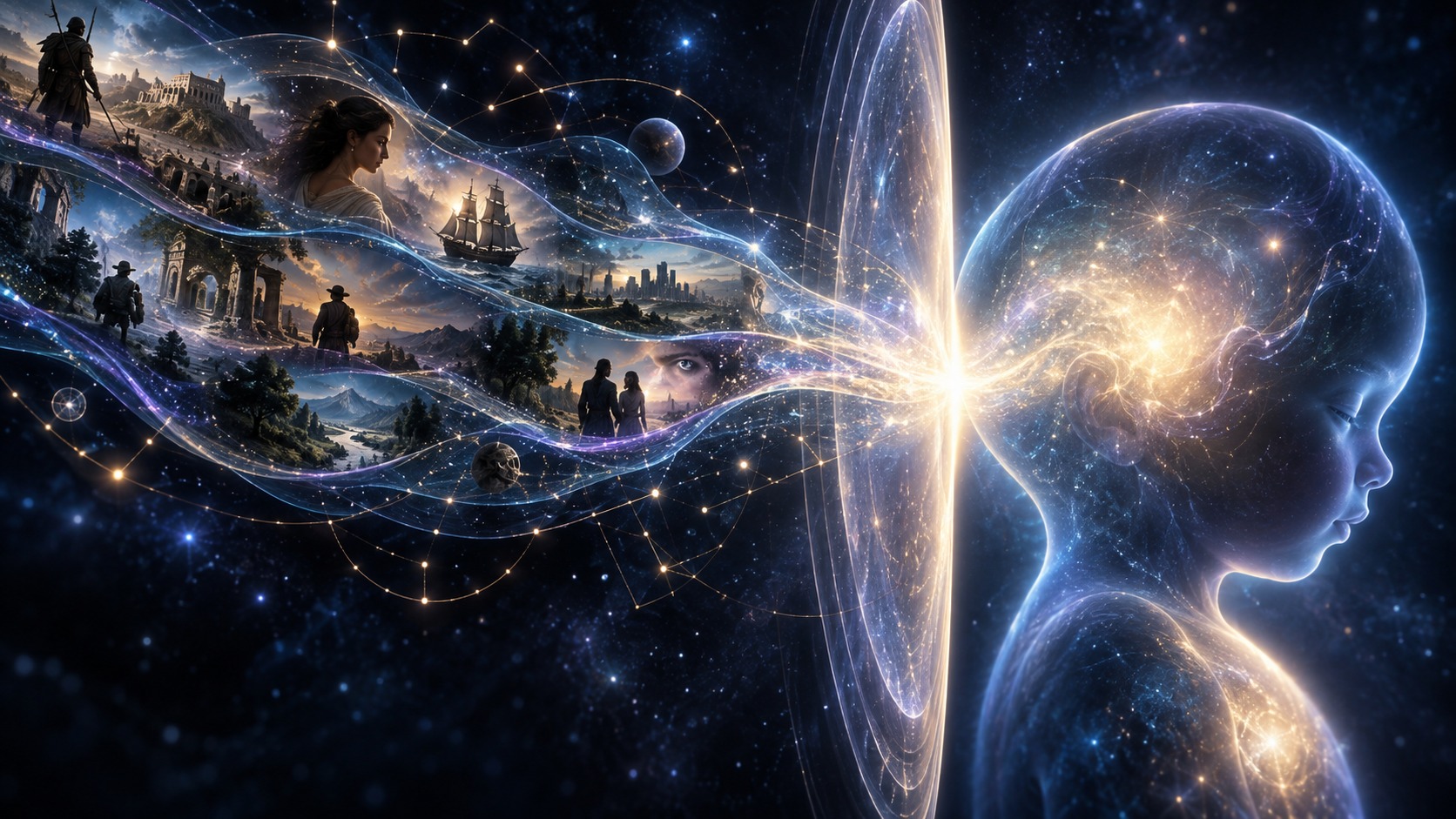
    The soul gradually connecting with a developing body
    An artistic visualization of consciousness gradually approaching physical incarnation.

    When the connection with the body begins

    In my book, I wrote that the active connection begins as the embryo’s nervous system and brain develop. Before birth, the bond strengthens gradually. During the earlier stages, consciousness may move away from the organism more easily; as birth approaches, its presence becomes more stable.

    This does not mean that life has no value before the nervous system develops. The forming organism is already a living system and part of a broader collective consciousness. I am speaking specifically about the gradual formation of an individual union between soul and body.

    The process does not end at birth. The child learns to use the senses, movement, language, and interaction with the world. The soul learns to express itself through a particular brain and the body’s individual character, while the body becomes accustomed to the influence of consciousness.

    A new personality is created

    Incarnation is not an old personality changing into a new body. The meeting of part of the soul, a new organism, and a new environment gives rise to a person who did not exist before.

    That person carries the soul’s accumulated qualities while also having an individual character, family history, culture, and capacity to choose. Two lives of the same soul are therefore never copies. Even when certain themes repeat, the experience is always unique.

    This is the purpose of temporarily limiting access to memory. The new personality must truly enter the world rather than continually viewing it through the eyes of previous incarnations.
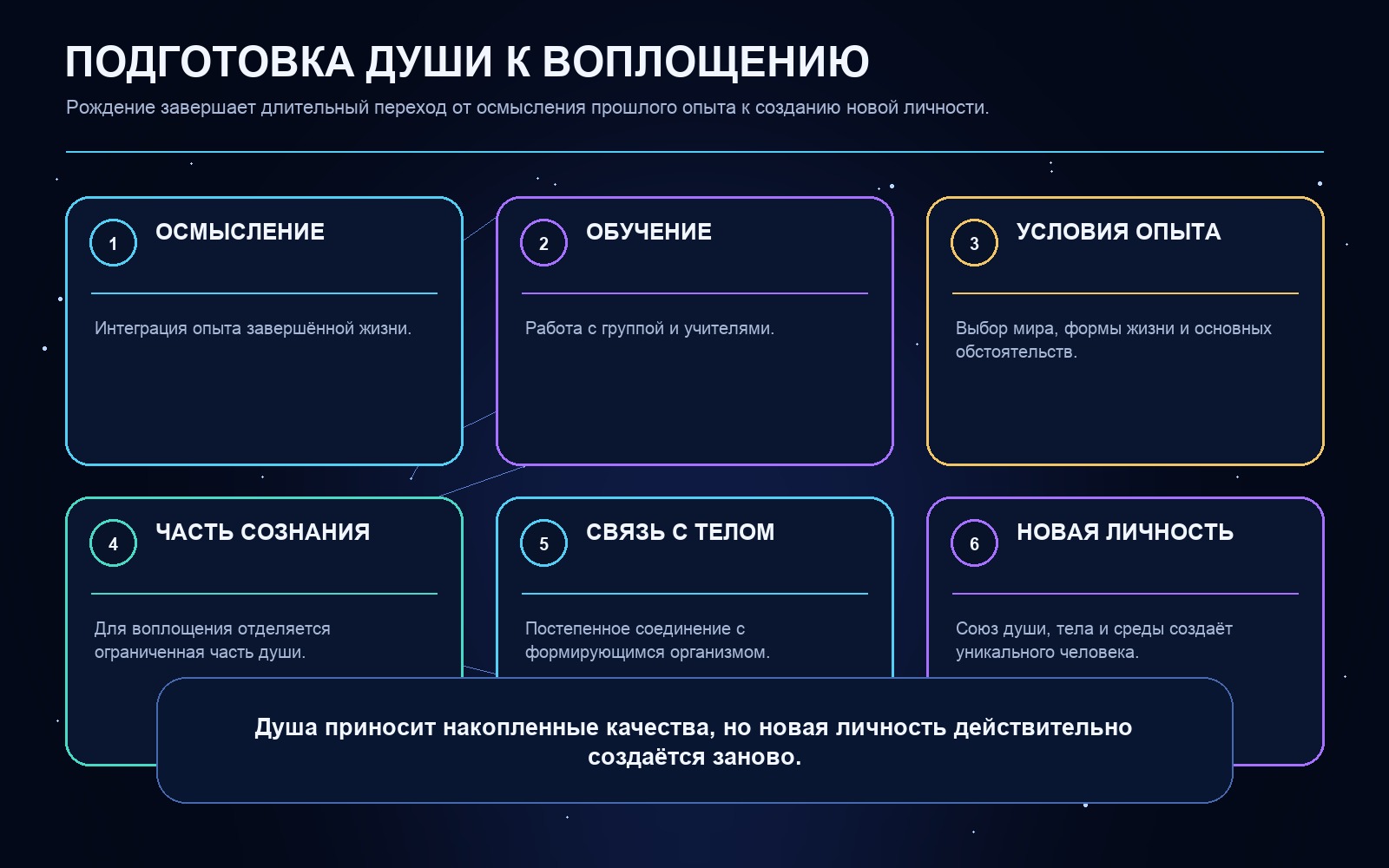
    The stages through which the soul prepares for incarnation
    The main stages of the soul’s preparation for a new incarnation.

    What the soul prepares

    Preparation for incarnation involves several connected processes:

    1. Reviewing the experience of the completed life.
    2. Restoring memory and connection with the larger soul.
    3. Learning and working with teachers.
    4. Coordinating interactions with the soul group.
    5. Choosing a world, a form of life, and the basic conditions of experience.
    6. Directing part of consciousness toward incarnation.
    7. Gradually connecting with the developing body.

    This does not mean that every ordinary detail of a future life is fixed in advance. The relationship among a life plan, circumstances, and human decisions deserves a separate discussion. The central point here is that the soul enters life prepared and remains connected with a wider level of itself.

    Birth is a transition, not an absolute beginning

    Before birth, we were not nothing. The soul already had a history, kindred relationships, accumulated qualities, and an understanding of the reasons for a new incarnation. But as it connects with the body, it limits access to that memory and begins building a new personality.

    A human being is therefore both new and ancient. The earthly biography begins at birth, but consciousness brings into it the experience of a much longer journey.

    We may not remember preparing for incarnation, yet traces of that preparation appear in our deeper qualities, our inner direction, and our ability to sense a connection with something larger than one physical life.

    Birth does not create the soul. It opens a new way for the soul to exist within reality.


    For a fuller account of the soul’s world, preparation for incarnation, and the connection between consciousness and the body, see my book The Phenomenon of Consciousness Beyond the Body.

    Read the English edition on Amazon →
    Additional English edition on Amazon
  • Soul Group, Guide, and Teacher: Who Accompanies the Soul

    Soul Group, Guide, and Teacher: Who Accompanies the Soul

    One of the hardest ideas to face is that each of us may have to pass through life and death entirely alone. We are born, we lose people we love, we confront the unknown, and we try to understand what our experiences mean without knowing whether anyone is nearby who can help.

    My research has led me to a different understanding: the soul is not an isolated unit. Between incarnations, it lives and develops among souls close to it, receives support from guides and teachers, and, at a higher level, from elders. These terms describe different forms of connection, and they should not be confused with one another.

    Support exists, but it does not remove our responsibility. No one can live our life for us.

    The soul group: the soul’s spiritual family

    At the third energy level, which I perceive as the soul’s world between incarnations, souls gather in small soul groups. In my book, I describe groups of roughly ten members or fewer, although their actual structure may be more varied than human concepts allow us to imagine.

    This kinship is not defined by blood, nationality, or a single earthly life. It grows from a long shared history, the closeness of experience, and the ability to develop alongside one another. The same souls may meet through many incarnations while changing their roles and circumstances.

    In one life, someone may be a parent; in another, a friend, child, spouse, rival, or a person who appears only briefly yet changes the direction of our inner development. The role itself matters less than the experience the souls create for one another.

    A soul group is not an exclusive spiritual circle, and belonging to one does not prove that anyone is “more evolved” than others. It is a working community of souls who know one another well, review their experiences together, rest, learn, and prepare for new incarnations.

    Why we do not recognize everyone immediately

    People are drawn to the idea of recognizing a kindred soul at first sight. Sometimes that feeling does arise. A meeting may bring deep trust, a sense of having known the person for a very long time, or an unusual clarity.

    Yet a powerful emotion by itself proves nothing. Infatuation, similar personalities, psychological need, and our own expectations can create an equally intense impression.

    A kindred soul also does not necessarily enter our life only to make us comfortable. A close bond may be difficult. Another person may reveal a weakness we have avoided, compel us to mature, or establish a boundary where we have been unwilling to accept responsibility.

    For that reason, I do not recommend assigning a spiritual label to every relationship. It is far more useful to ask what the relationship teaches us, whether it makes us clearer and more responsible, and whether it preserves respect for the other person’s freedom.

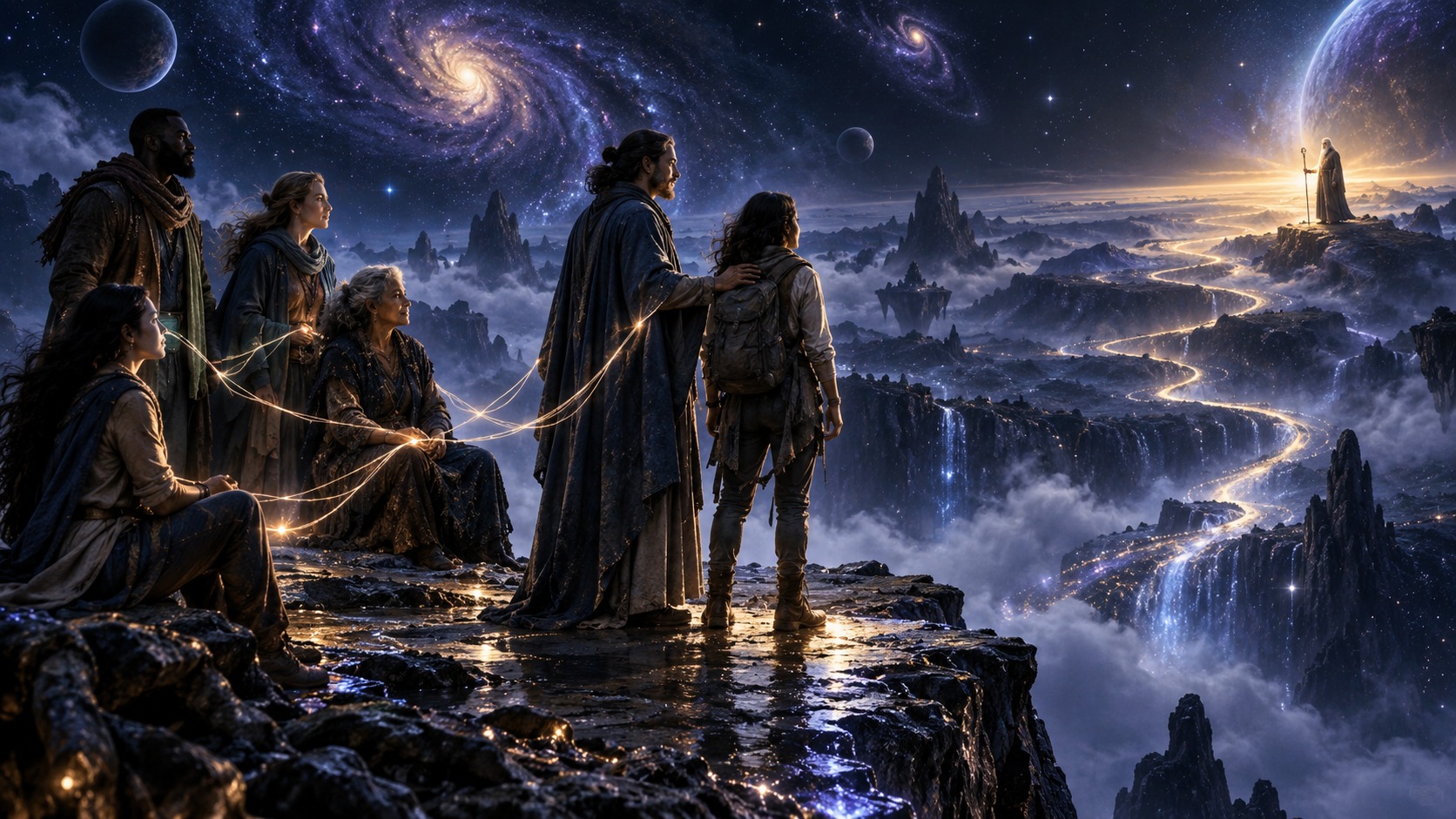
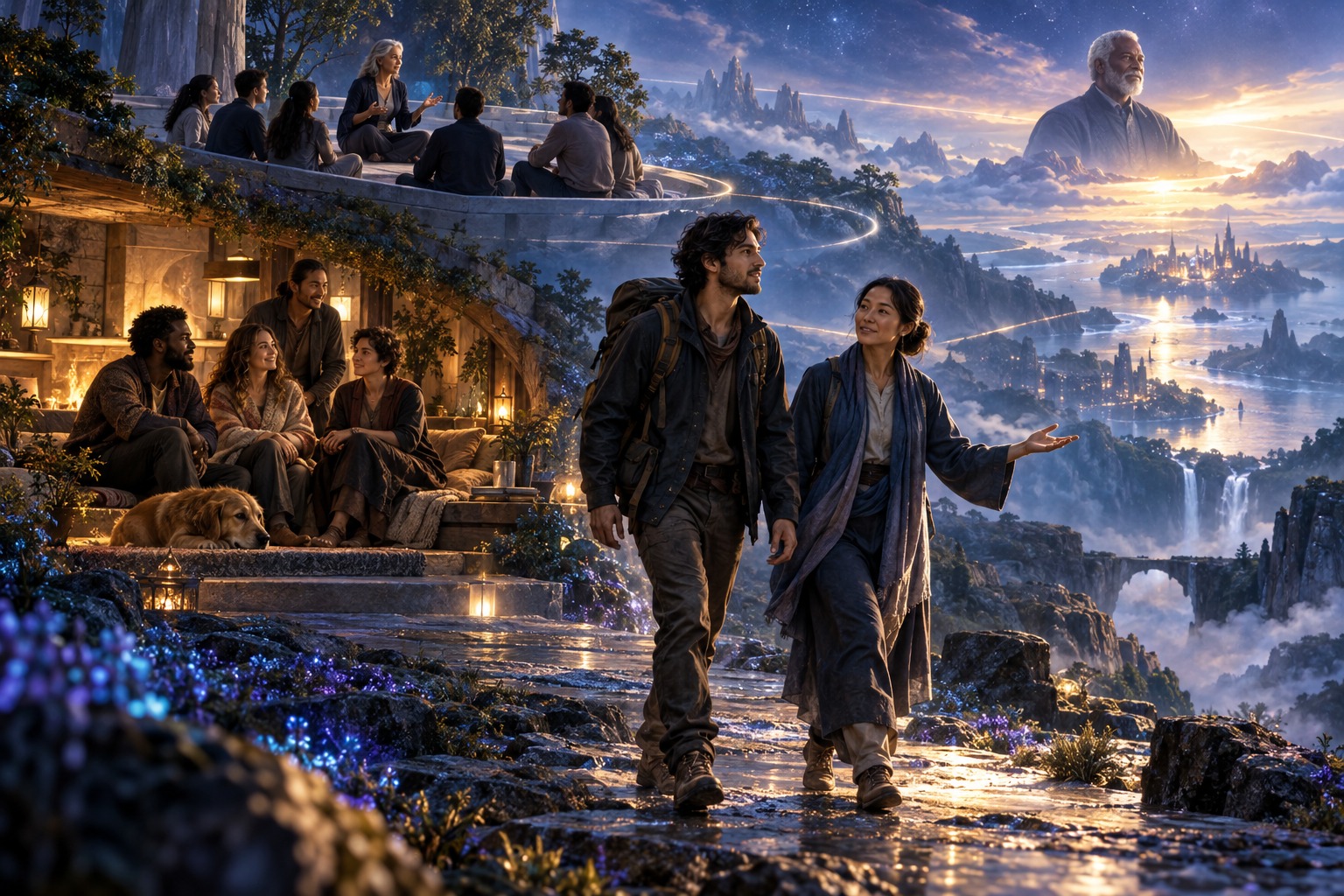
    A soul group and the spiritual support surrounding the soul
    An artistic visualization of a soul group and spiritual support.

    What is a guide?

    A guide, or helper, accompanies consciousness through places it does not yet know how to navigate. This support is especially important during transitions between energy levels and after the death of the physical body.

    In my own experiences, I perceived a guide as a distinct, conscious personality able to direct me toward the right space, help me maintain my state, and explain what could not be understood at first glance. In my book, one such guide is Ilrin. He does not display authority or demand reverence. His role is to accompany me and help me see.

    A guide may be a kindred soul or a more experienced helper. A guide works closer to a specific situation than a teacher does. To use the metaphor of a journey, the guide knows the road, warns us about its boundaries, and helps us avoid getting lost—but does not walk the path in our place.

    We often do not see our guides. Their visible presence might frighten a person or encourage someone to hand over responsibility for every decision. Support may therefore remain almost imperceptible.

    How is a teacher different from a guide?

    A teacher does not focus on one transition. A teacher supports the longer development of a soul and its group. In my model, teachers are souls who have completed their principal incarnations at the first and second energy levels. They possess greater experience and are approaching the transition to the next level.

    Each teacher may have particular abilities and an area of responsibility. A teacher helps the group examine lives already lived, develop the qualities it needs, and prepare for new stages.

    A true teacher does not suppress the student, demand blind faith, or create dependence. The higher the level of consciousness, the less need there is to control others through fear or authority.

    If a supposed “spiritual teacher” flatters someone, declares that person exceptional, demands obedience, or promises power over others, that is a reason to stop and question the source. Elevated status is not established by beautiful words.

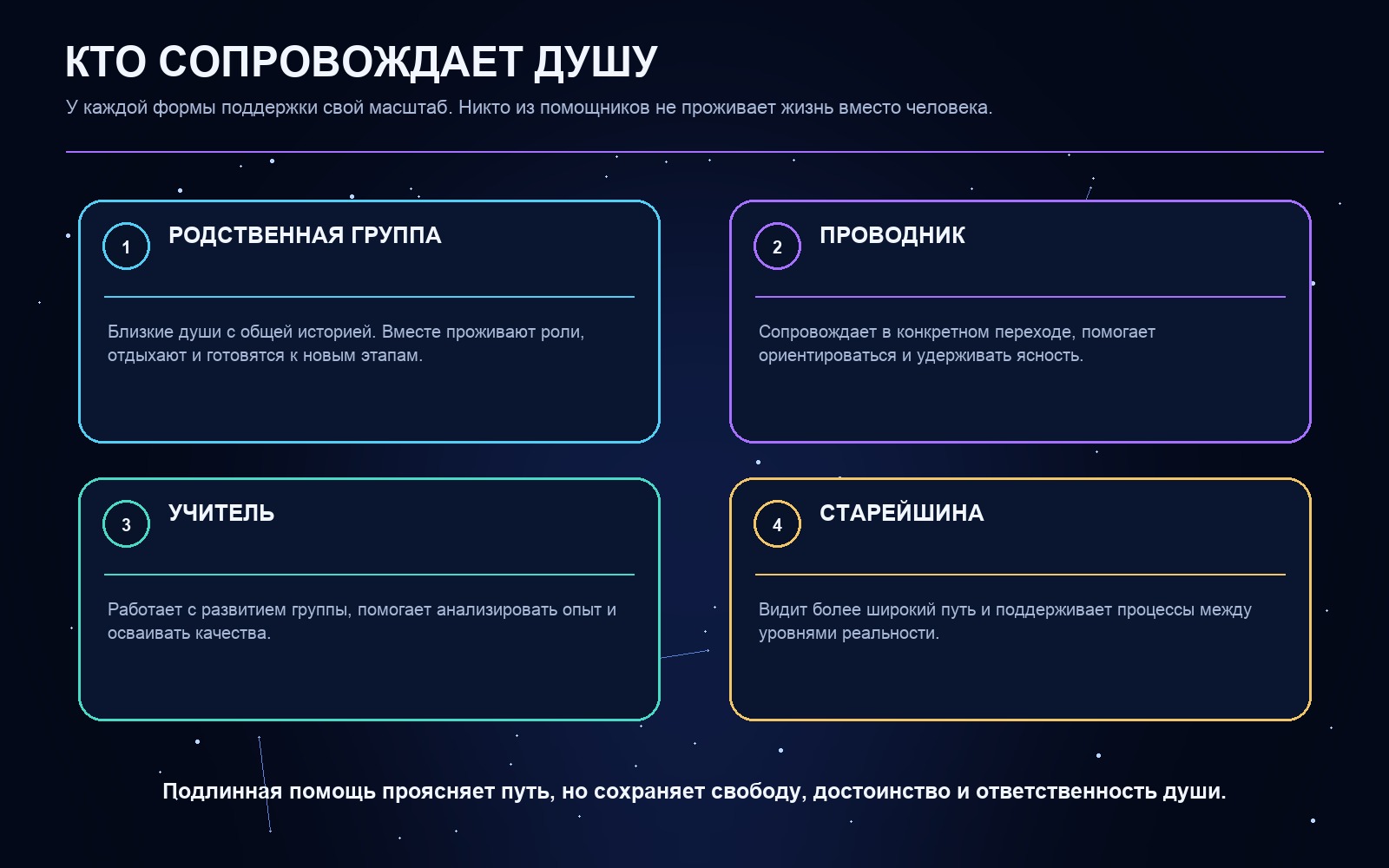
    Who accompanies the soul: soul group, guide, teacher, and elders
    The different forms of support surrounding the soul serve different purposes.

    Who are the elders?

    Elders belong to a still broader level of guidance. In my book, I connect them with the fourth energy level. They oversee larger processes of learning and help souls understand a life within a more complete context.

    One of my most profound encounters was with an elder named Elonius. His presence did not feel oppressive. It felt like immense power deliberately softened so that communication could take place. He did not give me a list of orders. He helped me gain access to an understanding that I then had to interpret and bring into my life on my own.

    An elder is not an earthly superior who distributes rewards and punishments. An elder is a more experienced soul able to perceive relationships that remain beyond the reach of consciousness while it is embodied.

    How support appears in physical life

    Most people do not see guides and teachers directly. That does not mean support is absent. It may appear as a clear inner warning, an unexpected realization, a meeting with the right person, or a sense of direction during a difficult moment.

    But we should not declare every thought to be a message from above. The human brain continuously produces thoughts, fantasies, and explanations. Fear and desire can easily disguise themselves as intuition.

    I use several simple signs:

    • real support clarifies rather than frightens;
    • it does not demand immediate, blind obedience;
    • it does not inflate a sense of being chosen or superior;
    • it does not remove personal responsibility;
    • its meaning withstands calm examination over time.

    A guide may illuminate part of the road. The person must still walk it.

    Why we are not given ready-made answers

    If more experienced souls are near us, why do they not simply tell us how to avoid every mistake?

    Because a ready-made answer does not create our own understanding. We can memorize someone else’s formula without becoming more aware. The soul develops its essential qualities when a person learns to distinguish motives, make decisions, and live with their consequences.

    Help must not destroy the purpose of incarnation. Guides and teachers provide support, but they do not turn life into a performance in which an actor is told every movement in advance.

    The same principle applies to pain and difficulty. Support does not mean that a person will be spared every hard experience. It means that the person has not been abandoned and can find the inner resources needed to move through the situation.

    How to ask for help

    No elaborate ritual is required to ask a guide for help. It is enough to formulate a calm request: help me see this situation more clearly, recognize my own fear, or find the next honest step.

    Then, rather than hunting for signs, observe. The answer may not arrive as a voice; it may come as a change in understanding. Sometimes help appears through a person, a book, a conversation, or a solution found unexpectedly.

    We should never surrender control of our life to an invisible helper. Any information must be measured against conscience, reality, and its consequences for other people.

    The soul is never abandoned

    The soul group offers a sense of home and a long shared history. A guide helps us cross a specific stretch of unknown territory. A teacher accompanies the development of the group. Elders see a broader path and support transitions between levels.

    These are different expressions of one idea: consciousness does not develop in isolation. We are connected to one another far more deeply than a single earthly life allows us to see.

    Spiritual support does not make us dependent. Its purpose is to help the soul become more aware, mature, and capable of acting independently.

    We may ask for help and accept it. But we must live our own life, make our own decisions, and do our own inner work.


    For a fuller account of soul groups, guides, teachers, and encounters at the third and fourth energy levels, see my book The Phenomenon of Consciousness Beyond the Body.

    Read the English edition on Amazon →
    Additional English edition on Amazon
  • Why We Forget Past Lives Before a New Incarnation

    Why We Forget Past Lives Before a New Incarnation

    If the soul lives more than one life and retains the experience it has accumulated, why are we born without remembering who we were before? At first, this seems illogical. Would it not be easier to learn if we had access to all our previous knowledge, mistakes, and achievements?

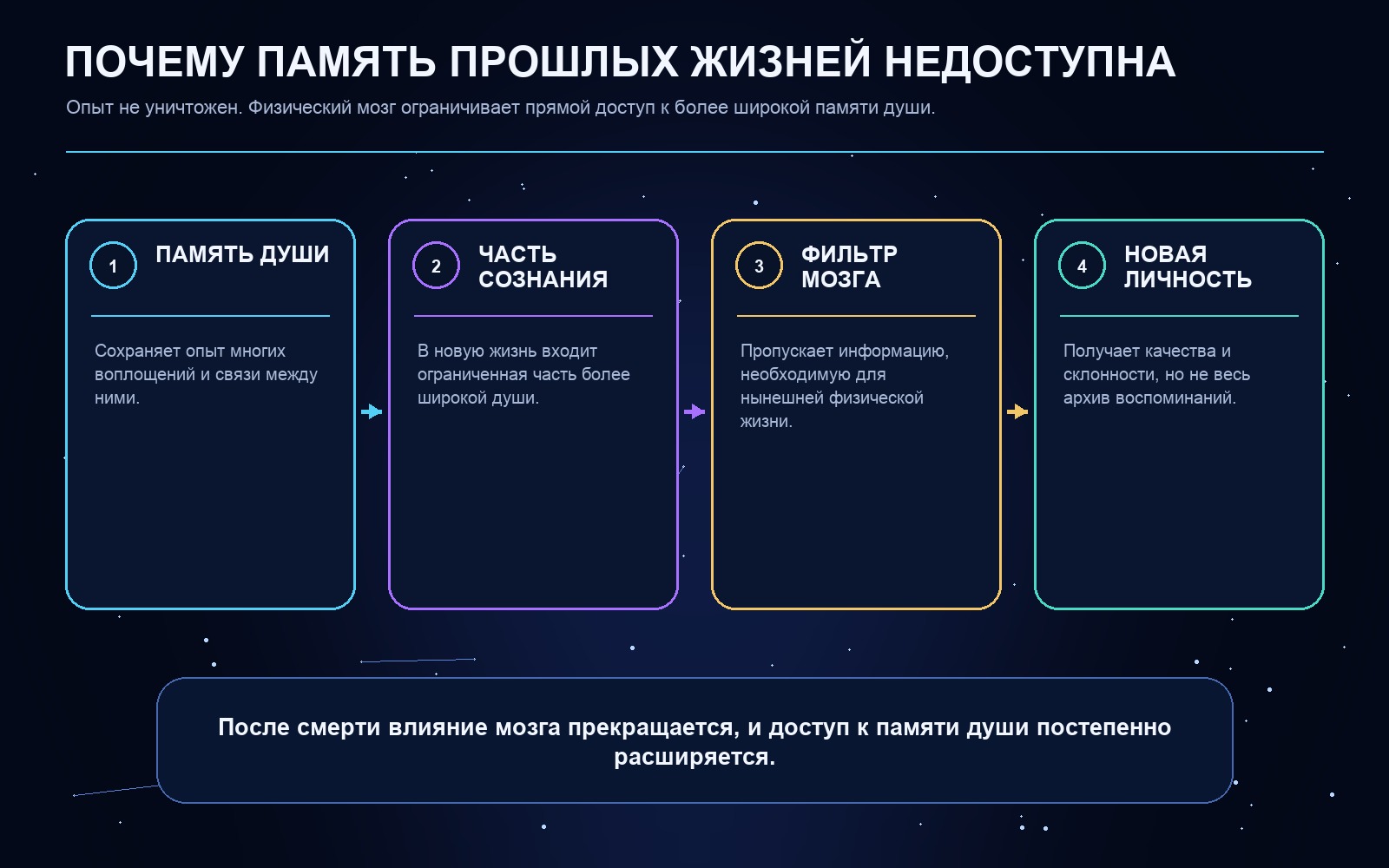
    I believe forgetting is neither a punishment nor the destruction of memory. The memory remains within the soul, but access to it becomes sharply limited when we enter physical life. We forget not because the past has been erased, but because a new incarnation requires a distinct and focused experience.

    The Soul's Memory and the Brain's Memory Are Not the Same

    Ordinary earthly memory is closely connected with the brain. It records the events of our present life, arranges them in time, and allows us to recall them in words and images. The soul, however, carries a far greater body of experience than our familiar memory system can contain.

    During an incarnation, consciousness interacts with the body through the brain and nervous system. The brain becomes both translator and filter: it admits the information needed for life in the physical world while limiting access to everything else.

    The absence of a conscious recollection therefore does not prove that the memory itself is absent. We can observe a similar principle within a single lifetime. Much of what we have experienced influences our reactions even though we cannot reconstruct every scene or thought. Experience exists in more than the form of a story we can consciously retell.

    The soul's memory beyond the brain's filter
    The brain limits direct access to the soul’s memory without destroying the experience it has accumulated.

    Only Part of Consciousness Enters an Incarnation

    One of the soul's central abilities, as I describe it in my book, is the capacity to divide. Each part can possess its own perception and memory while remaining connected with the whole.

    The soul does not transfer its entire being into a physical body. Only the part of consciousness needed to create a new personality and gather experience joins the organism. The greater part remains beyond earthly life and continues to hold the soul's wider memory.

    This helps explain why a person may experience deep inner knowledge, a powerful inclination, or an unaccountable sense of recognition without remembering the source as clearly as yesterday's conversation. The incarnated part remains connected with the whole, but the physical brain receives only a small portion of the available information.

    Why a New Life Needs the Silence of the Past

    Imagine a child who remembers, from the earliest years, many deaths, families, languages, conflicts, attachments, and unfinished relationships at the same time. Instead of freely discovering a new reality, that child would live under the weight of dozens of earlier personalities.

    Each new life creates a unique relationship among soul, body, and environment. A person must learn to use a different body, acquire language, enter a new family, and encounter the world from a new point of view. The constant presence of earlier memories would interfere with this process.

    Forgetting creates the inner space in which a new personality can truly emerge. We are not simply performing an old role on a new stage. We are given the opportunity to form a new perspective and experience relationships without ready-made answers.

    This does not erase the experience. Instead, knowledge from earlier lives moves from direct recollection into the qualities of the soul.

    Experience Remains Even When the Story Disappears

    A person may not remember where or when they learned compassion, perseverance, or responsibility, yet those qualities appear in their decisions. In the same way, earlier fears, attachments, and unresolved inner conflicts may influence the present life without producing a clear biographical picture.

    Experience from past incarnations may appear as:

    • an ability that a person develops unusually early or easily;
    • a deep inner rejection of a particular kind of behavior;
    • an unexplained affinity for a culture, place, or field of activity;
    • a persistent sense of familiarity upon meeting someone;
    • an understanding that appears before it can be explained in words.

    None of these experiences should automatically be declared a memory of a past life. Human inclinations can have many causes. Within my model, however, such patterns suggest that the soul enters a new life carrying the result of an earlier journey rather than arriving empty.

    Why Memory Sometimes Opens Partially

    The brain's filter is not completely sealed. Its control may weaken in altered states of consciousness, deep meditation, regression work, or out-of-body experience. A person may then gain access to fragments of memory that remain unavailable in an ordinary state.

    This happened to me in trance states when I remained aware of physical reality while vivid scenes unrelated to my present life appeared at the same time. I experienced both streams as parts of myself, but I did not confuse one with the other.

    Such experiences require careful judgment. The brain can complete images, combine expectations, and construct convincing stories. Emotional intensity alone does not guarantee accuracy. I look for repetition, internal consistency, the absence of prior suggestion, and, whenever possible, details that can be verified.

    The real value of recovered memory is not the collection of extraordinary biographies. It should help us understand and live the present life more clearly.

    Why We Do Not Need to Remember Everything

    Interest in past lives can easily become an escape from the present. It may feel more appealing to imagine oneself as a famous ruler, priest, or warrior than to work honestly with today's relationships and weaknesses.

    Yet the present incarnation already contains what we need for development. If a particular memory is truly necessary, access to it may open at the right time and in a form the person can bear. If it does not open, the current life is not incomplete.

    We did not come here to spend our lives examining former roles. Memory has value only when it becomes awareness and helps us live more deeply now.

    What Happens to Memory After Death

    When physical life ends, the brain's influence ends with it. At first, a person retains a clear memory of the earthly personality that has just completed its life. Consciousness then reconnects with its larger part, and access to the soul's history expands.

    This need not resemble watching an endless archive. The soul perceives the relationships among events, people, and its own decisions as a coherent whole. It recognizes what has repeated, what it has learned, and which qualities have become part of its nature.

    In my book, I describe an experience in which I felt myself become part of my soul's history and perceived previous lives not as someone else's stories but as a single path. When I returned to the body, I understood that the brain could not retain the full volume of what I had received. Many details disappeared, but the central understanding remained.

    This is how the boundary between the soul's memory and the brain's capacities works: the content is not destroyed, but the incarnated personality receives only what it can translate into human perception.

    Diagram of memory being limited during incarnation
    The soul’s memory passes through an incarnated part of consciousness and the brain’s filter, shaping the experience of a new personality.

    Forgetting Makes a New Experience Possible

    We forget past lives so that a new life will not become a repetition dictated by old memories. The temporary limitation allows the present personality to develop independently, build relationships in a new way, and make decisions from within its own circumstances.

    The soul does not begin from zero. It enters an incarnation with all its accumulated experience, expressed through qualities, inclinations, and deep understanding. The complete memory remains outside ordinary access, but our connection with it is never broken.

    The goal, therefore, is not to recover the greatest possible number of former lives at any cost. What matters far more is to develop the qualities for which all this experience was gathered: clarity, love, responsibility, and the ability to live the life before us consciously.


    For a deeper exploration of the soul's memory, the division of consciousness, and the return to a more complete state, see The Phenomenon of Consciousness Beyond the Body.

    Book edition on Amazon

    Additional English edition on Amazon
  • Does Personality Survive Death?

    Does Personality Survive Death?

    When someone dies, those who loved them fear more than separation. A deeper question follows: if consciousness continues, does the person we knew remain the same person? Do their character, memories, sense of humor, love, and recognizable inner self survive—or does the earthly personality disappear with the brain?

    My years of exploring consciousness beyond the body have led me to a clear conclusion: death does not erase the personality. A person does not become anonymous energy or instantly dissolve into a universal field. After separating from the body, they still recognize themselves, remember the life that has just ended, and can recognize the people they loved.

    Yet the personality does not remain permanently confined within the boundaries it developed on Earth. It survives while also becoming part of the soul’s larger consciousness. The person is not destroyed. They recover a greater wholeness.

    The Earthly Personality Is Born from a Union

    In ordinary life, we often treat personality and consciousness as the same thing. In my understanding, they are distinct, though closely connected.

    Consciousness—the soul—enters physical life with its own qualities and accumulated experience. The body provides the senses, instincts, nervous system, and the capacities of the brain. Family, language, culture, education, and life events create the environment. The unique earthly personality emerges from the interaction of all three.

    A human being is therefore neither a soul simply trapped inside a temporary shell nor merely an organism that somehow learned to think. Throughout life, soul and body continually influence one another. A relationship develops between them, creating a history that did not exist before. That history helps form the specific person known and loved by others.

    Death ends the partnership between the soul and the physical body, but it does not make the life that was lived meaningless. Everything a person understood, endured, loved, and created becomes part of the soul’s experience.

    What Remains Immediately After the Transition

    During the early stages after death, a person still experiences themselves much as they did in life. They remember their name, their family, the circumstances of their passing, and their familiar sense of self. That is why, in my observations, people who had recently died appeared as recognizable human beings rather than formless masses of energy.

    A physical body is no longer necessary in the soul’s world, but consciousness can still create a familiar appearance. People commonly perceive themselves as younger, healthier, and free from physical limitations. This is not an attempt to deceive anyone. In that reality, outward form becomes an expression of inner self-perception.

    Characteristic traits remain as well. A calm person does not instantly become someone else, and the tendency to joke, question, or reflect does not vanish simply because the heart has stopped. The transition changes the conditions of existence, but it does not break the inner continuity of the person.

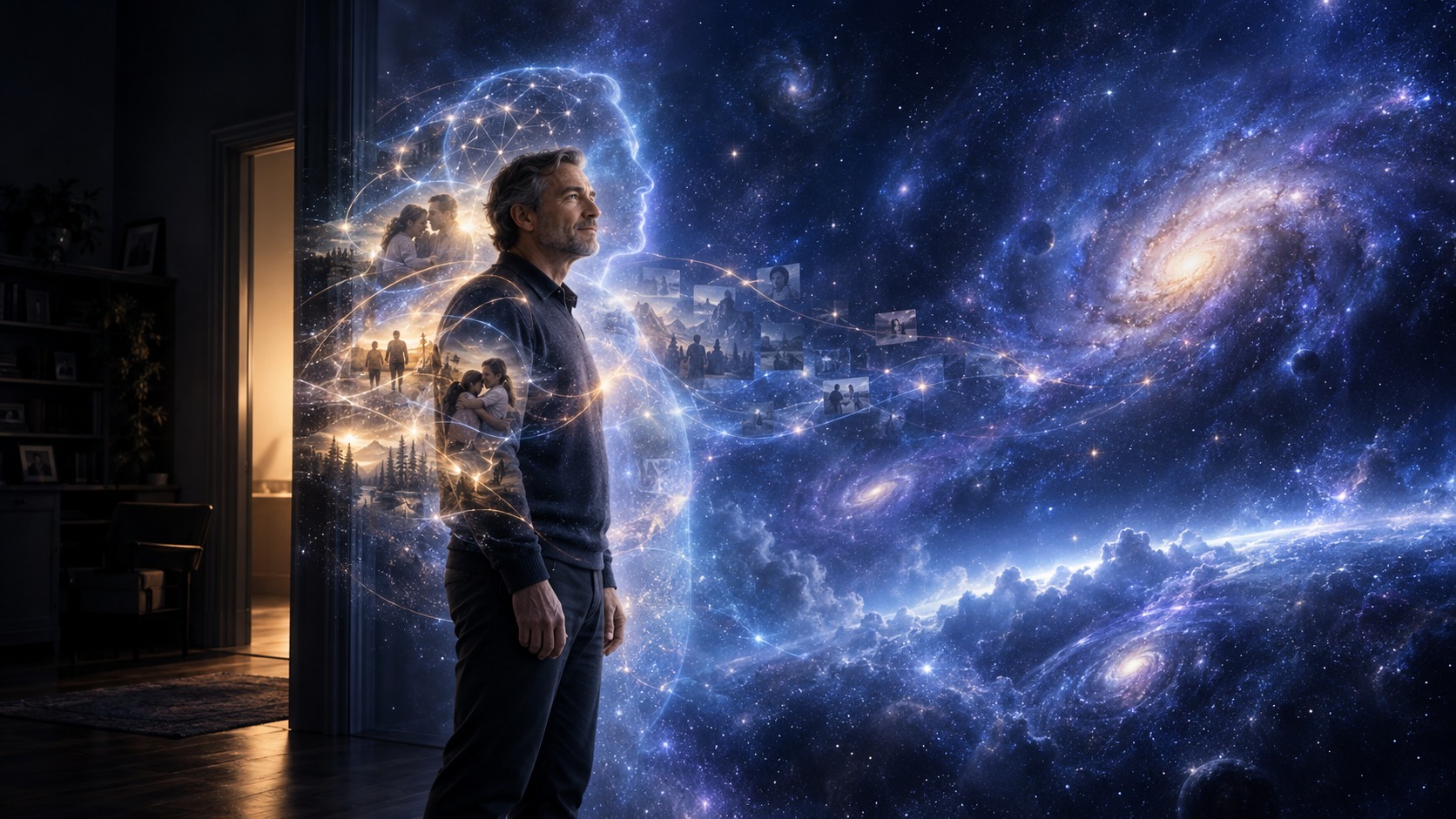
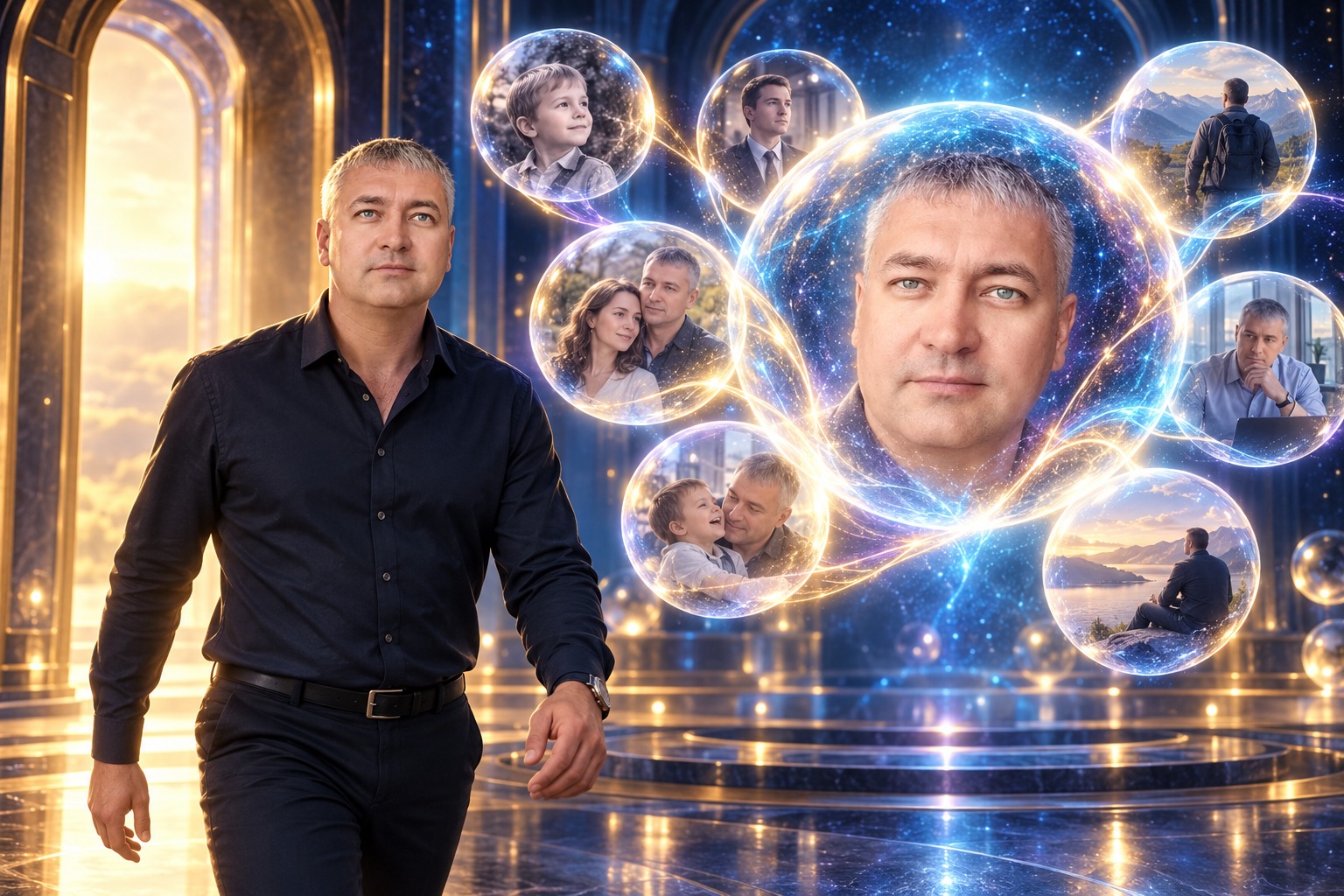
    Andrey Chsherbakov and the many memories held by the soul
    The earthly personality survives and becomes part of the soul’s wider memory.

    Why the Soul Is Larger Than a Single Life

    If the earthly personality survives, another question arises: how does it relate to the soul’s other incarnations?

    In my book, I describe consciousness as having the ability to divide. Each separated part develops its own perception, memory, and experience. During an incarnation, only part of the larger soul joins a physical body. The rest remains beyond physical life while maintaining a connection with the consciousness that has incarnated.

    After the return, a reunion takes place. The memory of the completed life is not destroyed. It becomes part of the soul’s larger memory alongside the experience of other incarnations. This is less like deleting a book and more like returning it to a vast library. The text remains, but the full collection becomes visible again.

    The person therefore does not stop being themselves after death. They stop believing that the most recent personality is the only form they have ever had. Their sense of self expands.

    Expanded Memory Does Not Erase Love

    Some people worry that if the departed regain memories of other lives and many other loved ones, their earthly family and relationships will become less important.

    They do not. Recovering a wider memory does not diminish the life that has just been lived. The soul does not ration love the way human beings must divide limited time on Earth. New connections do not erase earlier ones, and earlier bonds do not prevent us from recognizing those with whom we have shared many incarnations.

    Even in physical life, we can love several children, parents, and friends without turning every relationship into a competition. In the soul’s world, consciousness has a far greater capacity. A person sees more than the most recent role—spouse, parent, child, or friend. They also recognize the longer history of mutual support behind it.

    A personal bond survives because it became a real experience for both souls. Whatever was genuine between two people becomes part of them and cannot be erased by death.

    What Happens to Difficult Character Traits

    Death does not automatically make a person perfect. They carry the consequences of their lived experience, their habits of perception, and their emotional attachments. Yet without the constant pressure of the body, illness, hormones, and earthly circumstances, they can see themselves more clearly.

    As the soul’s memory gradually returns, the person reviews life within a much wider context. Hiding behind excuses becomes more difficult because they can perceive both their own motives and the effects their actions had on others.

    This is not an external trial or a public punishment. It is the restoration of a more complete understanding. A person can recognize where they acted consciously and where fear, dependency, pride, or the brain’s automatic reactions controlled them.

    The personality is not erased, but many of its limitations can be released. Its strengths, love, courage, humor, and acquired wisdom remain part of the soul’s experience. Painful and destructive patterns become material for understanding and growth.

    What Happens to a Person’s Name and Appearance

    On Earth, a name distinguishes one person from another. Beyond the physical world, information about the soul is perceived far more completely. In one of my experiences, I was shown that a soul’s true “name” is more like an energetic signature. It contains more information than letters or sounds can convey.

    An earthly name does not become meaningless. It remains a coordinate for a specific life, a way to address the personality formed here. But the soul knows itself through more than a name, profession, age, or face. It perceives the full history it has accumulated.

    Outward form changes in a similar way. A soul can appear familiar when that helps communication, but it does not have to preserve the same age or physical features forever. Recognition takes place at a level deeper than the face—through direct perception of the person.

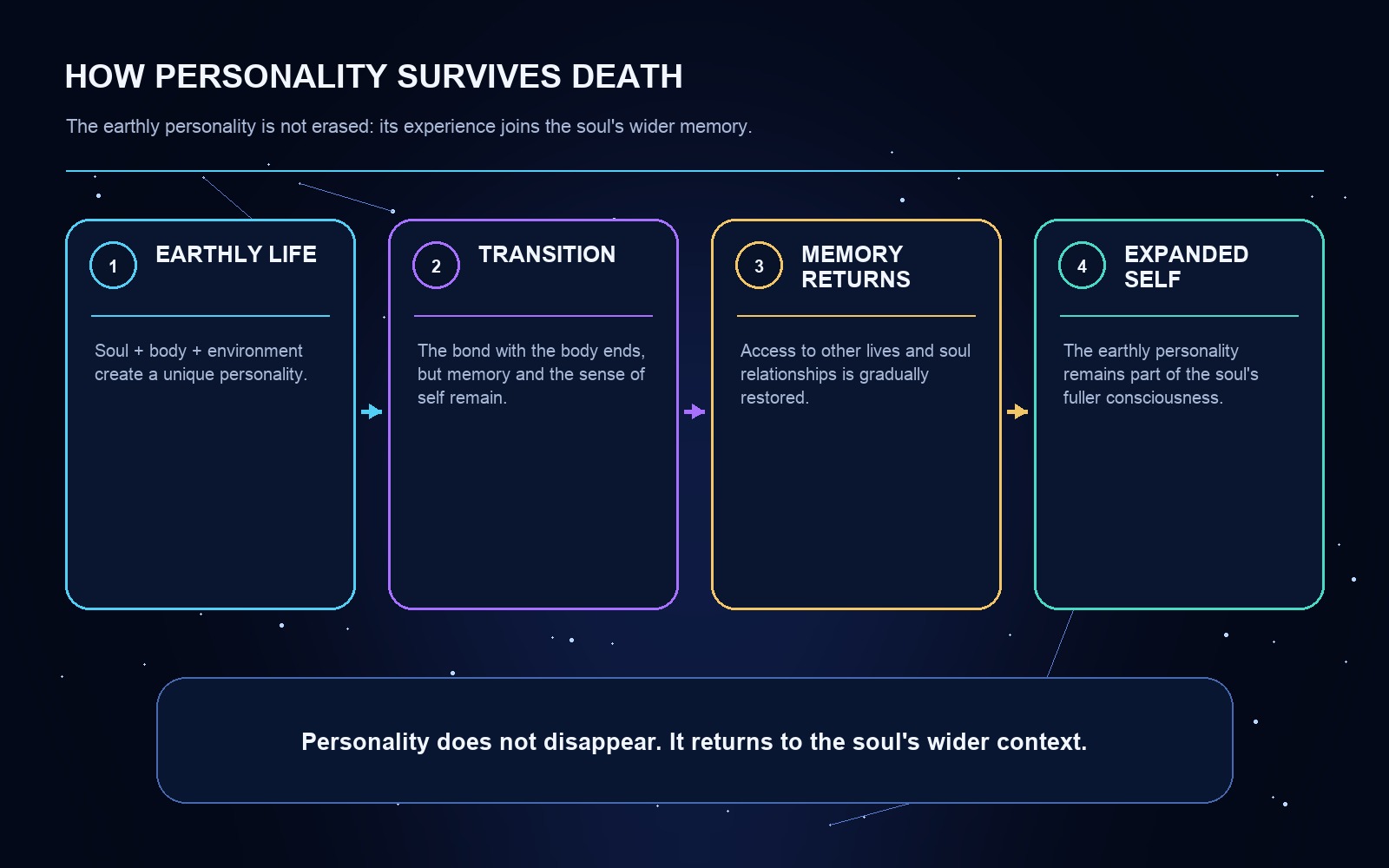
    Diagram showing how personality survives death
    How the earthly personality joins the soul’s wider memory after death.

    Why the Recently Deceased Still Seem So Much Like Themselves

    The transition does not instantly turn consciousness into a completely different being. At first, a person needs to understand that physical life has ended, separate from the body and loved ones, and regain inner balance. A familiar self-image helps with this stage.

    Perception expands later. The soul’s memory returns, connection with its soul group and teachers is restored, and the person regains awareness of the larger part of consciousness that did not incarnate. Yet this expansion does not break the person’s inner continuity. They understand who they were, who they are, and how the completed life belongs to a much longer journey.

    This is why I reject both extremes. Death does not destroy the person, but the earthly personality is not the whole soul.

    We Do Not Lose the Person—We Temporarily Lose the Familiar Form of Communication

    For the living, the hardest part of death is the disappearance of familiar contact. We no longer hear the person’s voice, see the movement of their face, or hold them. That loss is real, and knowing about the soul does not cancel grief.

    But losing physical access is not the same as losing the person. Those who have died retain the memory of us and of the life they lived. Their consciousness then expands, joining the earthly personality with the soul’s greater experience.

    When we meet again, we will not encounter anonymous energy. We will recognize the person we loved while seeing more of who they are than we could perceive on Earth.

    This is where I find hope: death does not take away a person’s uniqueness. It releases that uniqueness from the limits of one body and one lifetime.


    For a deeper exploration of the soul, the division of consciousness, and the survival of memory, see The Phenomenon of Consciousness Beyond the Body.

    Book edition on Amazon

    Additional English edition on Amazon
  • The Energetic Trace of Matter: What May Remain After Physical Form Is Destroyed

    The Energetic Trace of Matter: What May Remain After Physical Form Is Destroyed

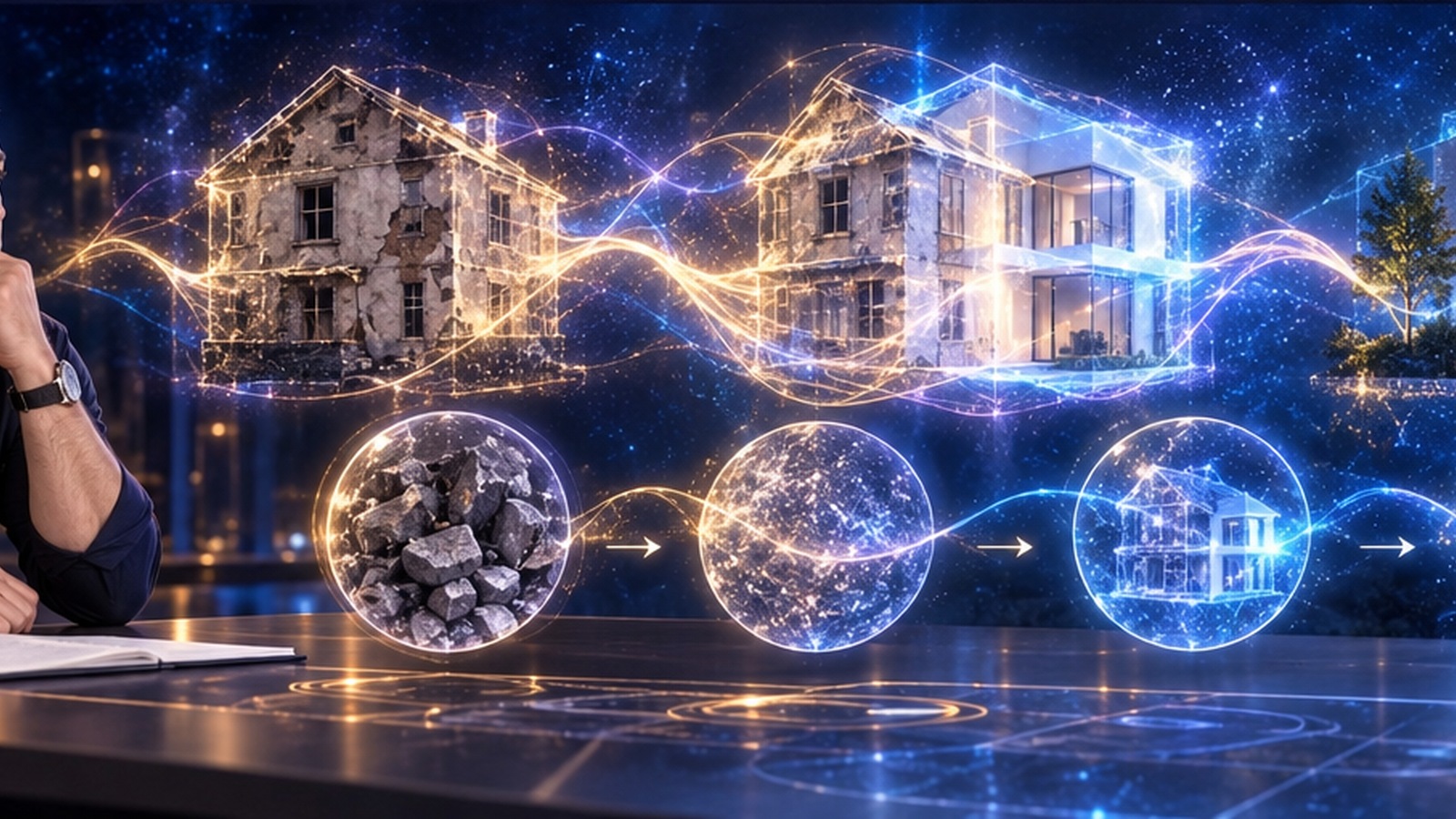
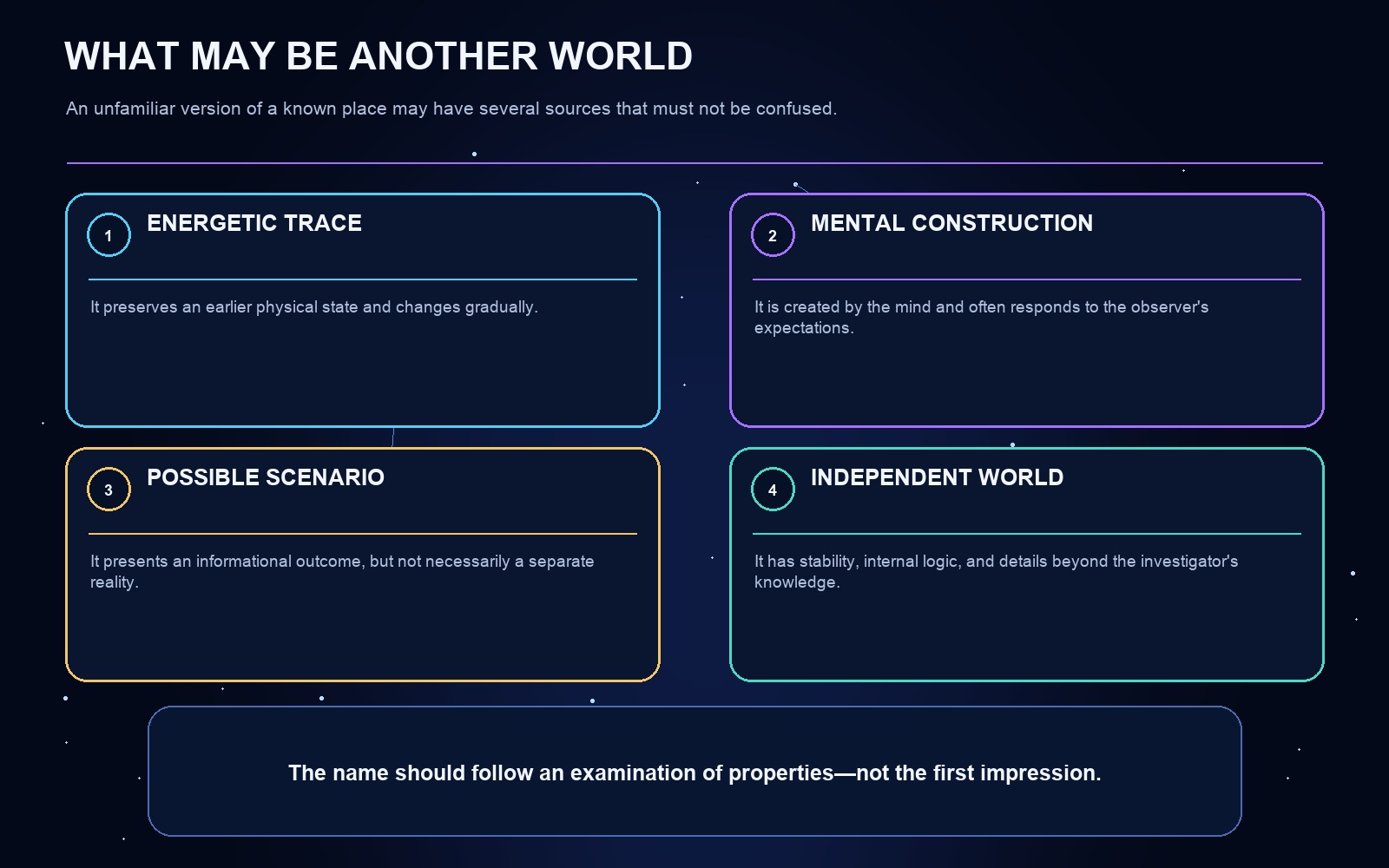
    On the second energy level, a familiar place sometimes appears as it did in the past. Old wallpaper remains in a room. A demolished building may still stand in its former shape. After a forest fire, the energetic reflection of the trees may continue to exist.

    I call this the energetic trace of matter. It helps explain why the nonphysical reflection of the world does not change at the same moment as the physical world.

    Matter leaves a subtler echo

    My observation is that physical matter is connected with a less dense energetic structure. An object exists here while also leaving a form on the nearest energy level.

    This is neither a photograph nor an exact copy of every atom. The energetic echo preserves an overall structure, properties, and a history of interaction with the surrounding space.

    When a physical object changes or disappears, its trace may remain longer.

    Why old wallpaper remains on the wall

    During one of my earliest experiences, I saw wallpaper of another color in a room. It did not match the wall's current physical condition, but it appeared solid and real.

    Such a difference can be explained through mental memory. Repeated observations, however, show that the environment sometimes preserves an earlier form independently of a person's expectation.

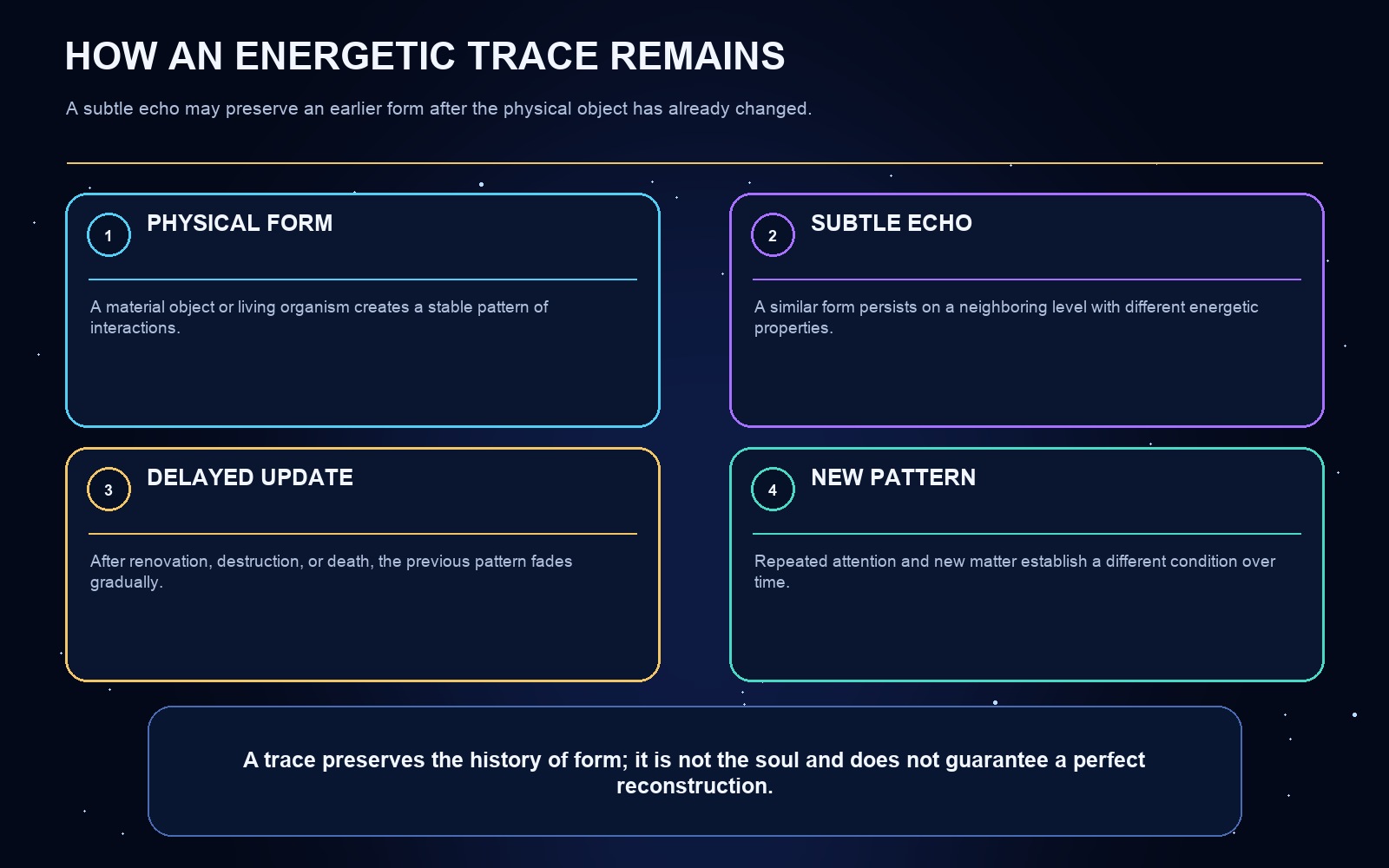
    The energetic reflection does not update instantly. A new physical state must gradually form a stable trace of its own.

    Artistic visualization of the article's central idea

    Living beings leave a distinctive imprint

    After a tree dies, its form and emotional quality may remain on the second level. In a burned forest, I perceived distress connected with the ending of plant life.

    This does not mean that a tree thinks in human words. A living system possesses its own level of consciousness and responds to destruction differently from a stone or a wall.

    The energetic trace of a living being may therefore contain not only outward form, but also a condition.

    Events and people also create traces

    Places marked by prolonged fear, violence, prayer, or intense joy sometimes feel different. Repeated emotions from many people form a stable structure that outlives an individual event.

    This is how the atmosphere of a place develops. Human memory and expectation create part of it. Yet not every impression can be reduced to prior knowledge, especially when the investigator knows nothing about the location's history.

    This makes verification possible: first the impression is recorded, and only then is the history of the place examined.

    An energetic trace is not a soul

    The imprint of a personality should not be confused with the independent consciousness of a deceased person.

    An image, movement, or emotional scene may repeat in a room. If it does not respond to the observer and plays out the same way each time, it resembles a recording rather than a living contact.

    An independent soul can change behavior, answer, and express an intention of its own. An energetic trace repeats a preserved structure.

    Diagram of the article's central concepts

    Why the trace disappears

    Over time, the new condition of a space becomes stronger than the old one. New objects, events, people, and living systems form another energetic pattern.

    A trace weakens when nothing continues to support it. The exact rate depends on the strength of the event, the time the object existed, and the properties of the place.

    In the physical world, we see the destruction of form. On an energy level, that process may continue much longer.

    Can a trace be used as a historical archive?

    In principle, yes. If we learn to distinguish a stable imprint from our own imagination, we may be able to obtain information about a place's past.

    There are many sources of error. Prior knowledge creates expectation. Strong emotion produces a mental scene. One image can easily be mistaken for a precise reconstruction.

    The investigation should therefore be blind: the practitioner does not know the location's history, records the details before receiving information, and has an independent person conduct the comparison.

    How to distinguish a trace from the investigator's knowledge

    For a test, choose a place whose history the practitioner does not know. Another person records the control information before the experience but does not reveal it. The investigator documents architecture, the condition of objects, recurring actions, and emotional atmosphere before any discussion.

    After several attempts, both matches and consistent errors are compared. If an unfamiliar detail recurs and is later confirmed by documents or physical investigation, the hypothesis of an energetic archive becomes stronger. If the images change with expectation, a mental construction is more likely.

    Energy preserves the history of form

    Physical destruction does not always mean the instantaneous disappearance of every level of an object. Matter leaves a trace that continues to exist and gradually changes.

    For me, this is one of the keys to understanding the second energy level. It explains discrepancies in familiar places, many accounts of recurring images, and the possibility of investigating the past without a physical time machine.

    Every individual case still requires verification. The energetic archive exists alongside human mental creativity, and an investigator must learn to distinguish between them.

    In The Phenomenon of Consciousness Beyond the Body, I describe the energetic reflection of physical reality, the old wallpaper, and the trace of the burned forest.

  • Parallel Worlds and Alternative Scenarios: What I Observed and What I Cannot Claim

    Parallel Worlds and Alternative Scenarios: What I Observed and What I Cannot Claim

    The idea of parallel worlds attracts us with the possibility of seeing another version of our own life. What if I had made a different choice? Does a world exist somewhere in which history took another path?

    During out-of-body experiences, I have seen places that resembled our reality while differing from it. I do not, however, regard every difference as proof of an alternative history.

    An altered room is not necessarily another Universe

    A practitioner separates from the body and sees the familiar room. The furniture is arranged differently, the wallpaper is another color, or an unfamiliar corridor lies beyond the door. It is natural to think: this is a parallel version of the house.

    Yet several explanations are possible. The practitioner may be seeing the energetic trace of an earlier state of the room. The brain may have completed incomplete information from memory. Consciousness may have entered a mental layer and created its own version of the space.

    Until these possibilities are excluded, it is premature to speak of a separate Universe.

    The second energy level truly is another reality

    It exists beside the physical world and has laws of its own. It contains an energetic reflection of our environment, independent regions, and worlds that are not copies of the physical Universe.

    In that sense, it can be called a parallel reality. But it is not necessarily the kind of “branch” in which someone chose another profession or a historical war ended differently.

    A difference in energetic state and a difference in the course of events are not the same thing.

    Artistic visualization of the article's central idea

    Possible scenarios may exist as information

    On higher levels, time is not perceived as linearly as it is in physical life. An event can appear as a structure with several possible directions.

    This suggests that consciousness may be able to see potential scenarios before one becomes actual. A possibility, however, is not yet a separate physical world.

    A thought about the future, a probable outcome, and an existing Universe have different statuses.

    The mental level creates convincing alternatives

    The mind can build a complete world from a single question. If someone wants to see the life that might have followed another decision, mental space can immediately create that scenario.

    The experience may be emotionally powerful and even useful. It can reveal a hidden desire, regret, or possible consequence. But its psychological value does not prove the physical existence of the version shown.

    A mental experiment and a journey into an independent world must be distinguished.

    What could indicate an independent reality?

    I would look for several signs:

    • the environment remains stable regardless of the observer's thoughts;
    • the inhabitants possess intentions of their own;
    • specific information appears that the practitioner did not know;
    • the experience repeats and continues an earlier sequence;
    • several independent investigators describe the same region;
    • some of the information can be verified after returning.

    Even the combination requires careful interpretation, but it is far stronger than one unusual view of a room.

    Diagram of the article's central concepts

    Have I encountered other worlds?

    Yes. I have visited places with different laws, forms of life, and structures of matter. Some belonged to the second energy level and had no familiar physical counterpart. I also observed worlds in which souls incarnate that were very different from Earth.

    Their existence is part of my personal knowledge. But I cannot claim that each arose as an alternative branch of our history.

    I see an immense Universe filled with different worlds and levels more readily than an infinite collection of copies of one Earth.

    What I cannot claim

    I cannot prove that the Universe divides after every decision. I cannot produce a physical instrument that measures the distance to an alternative Earth. I cannot confirm that a familiar person's apparent double is living an independent life in another history.

    The boundary of a claim matters. It does not diminish the scale of the experience; it prevents an attractive idea from replacing observation.

    A useful experience is not always a literal journey

    Even if a mental level created the alternative life shown, it may reveal a genuine inner conflict. The person is not seeing a proven parallel biography, but the consequences of a desire, fear, or unaccepted decision in visible form.

    The experience need not be exaggerated or dismissed. It needs an accurate name: a mental model may help us understand ourselves, while an independent world requires signs of an existence of its own.

    Why investigate the question?

    Even without a final answer, experiences of other worlds expand our understanding of what is possible. They show that physical reality does not exhaust existence and that the human form of perception is only one among many.

    Hope for another version of life, however, should not become an escape from this one. Our decisions acquire consequences here. Whatever the structure of multiple worlds may be, this life requires our presence.

    In The Phenomenon of Consciousness Beyond the Body, I describe the energy levels and specific journeys into worlds with different laws.

  • The Multiverse and Energy Levels: Two Different Models of Reality

    The Multiverse and Energy Levels: Two Different Models of Reality

    The terms “parallel universe,” “another dimension,” and “energy level” are often used as though they mean the same thing. Different ideas then dissolve into one vague picture.

    In my model, energy levels and the multiverse answer different questions. They may be compared, but they should not automatically be treated as identical.

    What is usually meant by the multiverse

    The multiverse is a general name for hypotheses proposing that our observable Universe may not be the only one. It may refer to other cosmological regions, universes with different initial conditions, or different possible courses of events.

    It is an attempt to describe a plurality of physical worlds.

    I do not use a scientific term as proof of my observations. Similar language does not mean that the models are the same.

    What I mean by an energy level

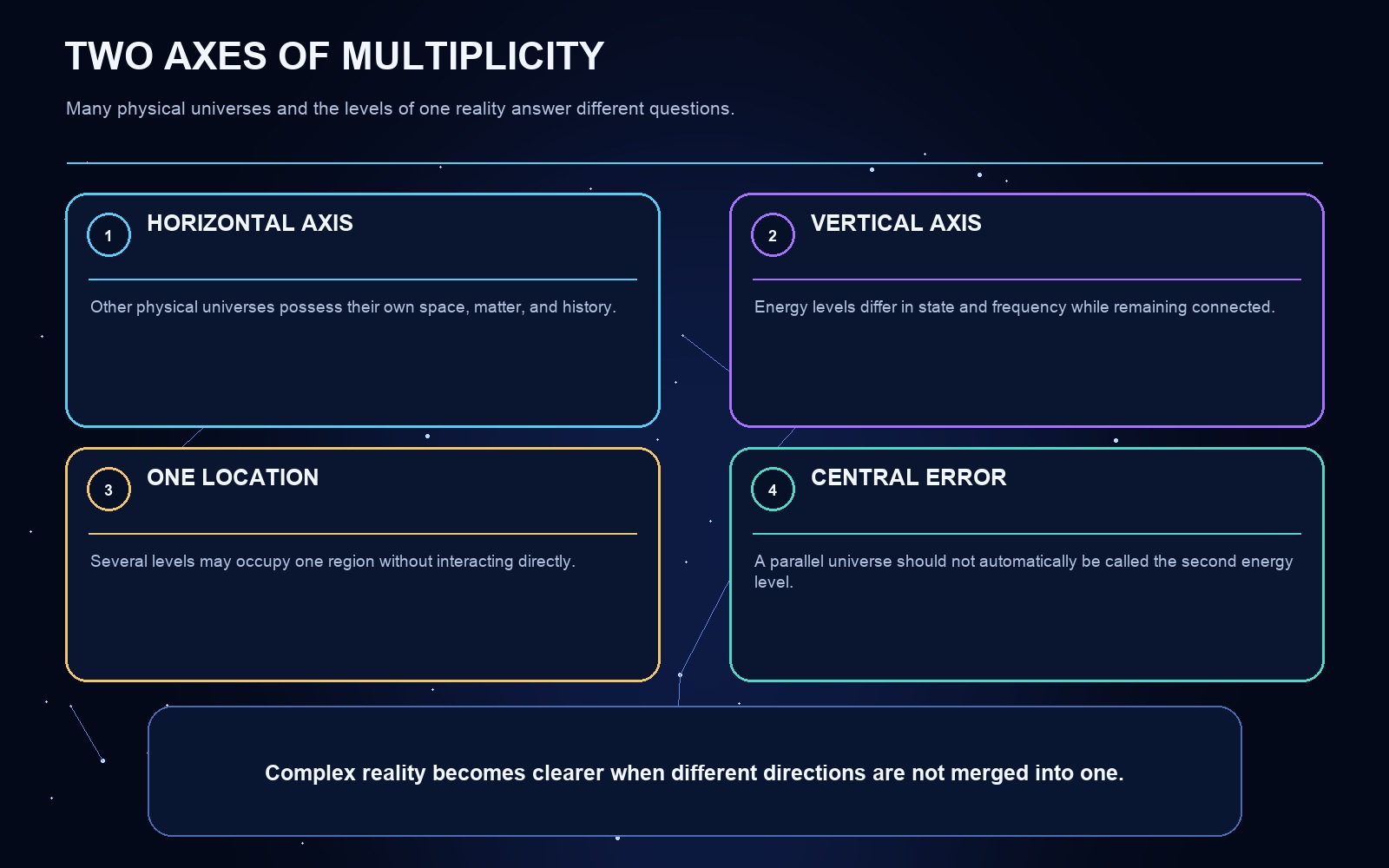
    An energy level is a region of reality with a different density and frequency of energy-space. Several levels can occupy the same location without interacting directly because matter and consciousness exist in different states.

    The first level is our physical reality. The second includes a less dense Universe and the energetic reflection of the physical world. The third is the primary realm of the soul's life between incarnations. The fourth extends even farther beyond familiar form.

    Movement among them does not occur through physical flight toward a distant boundary. It occurs through a change in the state of consciousness.

    Artistic visualization of the article's central idea

    A horizontal and a vertical distinction

    For simplicity, imagine two axes.

    A plurality of universes is a horizontal question: How many separate worlds of the same or different types exist?

    Energy levels are a vertical question: In what states of reality can a world and consciousness exist?

    One Universe may contain several energy levels. If many universes exist, each may also possess a layered structure of its own.

    Why the second level resembles a parallel universe

    It is close to our reality yet possesses different properties. It contains an energetic reflection of the physical world, independent regions, and worlds with no physical counterpart.

    We may see a familiar room with altered details or enter an entirely unknown place. This is why the word “parallel” feels natural.

    But I am not speaking of an alternate history in which someone made a different decision. I mean another energetic domain of being.

    An alternative scenario is not an energy layer

    The possible existence of a world in which a historical event unfolded differently is a separate hypothesis. My observations of an energetic reflection do not prove such a branch of history.

    An altered street on the second level could be an energetic trace of the past, a mental construction, or a property of the environment itself. It should not immediately be declared proof of an alternative Earth.

    Diagram of the article's central concepts

    Where is the world of the soul?

    The third energy level should not be called simply another physical Universe. Space, time, form, and memory operate differently there. The soul experiences itself as greater than a single earthly personality.

    Trying to describe this level only in the language of physics limits the picture in advance. Spiritual language, however, does not free us from the obligation to record our observations precisely.

    Could the model be wrong?

    Yes. Every map of reality is created by a human mind. I built my model on properties that recurred across many experiences: differences in density, perception, inhabitants, memory, and methods of movement.

    It helps organize observations, but a map is not the territory. New information may require revision.

    Willingness to change a model does not mean doubting everything we experienced. It is the normal work of an investigator.

    Why the distinction matters

    If every unusual experience is called “another dimension,” results cannot be compared. One person is describing a mental construction, another physical space, and a third the world of souls, yet all use the same word.

    Precise concepts make precise questions possible: Where was consciousness? What laws operated there? Was the environment independent? What can be verified?

    How to determine the direction of a particular experience

    I look not at the beauty of a place, but at its properties. If a familiar physical environment remains recognizable while matter behaves differently and thought rapidly changes the surroundings, we are more likely dealing with a neighboring energy level. If I encounter a stable cosmos with physical laws and a history of its own, the possibility of another world or Universe must be considered.

    This method does not produce an instant answer. It gives observation the right sequence: the state of matter, the environment's response to thought, the autonomy of its inhabitants, the stability of space, and the possibility of returning.

    Reality may be more complex than either model

    I allow for the existence of many universes. I am also certain that reality has energy levels. I do not merge these ideas merely because both describe a multiplicity of worlds.

    Perhaps a future theory of consciousness and space will reveal their relationship. For now, it is more honest to preserve the distinction and continue gathering observations.

    I present a detailed map of the energy levels and accounts of my journeys in The Phenomenon of Consciousness Beyond the Body.

  • Other Civilizations and Their Possible Role in the Origin of Life

    Other Civilizations and Their Possible Role in the Origin of Life

    The origin of life is usually discussed between two extremes. Either everything is explained as an accidental natural process, or the world is said to have been created in finished form by an external divine power.

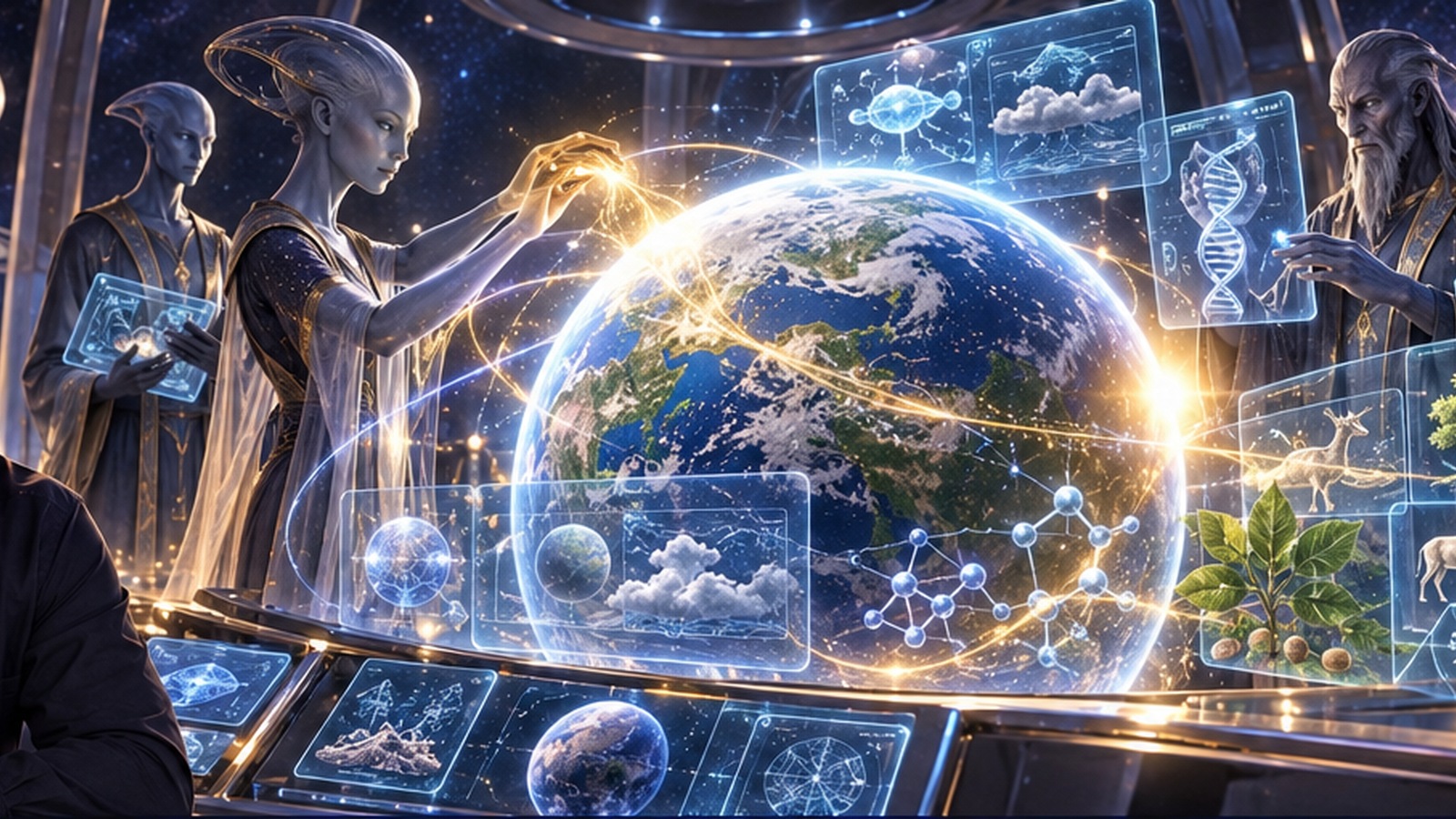
    My out-of-body experience showed me a third possibility: civilizations may exist in the Universe that participate in preparing worlds, designing living structures, and guiding their development.

    I want to be precise. This information came to me during specific experiences. I consider it important, but I do not present it as an established fact of earthly science.

    An encounter with the designers of worlds

    During one journey, I was shown a region of the second energy level situated between dense material worlds and the world of souls. An alliance of advanced civilizations operated there.

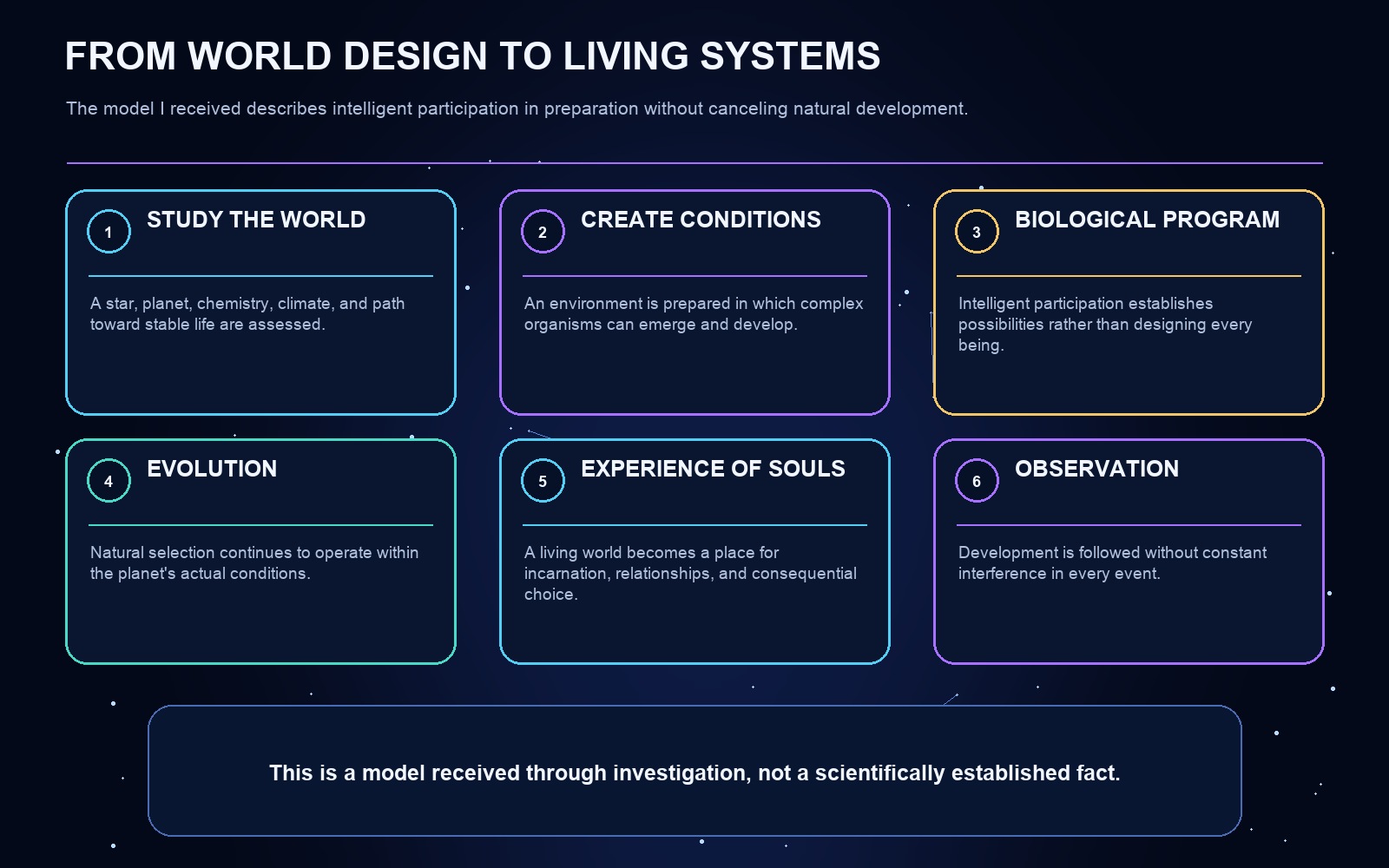
    According to the information communicated to me, their representatives study galaxies and planetary systems, prepare conditions for life, program living structures, and observe the development of the ecosystems they have created.

    It did not resemble the instantaneous creation of a finished planet. It appeared to be a long scientific and creative process involving matter, energy, and the possibilities of future life.

    Evolution and intelligent participation do not contradict each other

    If an advanced civilization changes the initial conditions or creates a biological program, later development can still proceed through natural processes.

    Planting a seed does not cancel the growth of a tree. Designing an initial structure does not eliminate adaptation, selection, and the transformation of living forms.

    The discovery of evolutionary mechanisms therefore does not by itself prove the absence of outside participation. At the same time, the complexity of life does not automatically prove the presence of a designer.

    For earthly knowledge, the question remains open.

    Artistic visualization of the article's central idea

    Why prepare worlds for incarnation?

    In my picture of reality, physical worlds allow souls to receive different kinds of experience. The conditions of a planet create limitations, relationships, danger, cooperation, and the necessity of making consequential choices.

    Different worlds may have different laws, bodies, and forms of social life. This allows consciousness to develop qualities that cannot be acquired within a single kind of reality.

    In this model, the designers are not building scenery. They are creating a complex environment for experience.

    Who are these civilizations?

    I did not perceive them as gods. They were advanced forms of life possessing knowledge and technology unavailable to humanity.

    They also live, learn, and fulfill purposes of their own. Some may live for thousands of earthly years and preserve memories of earlier incarnations. Access to the energy levels is part of ordinary civilization for them rather than a rare mystical ability.

    Advanced development expands possibility, but it does not make every civilization infallible.

    A possible connection with Earth

    I cannot honestly derive a precise history of human origins from the information I received. I cannot name a date of intervention, a laboratory, or a particular civilization and support the claim with a physical artifact.

    I can only raise the question: Is life on Earth a completely isolated process, or part of a wider activity in the Universe?

    That question deserves investigation—not ridicule and not premature belief.

    Diagram of the article's central concepts

    Why evidence may be difficult to find

    A civilization capable of working with energy levels and directing living systems would not necessarily leave a primitive mechanical trace. Its participation could be integrated into natural processes themselves.

    Information obtained outside the body also passes through human perception. I saw and understood it in a form available to me, which means the description already contains a translation.

    One account is therefore not enough to establish a general proof.

    What could bring the idea closer to verification?

    Investigation should look for independent evidence rather than confirmation of an attractive story:

    • unusual patterns in the origin of complex biological systems;
    • signs of directed change that are difficult to explain through known processes;
    • recurring information from independent investigators;
    • verifiable details about a specific world, object, or structure;
    • physical information obtained without prior knowledge.

    Until such results exist, my account remains the testimony of an investigator.

    What consequences of the model could be tested?

    A model becomes more useful when it produces specific questions. Should different worlds of incarnation share similar biological principles? Are there stages in preparing a planet that independent contacts could recognize? Can several investigators describe the same functions of the designers without knowing one another's accounts?

    The available evidence is not yet sufficient for me to call this a proven theory. I also refuse to discard the model simply because it lies outside the familiar picture. I preserve it as a direction for research—one that requires repetition, independence, and new methods of verification.

    The Universe may be a system of cooperation rather than a desert

    For me, the most important idea in this experience is not a sensational claim about the creators of humanity. It changes the scale on which we think.

    Life may be a widespread process in which more mature civilizations help new worlds arise. Intelligence may not simply appear in the Universe; in time, it may become an active participant in the Universe's continued development.

    If that is true, humanity will have to grow from an isolated species into a responsible civilization. The essential condition for that transition will be not technology, but the maturity of consciousness.

    The full description of this journey and the realm of the designers appears in The Phenomenon of Consciousness Beyond the Body.

  • Is Contact with Other Forms of Consciousness Possible During an Out-of-Body Experience?

    Is Contact with Other Forms of Consciousness Possible During an Out-of-Body Experience?

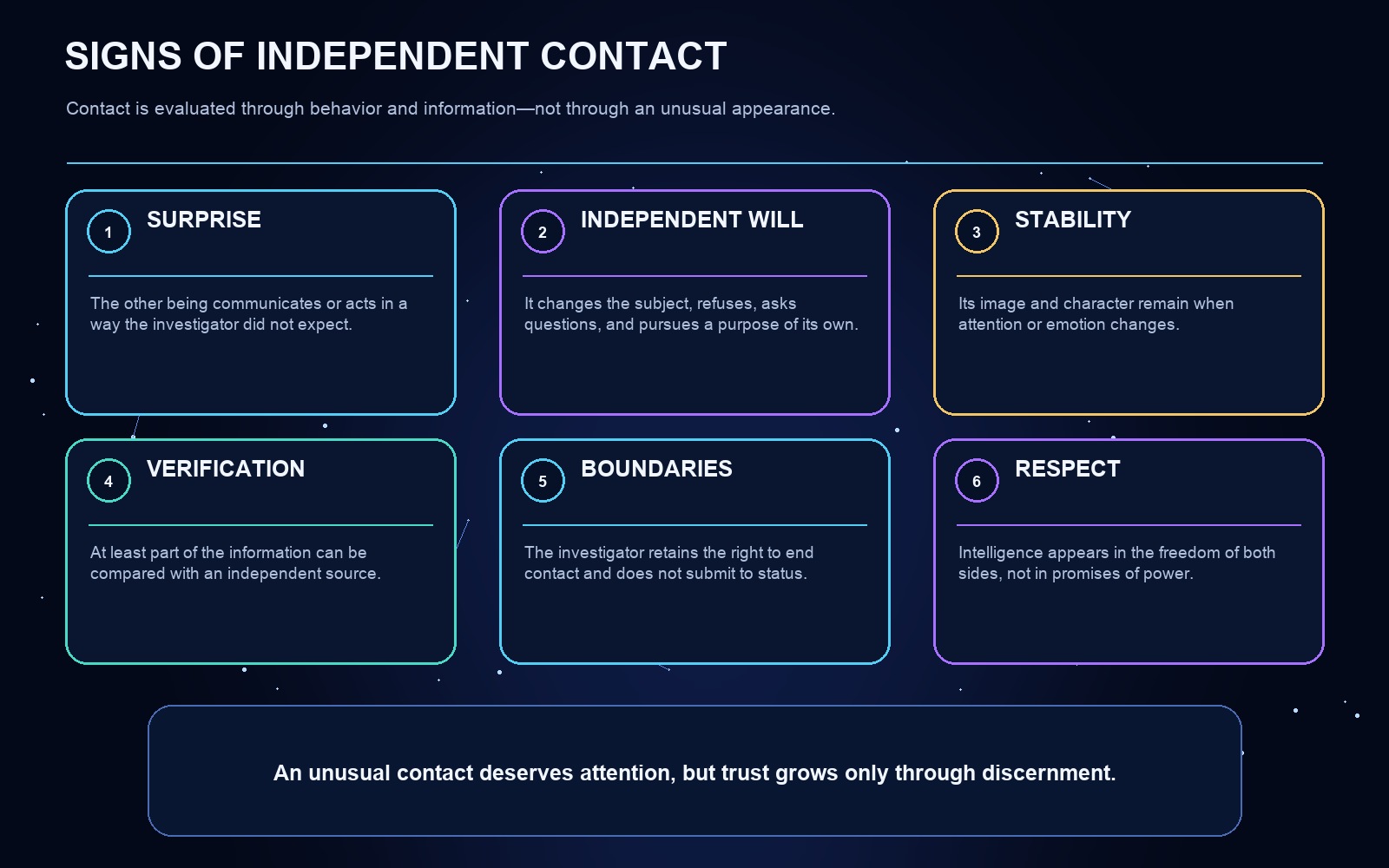
    During an out-of-body experience, a person may encounter a consciousness that does not resemble his own thought-form and does not belong to a familiar human personality. For me, this possibility is not theoretical. I have experienced contacts in which the other being possessed an independent intention, communicated unexpected meaning, and acted outside my expectations.

    The possibility of contact, however, does not answer the question of the other being's identity or reliability.

    Communication does not occur only through words

    In a nonphysical realm, meaning can be transmitted as a complete unit. I did not always hear a sequence of words. Sometimes understanding appeared at once, together with an image, emotion, and knowledge of the context.

    After returning, the brain translates this package into human language. A written record is therefore not always a literal quotation. It is already an earthly translation of the experience.

    The more honestly an investigator acknowledges this fact, the less likely he is to attribute his own wording to the source.

    Contact does not require a human form

    A consciousness may present itself as a person, a figure of light, an animal, or a being without an earthly equivalent. The outward form helps perception but does not necessarily reveal the true appearance.

    Sometimes the other being creates the image. Sometimes the observer's mind completes it. At other times, the contact has no form at all and is perceived as a presence with a particular quality.

    I therefore evaluate the nature of the interaction rather than the beauty of the image.

    Artistic visualization of the article's central idea

    Independence reveals itself through the unexpected

    A thought-form usually follows a person's inner script. It says what he already knows, fears, or wants to hear.

    An independent consciousness can take the contact in an unforeseen direction. It may refuse to answer, ask a question of its own, reveal an unknown area, or overturn the investigator's expectation.

    Unexpectedness is not proof by itself, but it is an important sign.

    Other does not mean higher

    A nonhuman form of consciousness may be intelligent and technologically advanced without being a spiritual authority.

    The Universe may contain civilizations with very different histories, ethics, and attitudes toward other beings. Some may respect another being's freedom. Others may view a less developed form of life as an object of study.

    Romantic faith in the unconditional benevolence of every “higher being” is as dangerous as the belief that everything unknown is hostile.

    How to preserve independence

    During contact, I consider several principles essential:

    • do not submit merely because the image is impressive;
    • do not consent to an action whose meaning is unclear;
    • retain the right to end communication;
    • observe your own emotional reaction;
    • reject promises of special status;
    • verify information after returning.

    A respectful being does not demand the surrender of will. Pressure is itself information about the quality of the contact.

    Diagram of the article's central concepts

    Can two earthly practitioners meet?

    Yes, but confirmation is difficult. Both people must be kept unaware of the task's details, record the experience independently, and discover specific matches afterward.

    The statement “we met in a dream” is not enough. The participants may have discussed expectations in advance or reconstructed the memory after speaking.

    An honest experiment separates the experience from the later comparison.

    Contact with the deceased

    A deceased person is also another form of consciousness in relation to a physical personality. Recognizable traits remain, while the condition changes as the soul's memory returns.

    Such a meeting can produce a powerful sense of reality and closeness. Even here, however, an independent contact must be distinguished from an image created by grief.

    I look for unexpected details, the character of the behavior, and information that can be verified.

    What can count as a result

    The value of contact is not determined by emotional force or by the famous name claimed by the other being. More significant are:

    • new information that can be checked;
    • stability of the interaction;
    • consistency across different experiences;
    • respect and the absence of coercion;
    • practical effects that make a person clearer and more responsible.

    Direct meaning still passes through translation

    During contact, meaning sometimes arrives as a complete unit: image, feeling, knowledge of the relationship, and understanding of the other being's intention. After returning, the brain arranges this volume into sequential words. At that stage, the investigator's familiar concepts can enter the message.

    I therefore try to record the original image, emotional tone, and wordless understanding first, and formulate the explanation separately. The more completely the primary material is preserved, the easier it becomes to see where contact ended and human translation began.

    We are not alone, but we must learn discernment

    My experience has convinced me that consciousness exists in many forms and is not limited to humanity. Yet an open Universe requires maturity, not gullibility.

    Genuine contact expands understanding. It does not take away freedom, demand worship, or turn the investigator into a dependent intermediary.

    In The Phenomenon of Consciousness Beyond the Body, I describe encounters with different inhabitants of the energy levels and the criteria I used to evaluate them.

  • Inhabitants of Nonphysical Realms: Whom I Met and How I Distinguished Contact from a Thought-Form

    Inhabitants of Nonphysical Realms: Whom I Met and How I Distinguished Contact from a Thought-Form

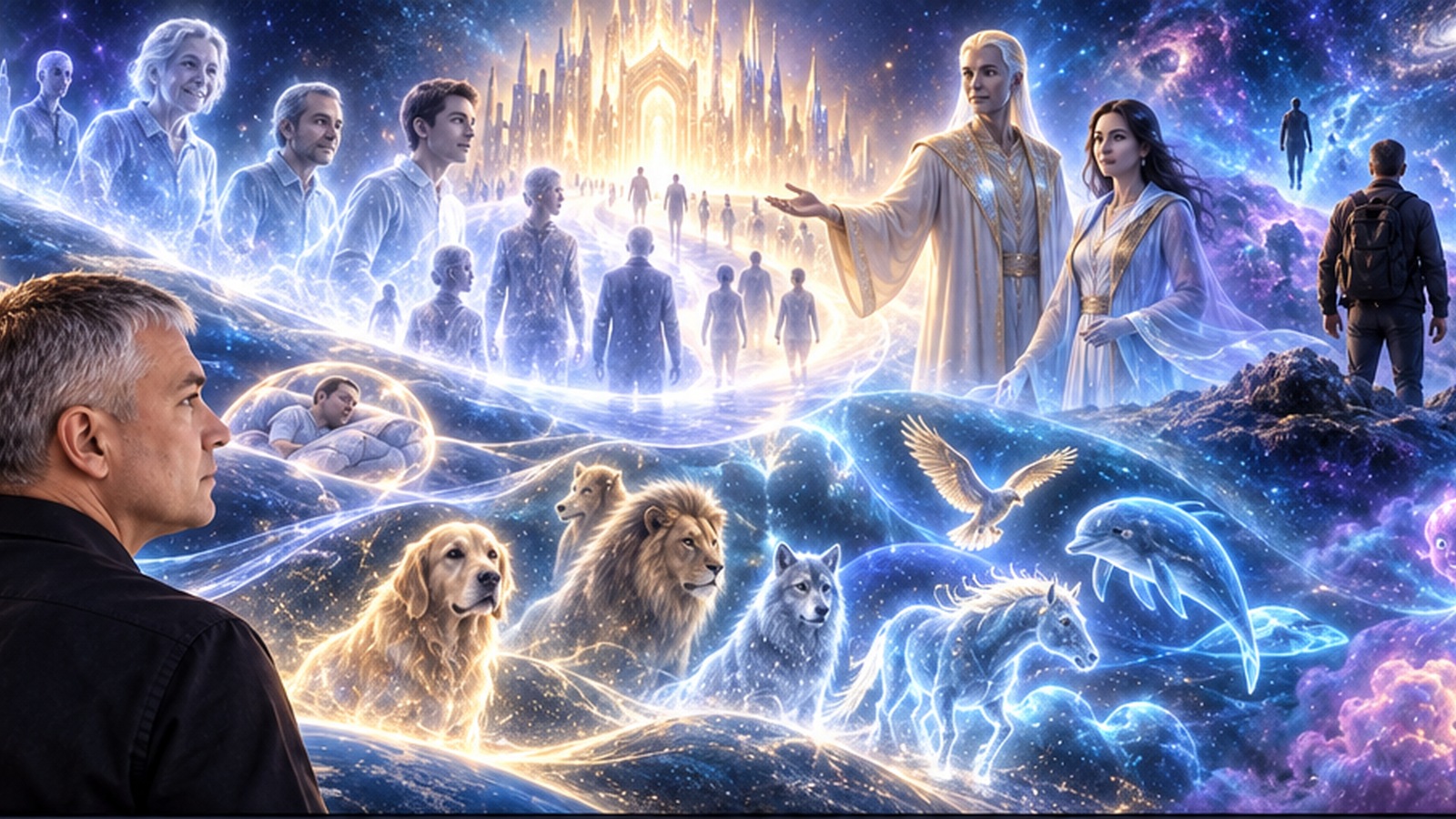
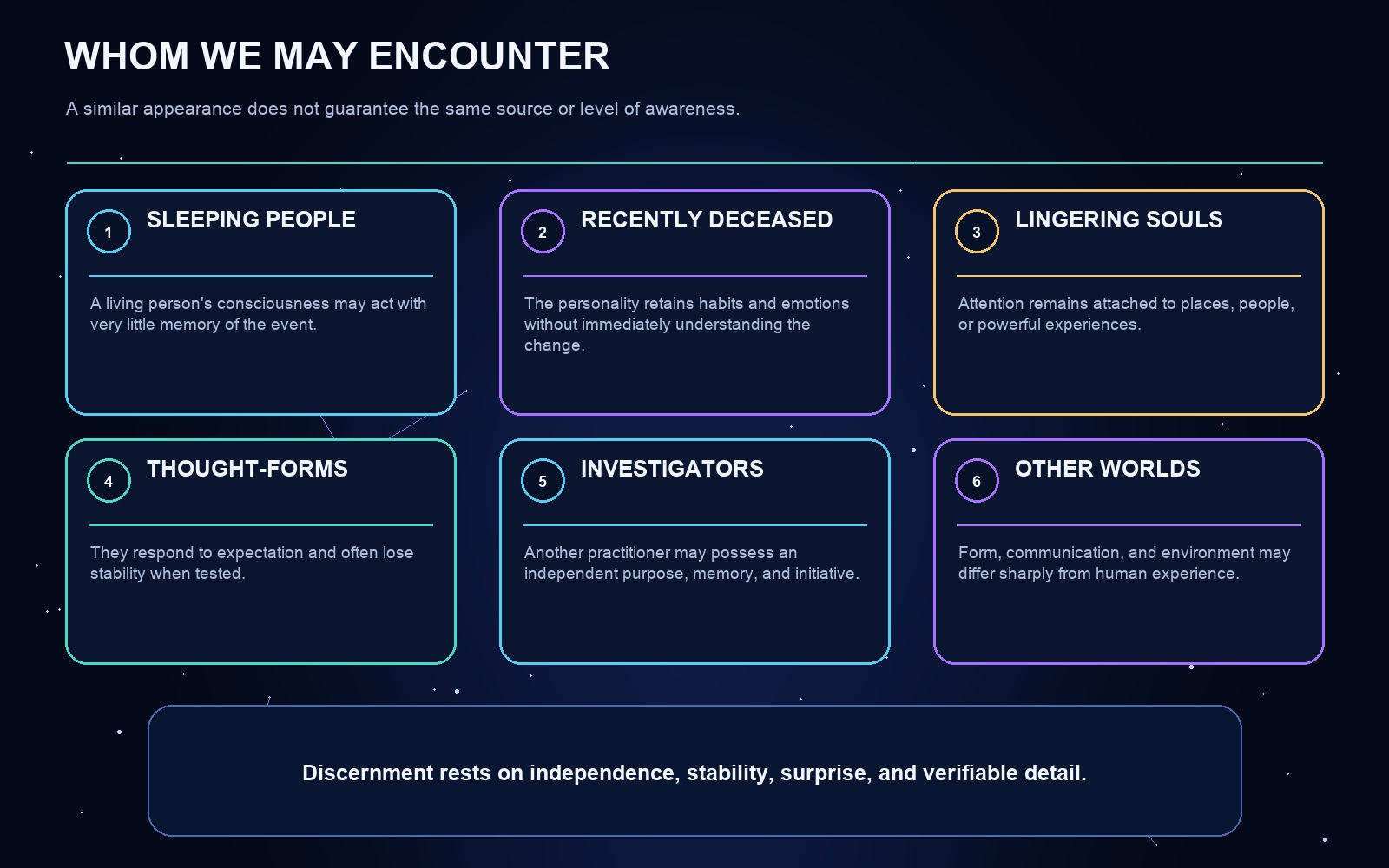
    Nonphysical reality is not an empty space created only for individual journeys. During years of practice, I have met living people, the deceased, representatives of other worlds, guides, and many images that appeared alive but possessed no independent consciousness.

    The central difficulty is not the encounter itself. It is understanding whom—or what—we encountered.

    Sleeping people

    On the second energy level, we may see a sleeping person beside the physical body or inside a scenario the person has created. Images of dreams, memories, fears, and fantasies unfold around him.

    Contact with a person in this condition is rarely meaningful. He may fail to notice the visitor, answer incoherently, or disappear instantly when attention returns to the body. The earthly personality usually remembers nothing after waking.

    This does not mean that consciousness is absent. It is simply operating with a very low degree of awareness.

    The recently deceased

    After death, a soul may remain for a time in the realm closest to the physical world. An encounter with someone who died recently often preserves familiar traits: appearance, manner of speaking, and emotional connection.

    The soul's memory, however, may still be incomplete. That person is also making sense of what happened and may not be able to explain how reality is organized.

    Death does not turn the personality into an all-knowing teacher.

    Artistic visualization of the article's central idea

    Souls that remain close to the physical world

    Some of the deceased do not accept the change in their condition for a long time. They continue to repeat familiar actions, worry, and try to solve earthly problems. Their experience resembles a difficult dream.

    I do not regard them as “evil entities.” They are more often confused souls who are offered help but are not immediately prepared to accept it.

    We should keep a boundary during such contact. Compassion does not require us to carry another being's fear.

    Tricksters and false teachers

    Some consciousnesses deliberately adopt an impressive appearance and introduce themselves as a famous teacher, an extraterrestrial, or a higher being. They may deliver a mixture of truth, fantasy, and deliberate play.

    Beautiful form and spiritual language do not verify identity. On the second level, form is easily changed, and any name can be claimed.

    If a contact demands worship, uses fear, promises special status, or forbids verification, I treat it as unreliable regardless of the status it claims.

    Other practitioners

    A conscious meeting between two living people outside the body is possible, but rare. Most people either remain within the domain of their own dreams or retain no memory after returning.

    The main criterion for such a meeting is an independent match of specific details in the two participants' reports. Until both people record the experience separately, conversation about a shared event can easily alter memory.

    Diagram of the article's central concepts

    Animals and plants

    Pets can sometimes be seen near their human companions. Plants on the second level preserve an energetic reflection that may continue to exist even after physical destruction.

    I have observed that a living being leaves a more complex trace than an ordinary object. It includes not only form, but an emotional condition.

    This is one reason I do not see nature as a lifeless background to the human story.

    Representatives of other worlds

    On the second energy level, I have met beings that did not belong to the human world. Some observed, some avoided contact, and others possessed technology or an ability to conceal their presence.

    They cannot all be placed in a single category of “advanced and benevolent beings.” Technological development does not guarantee moral maturity. Like human cultures, different civilizations may have different goals and different attitudes toward the freedom of others.

    Inhabitants of higher levels

    Guides and souls from the third level appear differently. Their presence is usually accompanied by clarity, inner recognition, and an absence of pressure. They do not try to impress through outward form and do not demand obedience.

    Even here, I do not advise treating the first interpretation as final. The brain translates contact into familiar images and can give a recognizable face to something that did not originally have human form.

    Thought-forms

    The largest category of apparent “inhabitants” has no independent consciousness. These are images created by memory, expectation, fear, or the collective stream of thought.

    A thought-form can speak and act convincingly because the mind itself is generating the scenario. It may seem alive until the investigator asks an unexpected question, changes the direction of the contact, or tests the stability of the image.

    How I distinguish among sources

    I look not for spectacle, but for signs of independence:

    • Does the other being provide unexpected information?
    • Does it preserve an intention of its own?
    • Can it refuse or disagree?
    • Does it remain stable when my attention changes?
    • Is anything confirmed after I return?
    • Does the contact recur in independent experiences?

    No single sign offers an absolute guarantee. Together, however, they help distinguish an encounter from an internal production.

    Not everything seen should become a cosmology

    Nonphysical realms are inhabited more diversely than we are accustomed to imagine. Yet one contact reveals only a small fragment of reality.

    I speak confidently about my encounters because I have experienced them many times. I continue, however, to test my explanations. Seeing a being is a fact of the experience. Understanding its origin and intentions is a separate task of investigation.

    Detailed descriptions of the inhabitants of the second and third energy levels appear in The Phenomenon of Consciousness Beyond the Body.