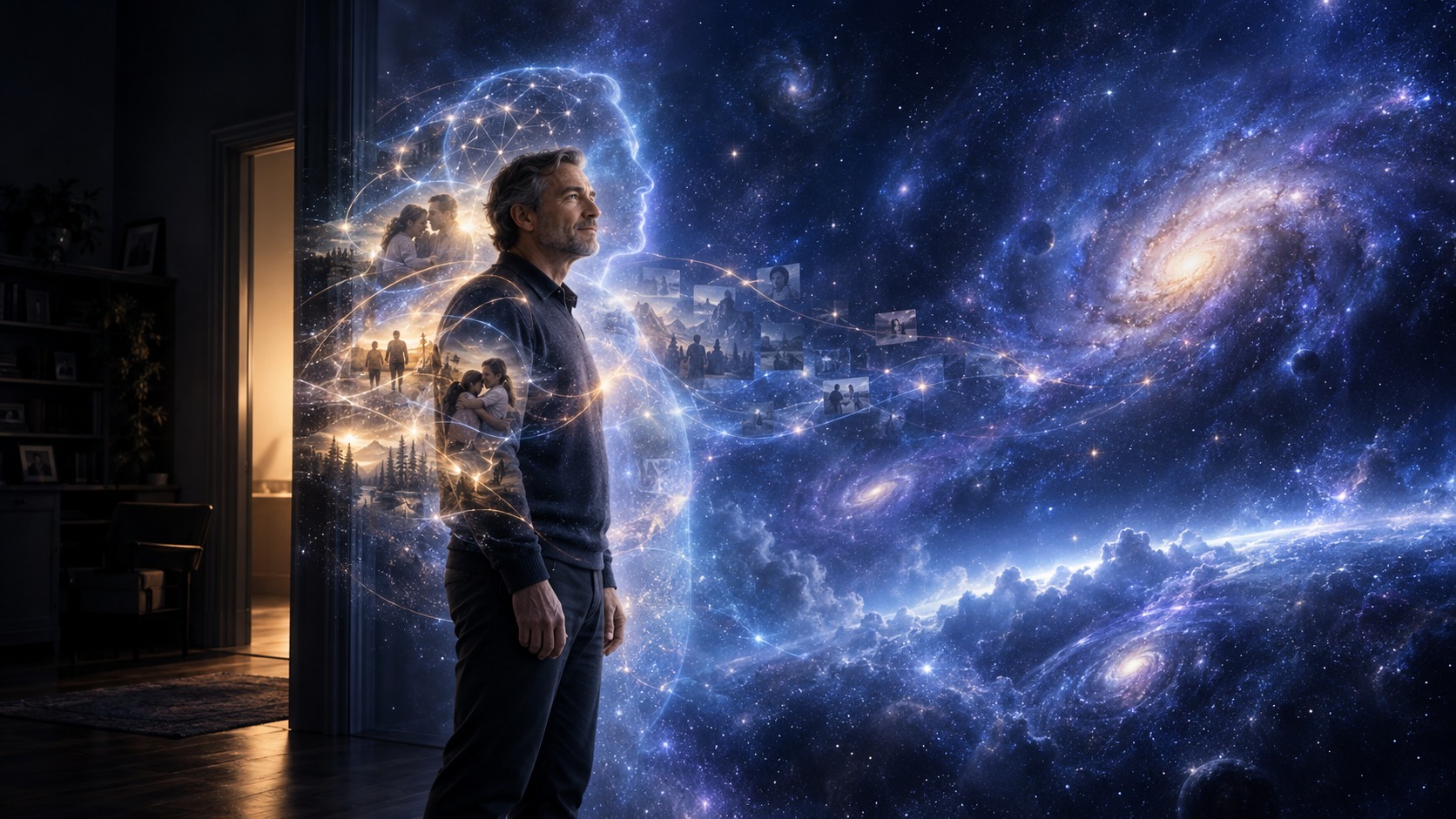
When someone dies, those who loved them fear more than separation. A deeper question follows: if consciousness continues, does the person we knew remain the same person? Do their character, memories, sense of humor, love, and recognizable inner self survive—or does the earthly personality disappear with the brain?
My years of exploring consciousness beyond the body have led me to a clear conclusion: death does not erase the personality. A person does not become anonymous energy or instantly dissolve into a universal field. After separating from the body, they still recognize themselves, remember the life that has just ended, and can recognize the people they loved.
Yet the personality does not remain permanently confined within the boundaries it developed on Earth. It survives while also becoming part of the soul’s larger consciousness. The person is not destroyed. They recover a greater wholeness.
The Earthly Personality Is Born from a Union
In ordinary life, we often treat personality and consciousness as the same thing. In my understanding, they are distinct, though closely connected.
Consciousness—the soul—enters physical life with its own qualities and accumulated experience. The body provides the senses, instincts, nervous system, and the capacities of the brain. Family, language, culture, education, and life events create the environment. The unique earthly personality emerges from the interaction of all three.
A human being is therefore neither a soul simply trapped inside a temporary shell nor merely an organism that somehow learned to think. Throughout life, soul and body continually influence one another. A relationship develops between them, creating a history that did not exist before. That history helps form the specific person known and loved by others.
Death ends the partnership between the soul and the physical body, but it does not make the life that was lived meaningless. Everything a person understood, endured, loved, and created becomes part of the soul’s experience.
What Remains Immediately After the Transition
During the early stages after death, a person still experiences themselves much as they did in life. They remember their name, their family, the circumstances of their passing, and their familiar sense of self. That is why, in my observations, people who had recently died appeared as recognizable human beings rather than formless masses of energy.
A physical body is no longer necessary in the soul’s world, but consciousness can still create a familiar appearance. People commonly perceive themselves as younger, healthier, and free from physical limitations. This is not an attempt to deceive anyone. In that reality, outward form becomes an expression of inner self-perception.
Characteristic traits remain as well. A calm person does not instantly become someone else, and the tendency to joke, question, or reflect does not vanish simply because the heart has stopped. The transition changes the conditions of existence, but it does not break the inner continuity of the person.
Why the Soul Is Larger Than a Single Life
If the earthly personality survives, another question arises: how does it relate to the soul’s other incarnations?
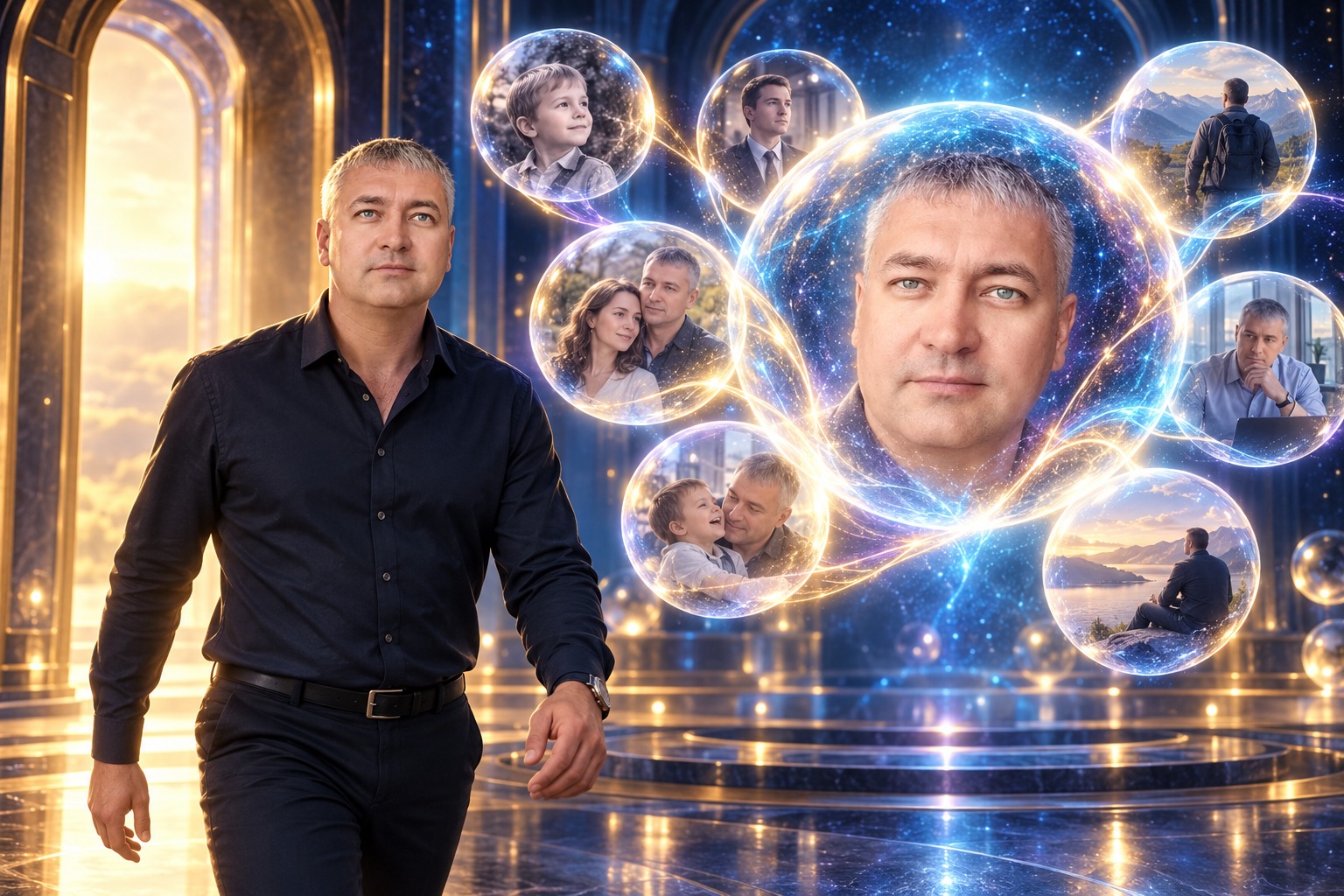
In my book, I describe consciousness as having the ability to divide. Each separated part develops its own perception, memory, and experience. During an incarnation, only part of the larger soul joins a physical body. The rest remains beyond physical life while maintaining a connection with the consciousness that has incarnated.
After the return, a reunion takes place. The memory of the completed life is not destroyed. It becomes part of the soul’s larger memory alongside the experience of other incarnations. This is less like deleting a book and more like returning it to a vast library. The text remains, but the full collection becomes visible again.
The person therefore does not stop being themselves after death. They stop believing that the most recent personality is the only form they have ever had. Their sense of self expands.
Expanded Memory Does Not Erase Love
Some people worry that if the departed regain memories of other lives and many other loved ones, their earthly family and relationships will become less important.
They do not. Recovering a wider memory does not diminish the life that has just been lived. The soul does not ration love the way human beings must divide limited time on Earth. New connections do not erase earlier ones, and earlier bonds do not prevent us from recognizing those with whom we have shared many incarnations.
Even in physical life, we can love several children, parents, and friends without turning every relationship into a competition. In the soul’s world, consciousness has a far greater capacity. A person sees more than the most recent role—spouse, parent, child, or friend. They also recognize the longer history of mutual support behind it.
A personal bond survives because it became a real experience for both souls. Whatever was genuine between two people becomes part of them and cannot be erased by death.
What Happens to Difficult Character Traits
Death does not automatically make a person perfect. They carry the consequences of their lived experience, their habits of perception, and their emotional attachments. Yet without the constant pressure of the body, illness, hormones, and earthly circumstances, they can see themselves more clearly.
As the soul’s memory gradually returns, the person reviews life within a much wider context. Hiding behind excuses becomes more difficult because they can perceive both their own motives and the effects their actions had on others.
This is not an external trial or a public punishment. It is the restoration of a more complete understanding. A person can recognize where they acted consciously and where fear, dependency, pride, or the brain’s automatic reactions controlled them.
The personality is not erased, but many of its limitations can be released. Its strengths, love, courage, humor, and acquired wisdom remain part of the soul’s experience. Painful and destructive patterns become material for understanding and growth.
What Happens to a Person’s Name and Appearance
On Earth, a name distinguishes one person from another. Beyond the physical world, information about the soul is perceived far more completely. In one of my experiences, I was shown that a soul’s true “name” is more like an energetic signature. It contains more information than letters or sounds can convey.
An earthly name does not become meaningless. It remains a coordinate for a specific life, a way to address the personality formed here. But the soul knows itself through more than a name, profession, age, or face. It perceives the full history it has accumulated.
Outward form changes in a similar way. A soul can appear familiar when that helps communication, but it does not have to preserve the same age or physical features forever. Recognition takes place at a level deeper than the face—through direct perception of the person.
Why the Recently Deceased Still Seem So Much Like Themselves
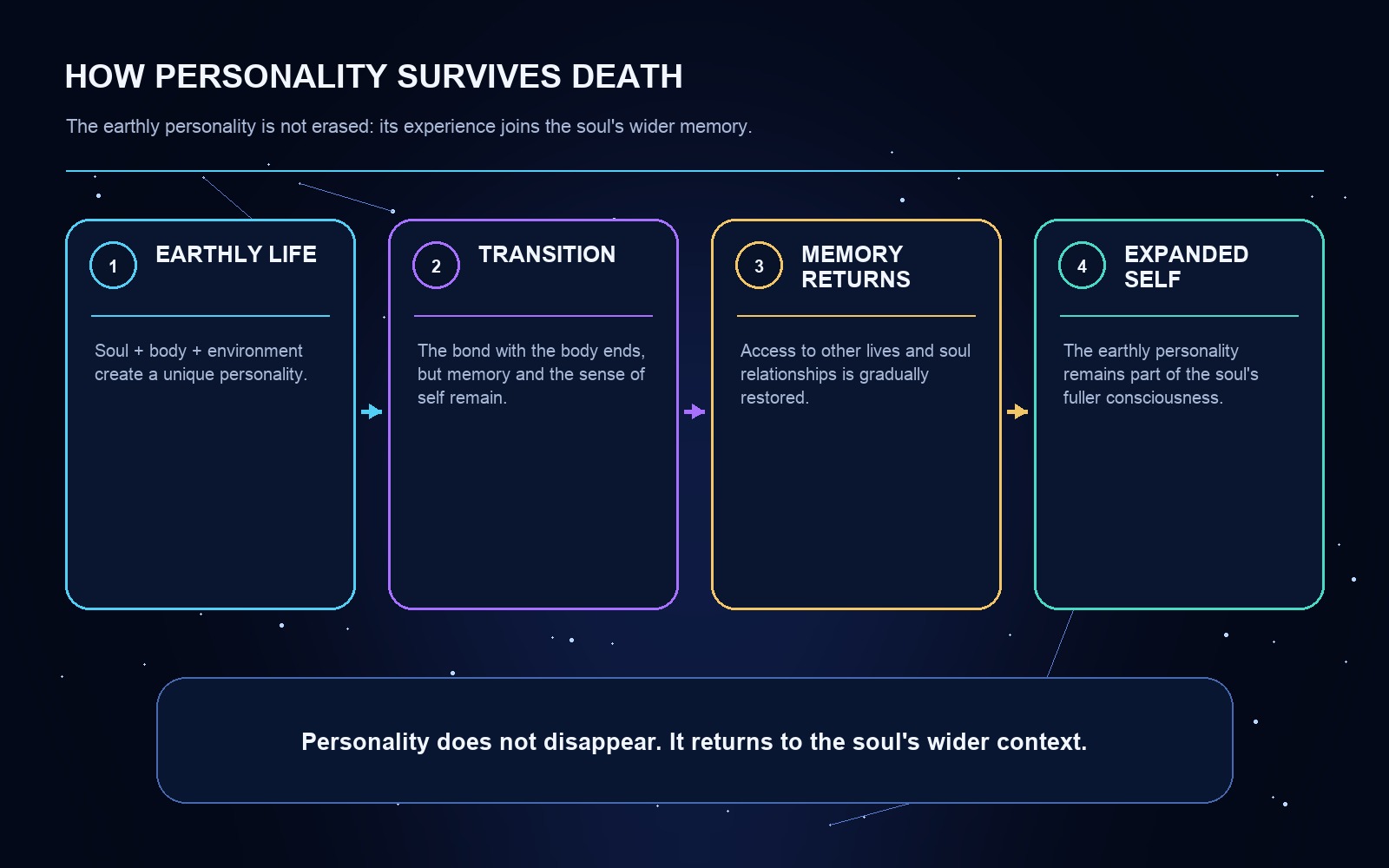
The transition does not instantly turn consciousness into a completely different being. At first, a person needs to understand that physical life has ended, separate from the body and loved ones, and regain inner balance. A familiar self-image helps with this stage.
Perception expands later. The soul’s memory returns, connection with its soul group and teachers is restored, and the person regains awareness of the larger part of consciousness that did not incarnate. Yet this expansion does not break the person’s inner continuity. They understand who they were, who they are, and how the completed life belongs to a much longer journey.
This is why I reject both extremes. Death does not destroy the person, but the earthly personality is not the whole soul.
We Do Not Lose the Person—We Temporarily Lose the Familiar Form of Communication
For the living, the hardest part of death is the disappearance of familiar contact. We no longer hear the person’s voice, see the movement of their face, or hold them. That loss is real, and knowing about the soul does not cancel grief.
But losing physical access is not the same as losing the person. Those who have died retain the memory of us and of the life they lived. Their consciousness then expands, joining the earthly personality with the soul’s greater experience.
When we meet again, we will not encounter anonymous energy. We will recognize the person we loved while seeing more of who they are than we could perceive on Earth.
This is where I find hope: death does not take away a person’s uniqueness. It releases that uniqueness from the limits of one body and one lifetime.
For a deeper exploration of the soul, the division of consciousness, and the survival of memory, see The Phenomenon of Consciousness Beyond the Body.
Leave a Reply