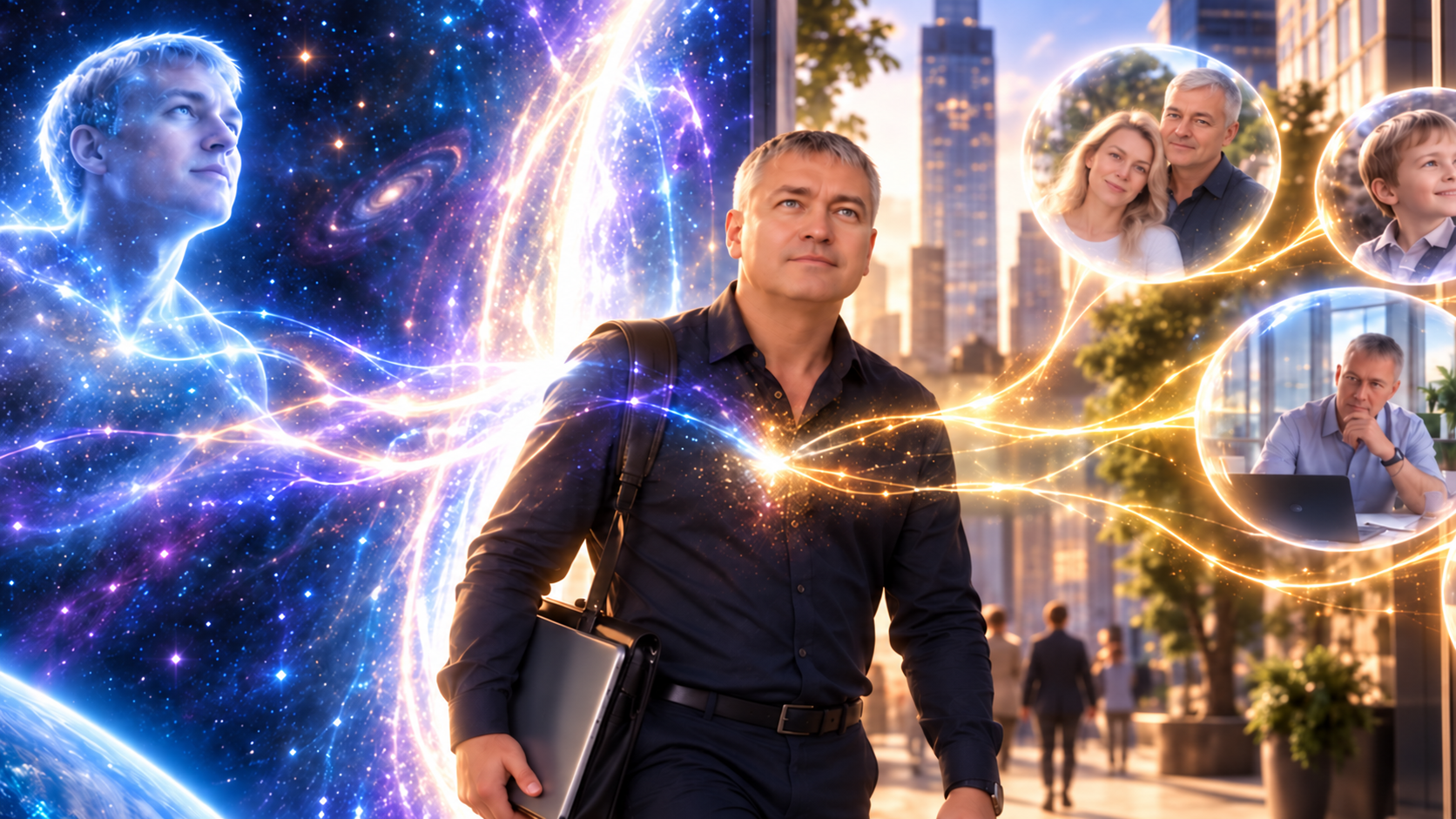
Out-of-body experience is often portrayed as an escape from everyday life: a person leaves the body, flies, visits unusual places, and returns with vivid memories. If that is where it ends, the practice really does become a form of entertainment.
For me, its meaning lies elsewhere. The true value of out-of-body experience becomes visible after we return—in how we think, make decisions, treat other people, and live an ordinary day.
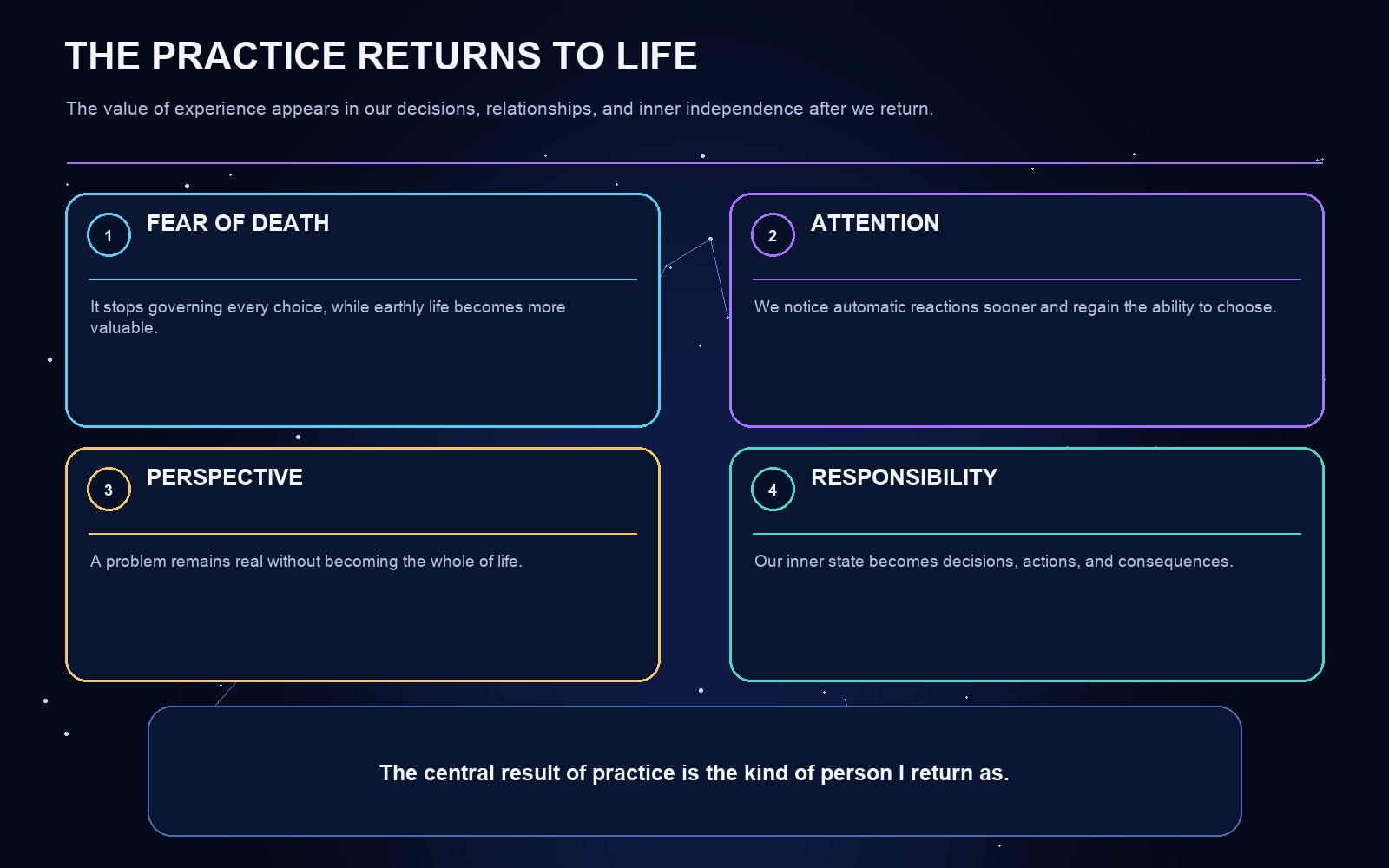
The fear of death stops governing life
The first major change that comes with conscious experience outside the body is the understanding that a human being is more than a physical organism. I did not reach this conclusion through a book or a religious sermon. I have experienced separation from the body many times while retaining my memory, my sense of self, and my ability to act.
This did not make me reckless. On the contrary, physical life became more valuable to me. When death no longer appears to be the complete destruction of the person, we cling less desperately to external things and see more clearly what we are actually spending our years on.
Awareness carries over into physical life
Remaining clear outside the body requires control of attention, emotion, and the stream of thought. Gradually, those same abilities begin to work during the day.
We notice an automatic reaction sooner. We have time to stop before fear, irritation, or habit makes the decision for us. We begin to distinguish our own desire from a program imposed by family, society, advertising, or authority.
That is practical awareness: not an attractive spiritual state, but the ability to be present in one's own life and choose how to act.

Our relationship with problems changes
An out-of-body experience will not pay the bills or resolve a family conflict for us. It can, however, change the scale on which we see a problem.
What looked like the end of the world yesterday becomes a difficult but temporary episode. We do not stop feeling pain, but we stop mistaking it for the whole of reality. We see this life as part of the soul's longer journey and gain the inner space needed to find a solution.
That change in perspective does not replace action. It releases energy that was previously consumed by panic.
We become responsible for our inner state
On the second energy level, thought and emotion affect the perceived environment much faster than they do in the physical world. Fear can generate a frightening image. Expectation can alter the surroundings. Calm intention helps us hold a direction.
After observing this many times, it becomes difficult to keep treating the stream of thought as harmless background noise. A thought does not always create a physical event directly, but it shapes attention, decisions, and actions—and actions create a life.
Work on oneself therefore stops being an abstract spiritual subject. It becomes a matter of personal responsibility.
Relationships become more honest
In ordinary life, we often defend an image of ourselves rather than the truth. We want to appear right, strong, spiritual, or successful. Unusual experience quickly reveals the limits of that game. Beyond our familiar social role, consciousness remains—with its fears, intentions, and actual level of maturity.
This knowledge helps us pretend less, especially to ourselves. When a person becomes more honest with himself, his relationships also change. He needs other people to validate his worth less often and becomes better able to see the living person behind the role.
An investigator's way of thinking develops
A sound practice teaches us not only to experience, but also to observe. What did I see? What did I feel? What did I know in advance? What was unexpected? What can I verify after returning?
That approach is useful far beyond out-of-body experience. It helps separate fact from interpretation, notice our expectations, and resist treating the first explanation as the final truth.
This is why I call myself an investigator. I am certain that my experiences are real, and I continue to refine my understanding of how they work.
The practice should not diminish earthly life
There is a danger in becoming so absorbed in unusual states that physical life begins to look like an inferior and uninteresting stage. I believe that is a mistake.
We did not incarnate here to spend all our time dreaming of another world. Physical reality gives us resistance, consequences, relationships, and the need to act. Here our inner qualities become real decisions. That is precisely why earthly experience has such value for the soul.
If a practice separates a person from family, work, and responsibility, it is being used incorrectly. If it makes that person calmer, freer, more attentive, and more honest, it is fulfilling its purpose.
The most important result is visible after the experience
The number of unusual experiences tells us nothing by itself about a person's development. Someone can leave the body hundreds of times and remain governed by fear, pride, and habit. Another person may have only a few powerful experiences and completely reconsider how to live.
The central question is simple: What kind of person do I return as?
For me, out-of-body experience became both a way to investigate reality and a tool for inner growth. It gave me hope, reduced my fear of death, and made me more responsible for every day of my life. That is its greatest practical value.
I describe my path and observations in greater depth in The Phenomenon of Consciousness Beyond the Body.
Leave a Reply