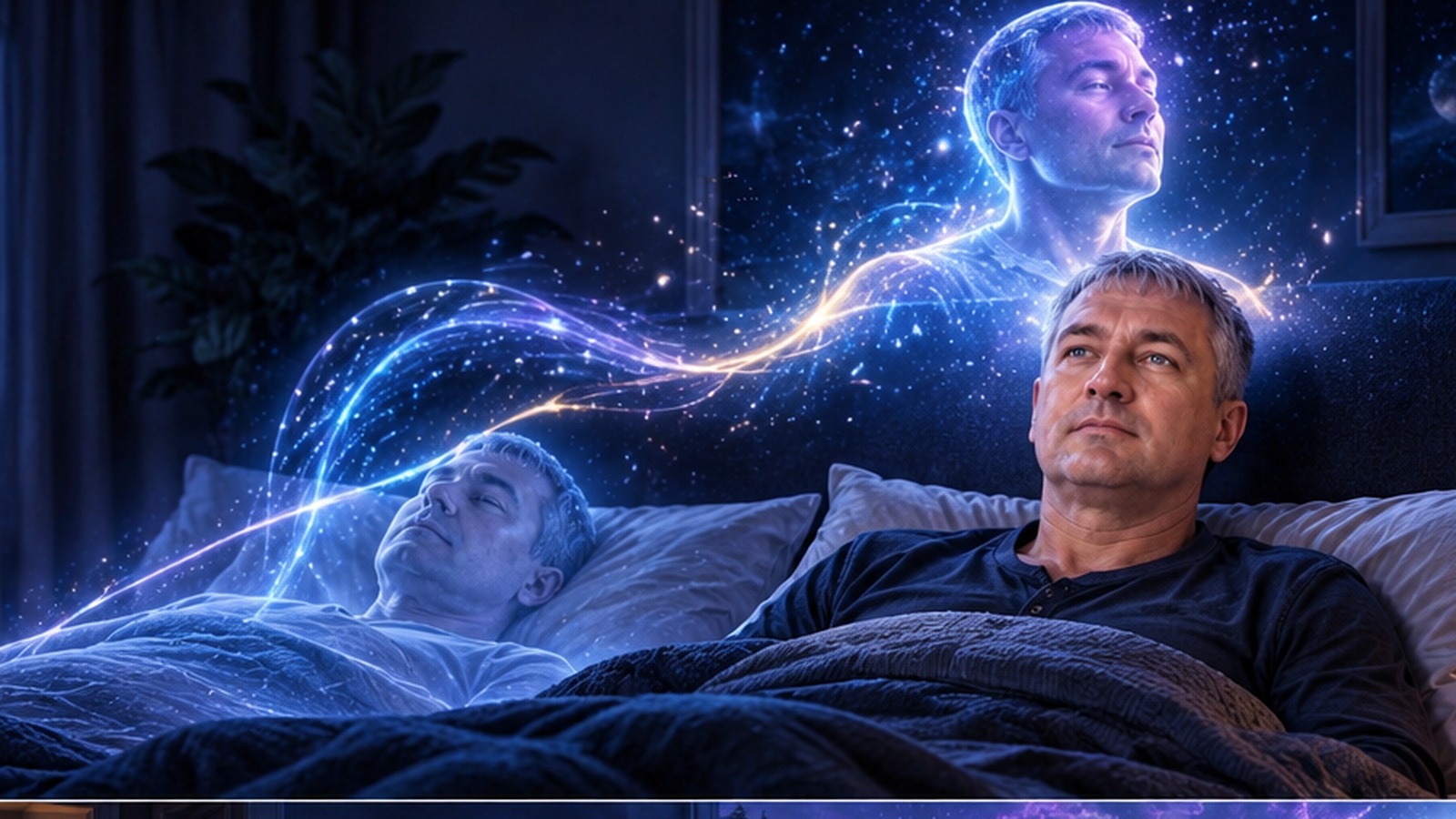
Sleepwalking and sleep paralysis are often surrounded by mystical stories. One person cannot move, senses a presence, or sees a figure in the room. Another gets up at night, walks through the house, and remembers nothing in the morning.
I find these phenomena important as threshold states involving sleep, the brain, and the activity of consciousness. A spiritual explanation, however, must never replace a medical one.
Sleep paralysis: consciousness is awake while the body still sleeps
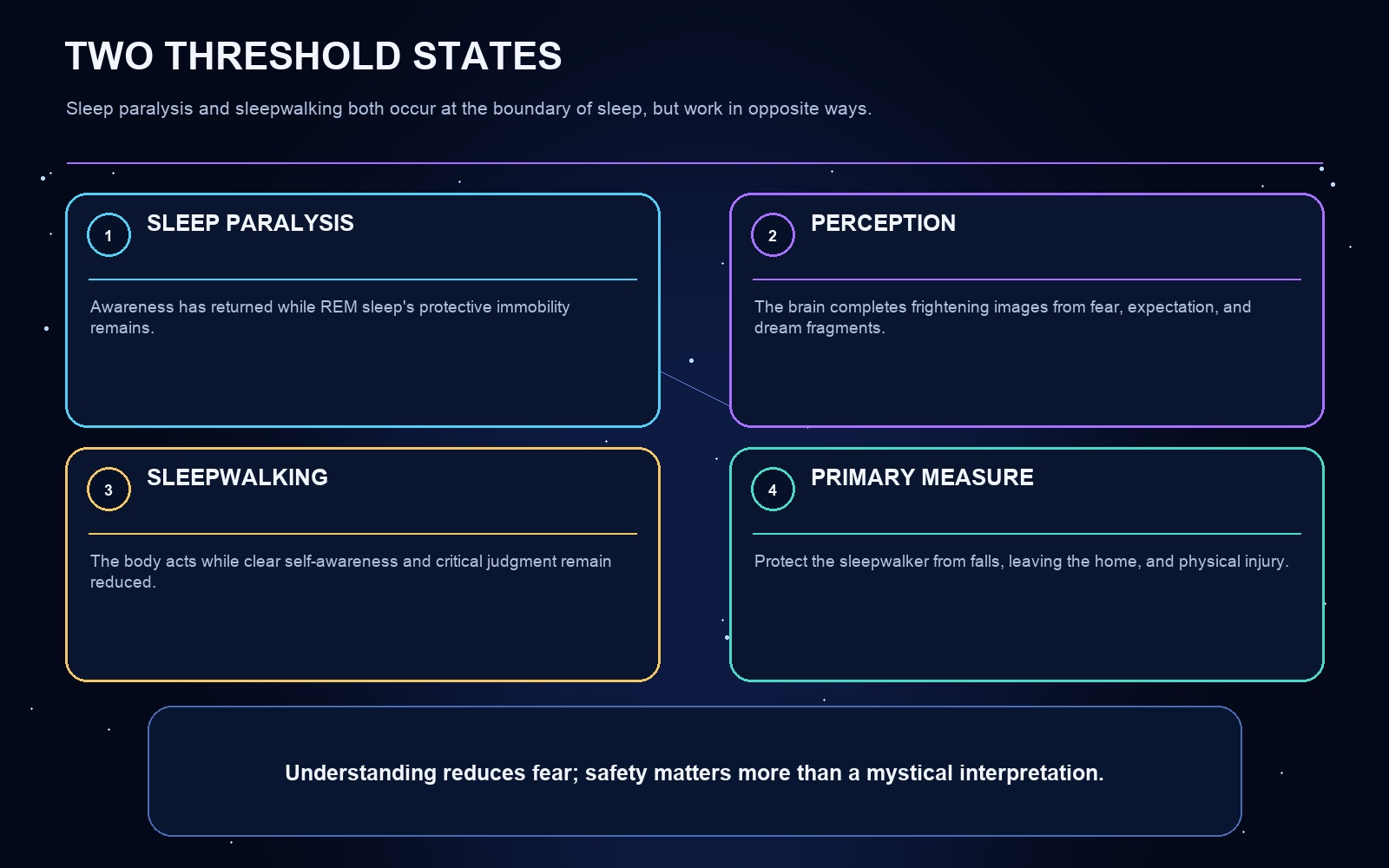
During sleep, the organism naturally restricts muscle activity so that a person does not physically act out dream movements. Sometimes awakening is not synchronized: the person is already aware, but the body remains in sleep mode for several seconds or minutes.
Medicine describes sleep paralysis as a transitional state during falling asleep or waking. It is usually brief and is not considered dangerous by itself.
From the perspective of my experience, this moment is also close to the state in which consciousness can separate from the physical body. Sleep paralysis therefore often includes vibrations, sounds, a sense of presence, or an unusual perception of space.
These two descriptions do not have to contradict each other. One describes the condition of the organism; the other considers the possibilities of consciousness within the transition.
Where frightening figures come from
A person wakes, cannot move, and immediately feels fear. The brain tries to explain the immobility as an external threat. At the boundary of sleep, mental images have not yet disappeared, so anxiety takes a form: a shadow, a being, pressure on the chest, or footsteps in the room.
I do not claim that every perception in this state is imaginary. But the starting point should be the most likely explanation: a transitional condition in which fear and dream imagery overlap the actual room.
Understanding the mechanism usually makes the experience less frightening.
Why sleep paralysis can become a gateway to an OBE
In this state, the physical body is deeply relaxed while awareness is preserved. Many practitioners deliberately seek exactly this combination.
The central task is neither to fight nor to force the body to move. The first step is to reduce panic and restore calm attention. Without that, a person will keep generating more frightening images around himself.
I do not consider sleep paralysis a requirement or a necessary stage of practice. It is simply one of the transitional states that some people experience naturally.
Sleepwalking works differently
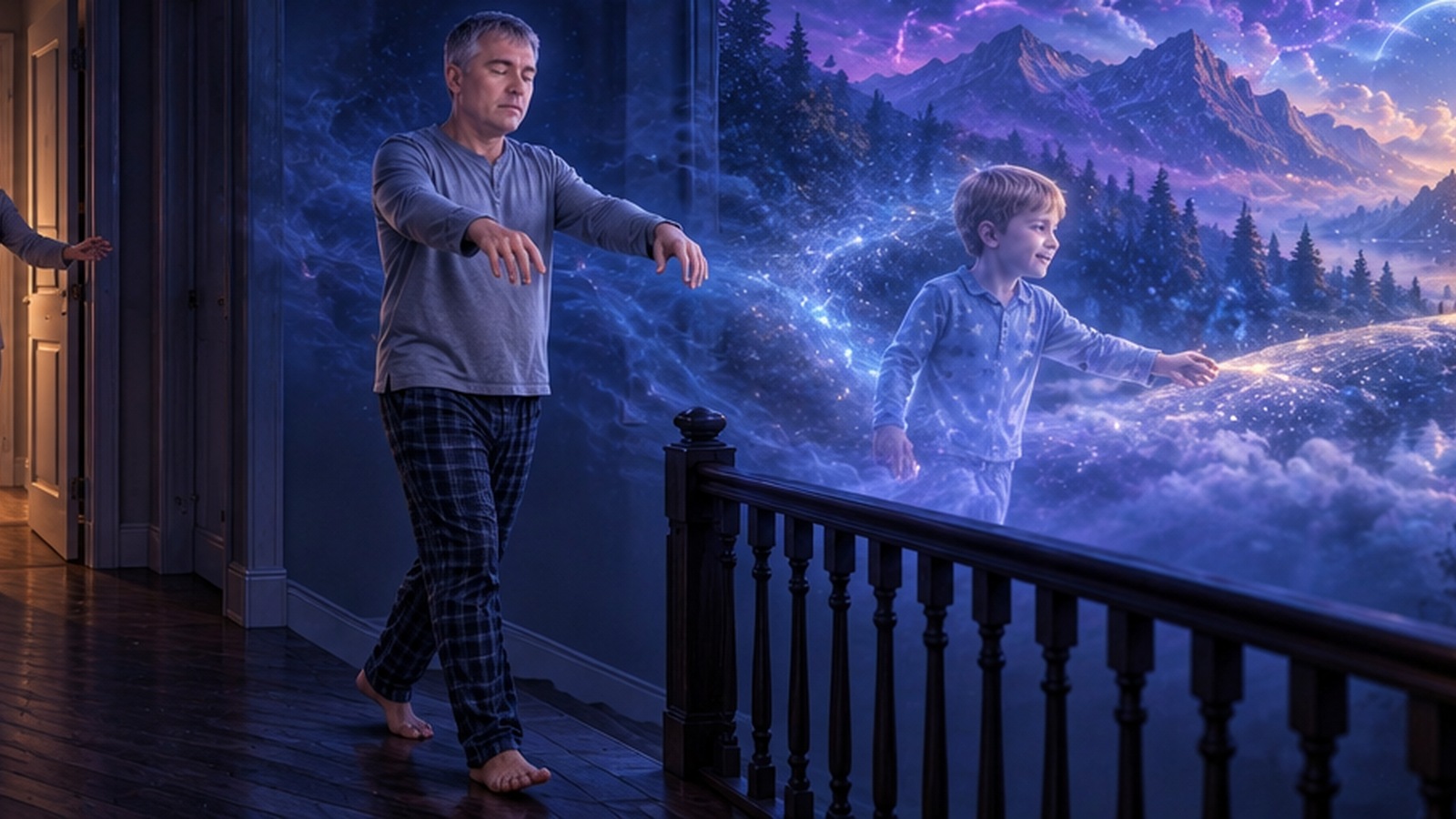
During sleepwalking, the physical body can move while the ordinary waking personality is not fully in control. A person may sit up, walk, perform familiar actions, and respond only weakly to the surroundings. Memories are usually absent in the morning.
The medical explanation describes a partial awakening from deep sleep: the motor systems are active while the brain has not yet reached full wakefulness.
In my view, a dream scenario may overlap physical perception at that moment. The person moves through the actual home but responds to an inner scene the brain continues to create.
Sleepwalking is not a conscious exit from the body
During a full out-of-body experience, the physical body remains lying down while consciousness acts beyond it. During sleepwalking, the body moves through physical space. This distinction matters.
There is no reason to explain somnambulism by saying that “the soul has lost the body” or that an outside being is controlling the person. Such ideas intensify fear and distract from practical safety.
Safety is more important than interpretation
A sleepwalker can fall, leave the house, or encounter a dangerous object. Windows and doors should be secured, pathways cleared, and access to stairs and sharp objects limited.
If episodes recur, create a risk of injury, include interrupted breathing, severe daytime sleepiness, or other unusual symptoms, a doctor or sleep specialist should be consulted.
Frequent sleep paralysis is also worth discussing with a physician when it produces persistent anxiety, fear of falling asleep, or chronic exhaustion.
Understanding instead of fear
Threshold states seem mystical because a person receives signals from sleep and waking at the same time. Without an understanding of what is happening, the mind fills the gap with the most frightening explanation.
My approach is neither to deny nonphysical reality nor to declare every nighttime event a spiritual encounter. We must determine as precisely as possible what was happening with the body, brain, memory, and consciousness.
The more clearly we understand the mechanism, the less room remains for panic and the more room opens for conscious investigation.
In The Phenomenon of Consciousness Beyond the Body, I examine sleep, awareness, and the separation of consciousness from the physical body as related but distinct processes.
Leave a Reply