A practical perspective from a researcher of consciousness beyond the body
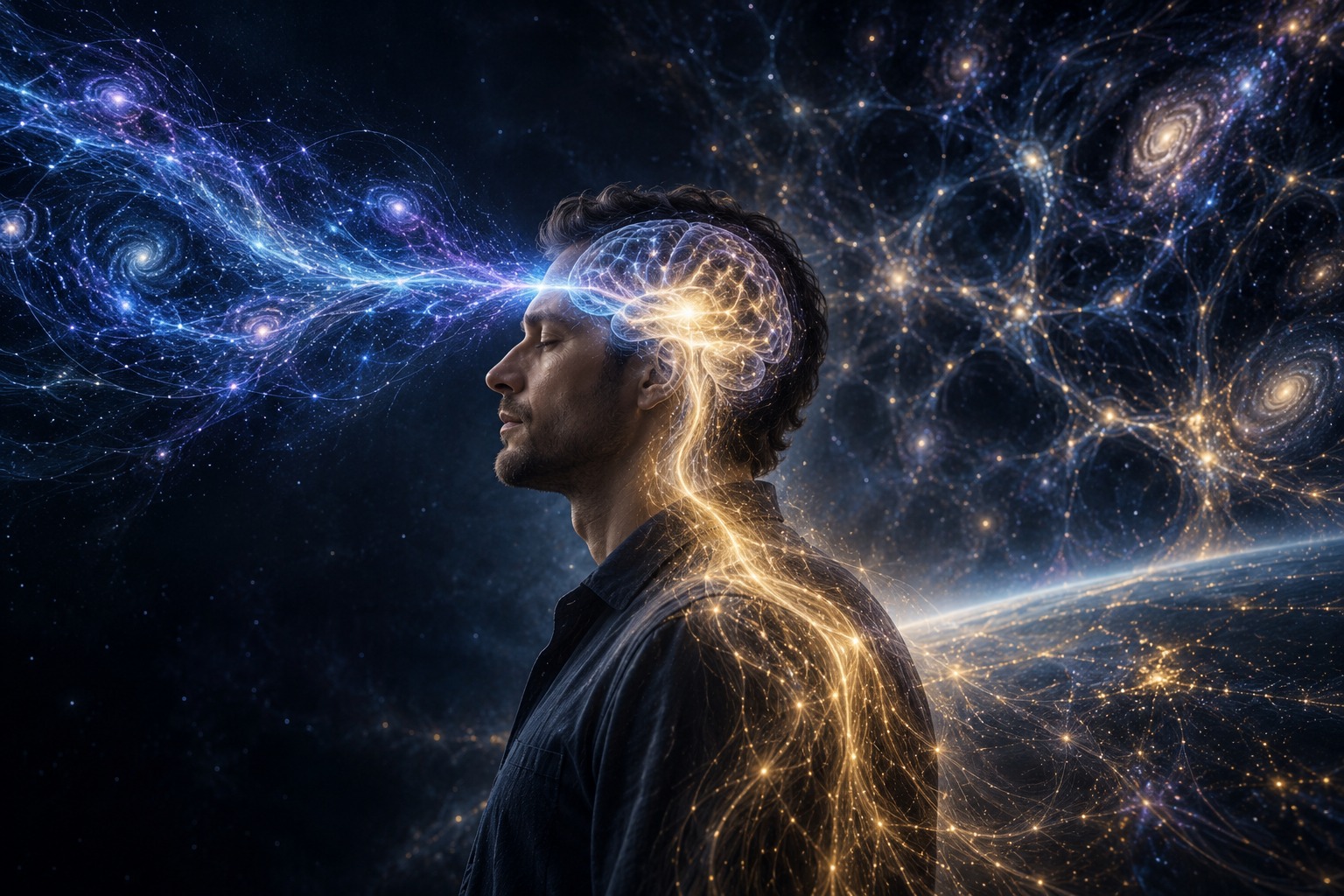
Does the brain create consciousness—or is the brain an instrument through which consciousness expresses itself in the physical world?
At first, this may sound like an abstract philosophical question. Yet almost everything depends on how we answer it: what we believe a human being is, how we understand life and death, what we call personality, how we approach mental and physical illness, what we teach our children, and where we direct science and technology.
If consciousness is produced entirely by the brain, then the human being ends with the body. Our sense of self is only a temporary effect of neural activity, and death is the final end of the individual.
But if the brain does not create consciousness—if it receives, limits, and translates consciousness into the forms of physical life—then the entire picture changes. A human being is no longer only a biological organism. We become a union of the physical body and a wider living reality that can exist independently of it.
That is the conclusion I have reached after twenty years of investigating out-of-body experience, meditation, regression work, and altered states of perception.
Why I Began Looking Beyond Conventional Explanations
My interest in the nature of consciousness began when I was young. I wanted to understand how reality is structured, what a human being truly is, and what actually lies behind the word soul.
At eighteen, I entered a theological academy. I studied theology for seven years and served as a pastor for ten. I lived according to my faith and took the spiritual search seriously. Over time, however, I realized that the religious system did not give me all the answers I was seeking. It offered established explanations, while I needed an understanding grounded not only in belief, but also in direct experience.
I left church ministry and continued searching. I practiced meditation, breathwork, and energy work. Eventually, conscious out-of-body experience became the main focus of my research.
I did not build my model of consciousness on one unusual event. It emerged from many recurring observations. When a phenomenon can be repeated, displays recognizable patterns, and allows different states to be compared, it is no longer merely an impression. It becomes material for investigation.
What Remains When Perception Separates from the Body
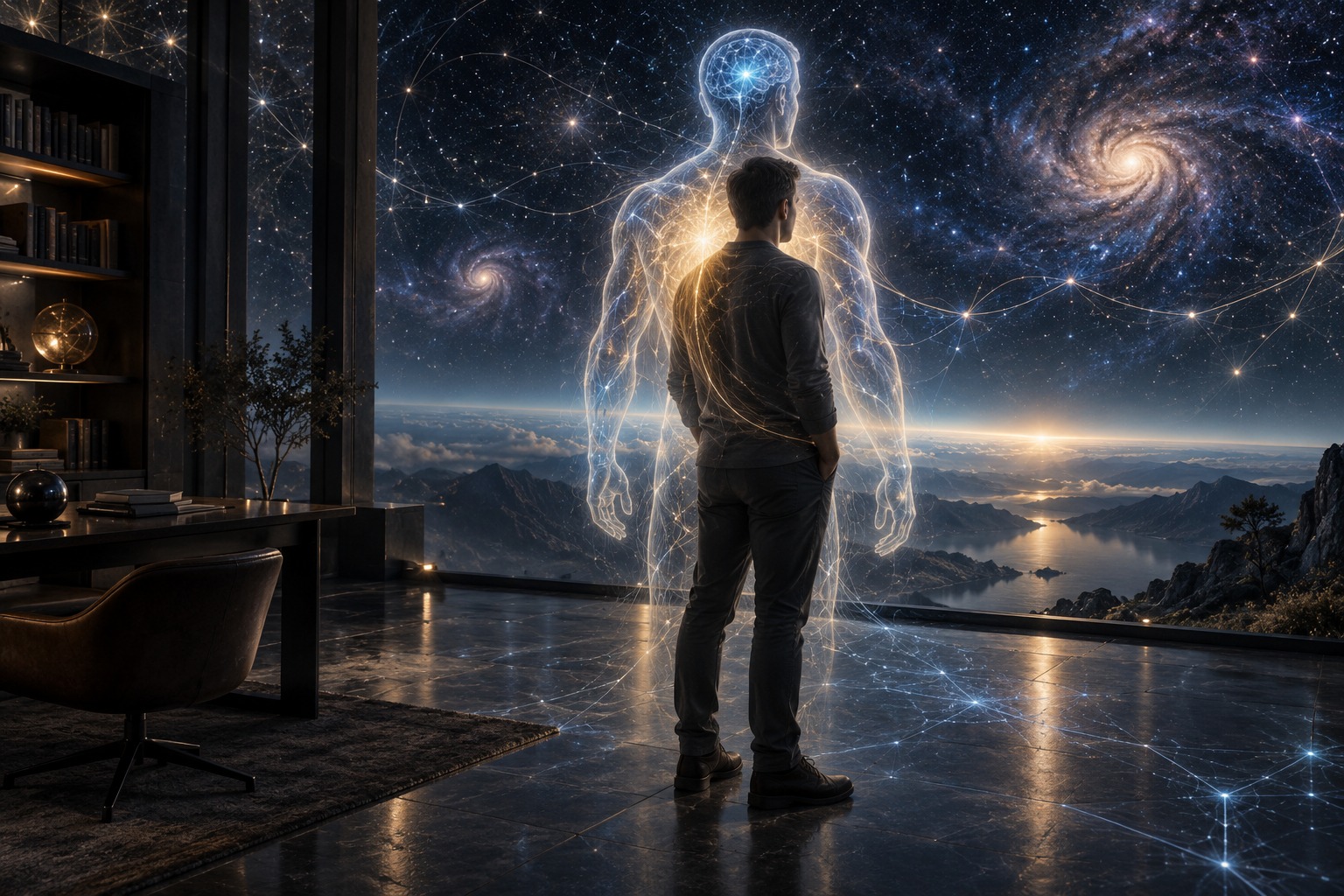
I define an out-of-body experience as a conscious separation from the physical body. In that state, a person continues to exist as an individual. They see, hear, move, make decisions, retain memory, and know who they are.
Sometimes the separation feels so realistic that, at first, the person does not notice anything has changed. They may believe they have stood up, walked across the room, or begun an ordinary activity. Only later do they discover something impossible in the physical state: they see their body from the outside, pass through a wall, rise into the air, or interact with space in an unfamiliar way.
The central point is not that the experience is unusual. The central point is that the aware self remains present.
The physical body stays motionless, yet the person continues to perceive, act, and accumulate experience. For me, this became one of the strongest reasons to regard consciousness as an independent phenomenon that cannot be reduced entirely to the activity of the brain.
Not Every Out-of-Body Experience Is the Same
To understand consciousness, we must distinguish between different qualities of perception. Not every vivid experience is an objective exploration of reality.
I identify three primary states.
The first is an ordinary dream. In my model, this is a weak form of separation in which awareness is largely absent and the brain produces chaotic images from stored impressions, emotions, fears, and memories.
The second is a conscious out-of-body experience within a mental layer. Here, mental means created by the mind through its capacity for thought and imagery. The person knows they are outside the body, can direct their actions, and experiences everything with extraordinary realism. Yet much of the surrounding environment is shaped by the brain—by expectations, beliefs, fears, religious imagery, and events from the previous day.
The third state is what I call a clear, or objective, out-of-body experience. Awareness and control remain strong, while the perceived environment no longer responds to personal fantasy. In this state, a person may obtain information that can be compared with physical reality: the location of objects, the actions of other people, the content of conversations, or details they could not have known in advance.
These states are much less common. They are also especially important when investigating whether consciousness can function independently of the body.
Consciousness Is Not the Stream of Thought
One of our greatest mistakes is to equate consciousness with thought.
Thoughts arise in the brain. The brain compares, remembers, predicts, repeats fears, generates internal dialogue, and sends familiar patterns around the same loops. This stream of thought can be useful, but it is not consciousness itself.
Consciousness is that which can observe thought, direct attention, make a decision, and interrupt an automatic response.
Based on my practice, I understand consciousness as a living energy. It possesses attention and intention, can acquire experience, and preserves individuality. We do not yet have instruments that can measure this energy directly, but the absence of a measuring device does not erase the phenomenon we observe.
There was a time when humanity could not detect radio waves, electricity, or invisible forms of radiation. They did not come into existence when the instruments were invented. The instruments simply allowed us to recognize what had already been there.
I believe something similar is happening with consciousness. We observe its effects, but we do not yet possess an instrument capable of directly identifying its scope, quality, condition, or way of interacting with matter.
The Human Being as a Union of Two Forms of Life
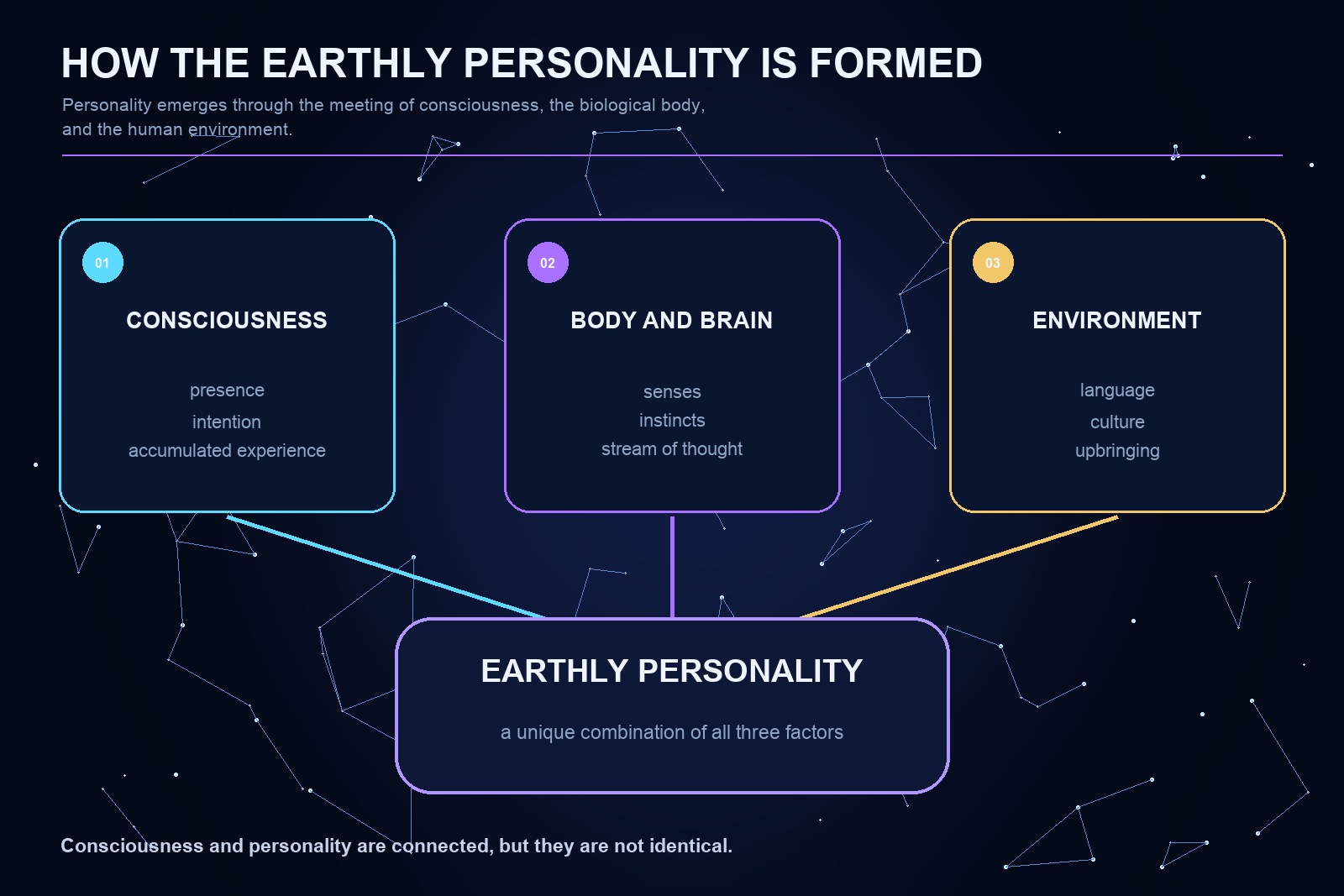
A human being is neither only a body nor only consciousness. The earthly personality emerges through their union.
Consciousness brings inner presence, awareness, intention, and accumulated experience. The body provides the senses, the nervous system, hormonal responses, instincts, and the ability to act in a physical environment. The brain processes incoming information, constructs mental models, and connects nonphysical experience with the specific conditions of human life.
Then come upbringing, language, culture, religion, education, fear, trauma, and social rules. Together, these elements shape the personality a person develops during an incarnation.
Consciousness and personality are therefore not the same. Consciousness is the deeper living foundation; the earthly personality also includes the brain, the body, and the entire body of human experience accumulated in this life.
The Brain as an Interface, Not the Source
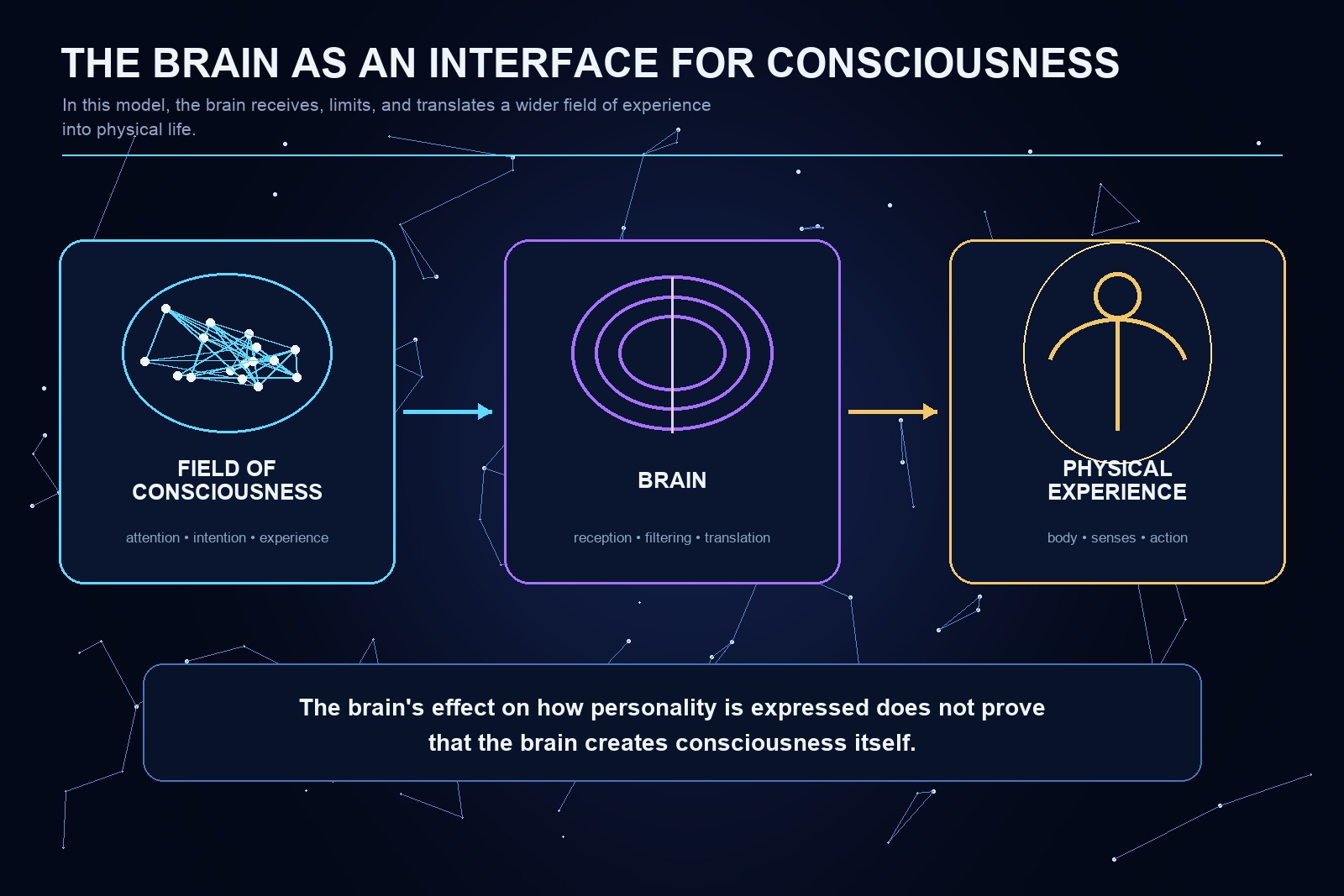
I see the brain and nervous system as the interface through which consciousness interacts with the physical body.
One useful analogy is a radio receiver. The receiver does not create the broadcasting station or the music. It receives a signal, converts it into an audible form, and allows it to appear in a particular place. If the receiver is damaged, the sound may weaken, become distorted, or disappear altogether. But damage to the device does not prove that the device created the signal being transmitted.
In the same way, the condition of the brain strongly affects how consciousness expresses itself through a human being. Illness, injury, chemical changes, or disruption of the nervous system can alter memory, speech, behavior, and the quality of perception. That is evident, and acknowledging it does not require us to reject the achievements of medicine.
Yet the brain’s influence on the expression of personality does not prove that the brain is the source of consciousness itself. The brain may instead determine the quality of the connection, the amount of information available, and the ways consciousness can manifest in the physical world.
This hypothesis deserves serious investigation rather than automatic rejection simply because it does not fit the prevailing materialist model.
Why We Lose Awareness
Consciousness does not express itself through the body without resistance. Biological impulses, automatic brain responses, and the surrounding environment exert constant pressure on it.
From childhood, a person receives ready-made ideas about what is possible and impossible, what to fear, whom to obey, and who they are expected to become. Family, school, religion, culture, media, and social institutions establish durable programs of behavior in the brain.
Eventually, those programs begin to operate automatically. A person wakes, works, reacts, becomes irritated, consumes information, and makes decisions along familiar pathways. Weeks, months, and years pass while they barely notice their own presence in their life.
This is how autopilot takes over.
Consciousness is not what imposes limiting thoughts on a person. The brain reproduces them because it conserves energy by following routes it already knows. Consciousness can observe these programs and gradually regain direction, but doing so requires awareness.
Awareness Means Reclaiming Direction in Your Life
Awareness is more than paying attention to your breath or noticing objects around you. It means understanding who you are, what is happening within you, and which forces are shaping your decisions.
An aware person can notice a thought before it becomes an action. They can distinguish a real decision from an automatic response. They can recognize the influence of fear, upbringing, social pressure, and habit. They do not overcome every limitation instantly, but they cease to carry out those patterns without question.
Awareness can be developed. It grows through concentration, self-observation, meditation, honest examination of our reactions, and deliberate practice in directing attention.
The more fully consciousness can express itself, the less automatically a person lives and the more actively they participate in shaping their own life.
What the Psychology of the Future Could Investigate
Modern psychology has learned a great deal about behavior, emotion, memory, motivation, and the brain. Yet it primarily studies the expressions of personality without having a widely accepted answer to the nature of the aware subject itself.
If consciousness exists independently of the brain, an entirely new field of inquiry opens before psychology:
- the structure and states of consciousness;
- the boundaries of ordinary perception;
- the mechanisms through which consciousness and the brain interact;
- lucid dreams and out-of-body experience;
- phenomena of expanded perception;
- the effects of concentration and intention on the human condition;
- methods for restoring inner wholeness.
Psychology could then study not only the behavioral consequences of inner processes, but the participant in those processes.
I am not proposing that we abandon neuroscience, diagnosis, or existing methods of care. I am proposing that we expand the subject of investigation. A human being is more complex than the brain, and the study of humanity should not end at neural activity.
How Medicine Could Change
Recognizing consciousness as an independent reality would not invalidate medicine. It could deepen it.
This is especially important when caring for people who are approaching death. If the individual disappears entirely with the body, death appears to be an absolute ending. But if consciousness continues, dying becomes a transition from one state of existence to another.
Research into near-death experiences, out-of-body experience, and altered states could help create a more complete model of end-of-life care. Medical support would then include not only the relief of physical pain, but also preparation for transition, work with fear, and the restoration of inner calm.
The effects of attention, emotional state, will, and meditative practice on the body also deserve focused study. No one should use these practices as a substitute for professional diagnosis or treatment. At the same time, medicine should not ignore the capacities of consciousness simply because it cannot yet explain how they work.
The future lies in cooperation: physical medicine works with the body, psychology works with personality and behavior, and consciousness research broadens our understanding of the being who is moving through illness and recovery.
What Would Change in Society
A materialist model inevitably directs people toward material goals. If life happens only once, personality is temporary, and death destroys everything, then accumulating resources, power, pleasure, and social status can begin to seem like the highest purpose of existence.
Understanding consciousness as a wider and continuing form of life changes the system of values.
A person begins to view their actions differently because life is no longer a random interval between birth and death, but one stage in a larger process of development. Personal responsibility grows. Self-knowledge becomes more important than endless consumption. Inner maturity acquires the same value as intelligence and professional success.
Our relationship with nature changes as well. If life is an expression of a unified field of consciousness, destroying the environment is more than an economic mistake. It is the destruction of the space in which life itself develops.
Technology also receives a different purpose. Its role should extend beyond increasing production, profit, and systems of control. It should help human beings grow, expand knowledge, and free time for creativity, exploration, and inner development.
Without the development of consciousness, technological progress may make civilization more powerful without making it wiser. Power without awareness always becomes dangerous.
Science and Spiritual Knowledge Must Meet
I have deep respect for science. But science must not turn the limits of today’s instruments into the limits of reality itself.
The study of consciousness requires cooperation among neuroscientists, psychologists, physicians, philosophers, researchers of altered states and near-death experiences, representatives of spiritual traditions, and experienced practitioners.
This does not mean that every mystical claim should be accepted on faith. Experience must be tested, compared, classified, and separated into stable patterns and personal fantasy. But dismissing an enormous body of human experience simply because it does not yet fit the established model is not a scientific response either.
Real inquiry begins when we can say: “We do not know yet, but we are willing to investigate.”
Science offers methods of verification. Spiritual traditions preserve observations accumulated across thousands of years. Practitioners contribute direct experience. Bringing these approaches together can move us toward a more complete understanding of consciousness.
Can People Be Taught to Work with Consciousness?
Reading and writing were once available to only a small part of society. Today they are basic skills. Perhaps the ability to direct attention, observe the activity of the brain, and enter altered states consciously will one day feel equally natural.
But we should not begin with mass instruction in out-of-body travel.
A person must first learn to concentrate, understand their emotions, observe thoughts, and avoid obeying every inner impulse. Ethical preparation is equally necessary: responsibility for the knowledge one receives, respect for other people, and the ability to preserve psychological stability.
Advanced practices produce unusual experiences and open new ways of obtaining information. Without maturity, those experiences can confuse a person, intensify fear, or become a means of escaping ordinary life.
Training should therefore proceed in stages:
- directing attention;
- concentration;
- self-observation;
- emotional stability;
- ethical responsibility;
- meditative practices;
- only then, deeper investigation of altered and out-of-body states.
The purpose of practice is not to collect unusual experiences. It is to understand consciousness more deeply and become a more aware human being.
A New Model of the Human Being
The origin of consciousness is not a secondary question. It determines the direction in which our entire civilization develops.
If the brain creates consciousness, the human being is a temporary biological system. If the brain serves as an interface for a wider living energy, then we belong to two worlds at once: the physical world and the world of consciousness.
My experience has led me to the second understanding.
I see the human being not as a body that somehow acquired consciousness, but as consciousness temporarily using a body for life, experience, and development.
I am not asking anyone to accept my view on faith. I am asking us to widen the field of inquiry: to observe, compare, test, develop awareness, and refuse to let established theories define the limits of what is possible in advance.
Perhaps the central question is not whether consciousness can exist beyond the brain. Perhaps it is this: are we willing to investigate the human being without fearing that our familiar picture of reality may prove too narrow?
Author: Andrey Chsherbakov
Researcher of consciousness beyond the body and author of The Phenomenon of Consciousness Outside the Body.
For a deeper account of my experiences and my model of reality, see my book on Amazon:
Leave a Reply