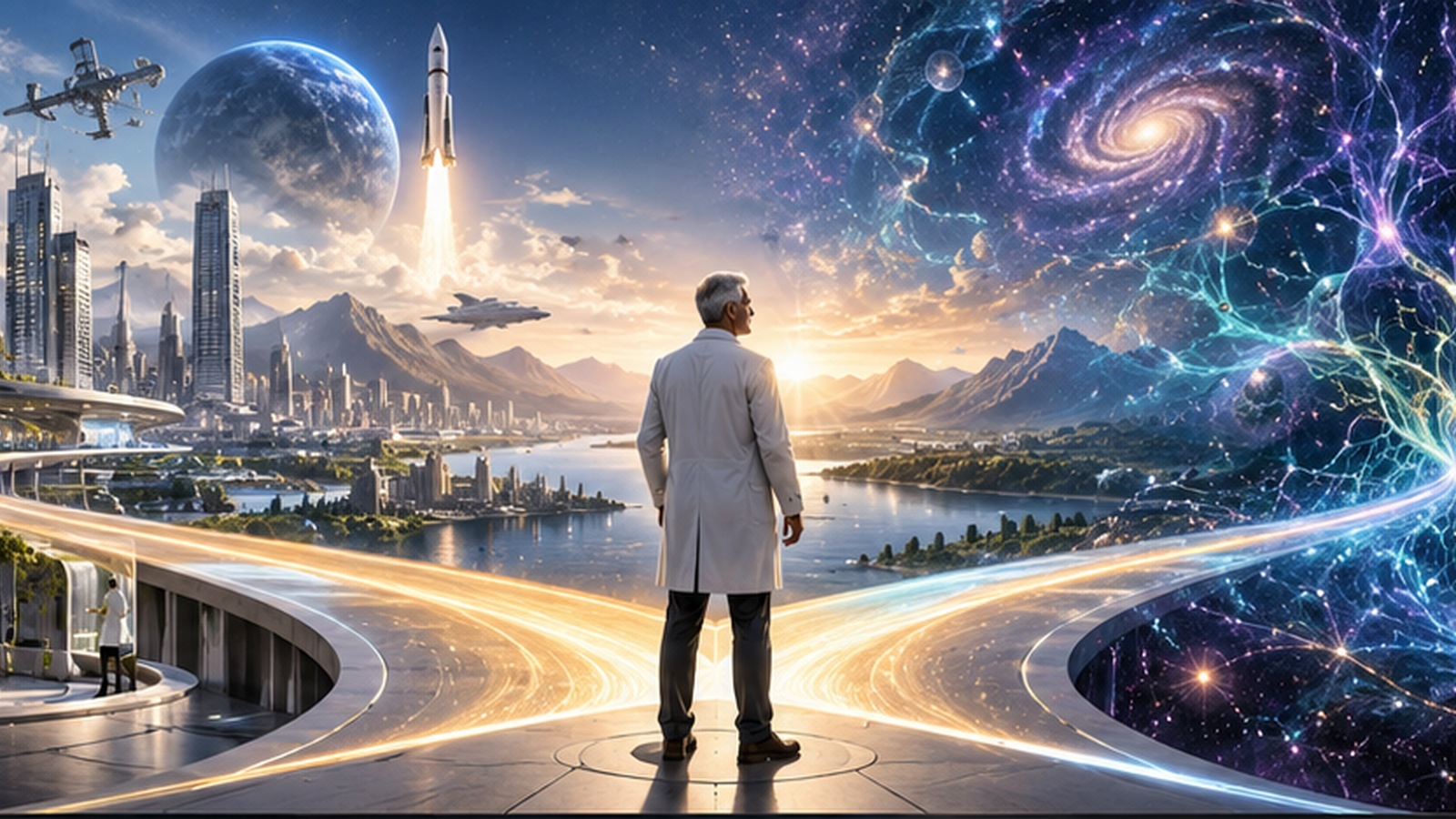
Never before has humanity possessed such technological power. We can alter heredity, create artificial intelligence systems, observe Earth from space, and transmit information to billions of people instantly. Yet our inner maturity is developing far more slowly than the capabilities of our tools.
The central question of the future is therefore not “What technologies will we create?” The central question is who will use them, and what level of consciousness will direct their power.
Technological Power Amplifies Intention
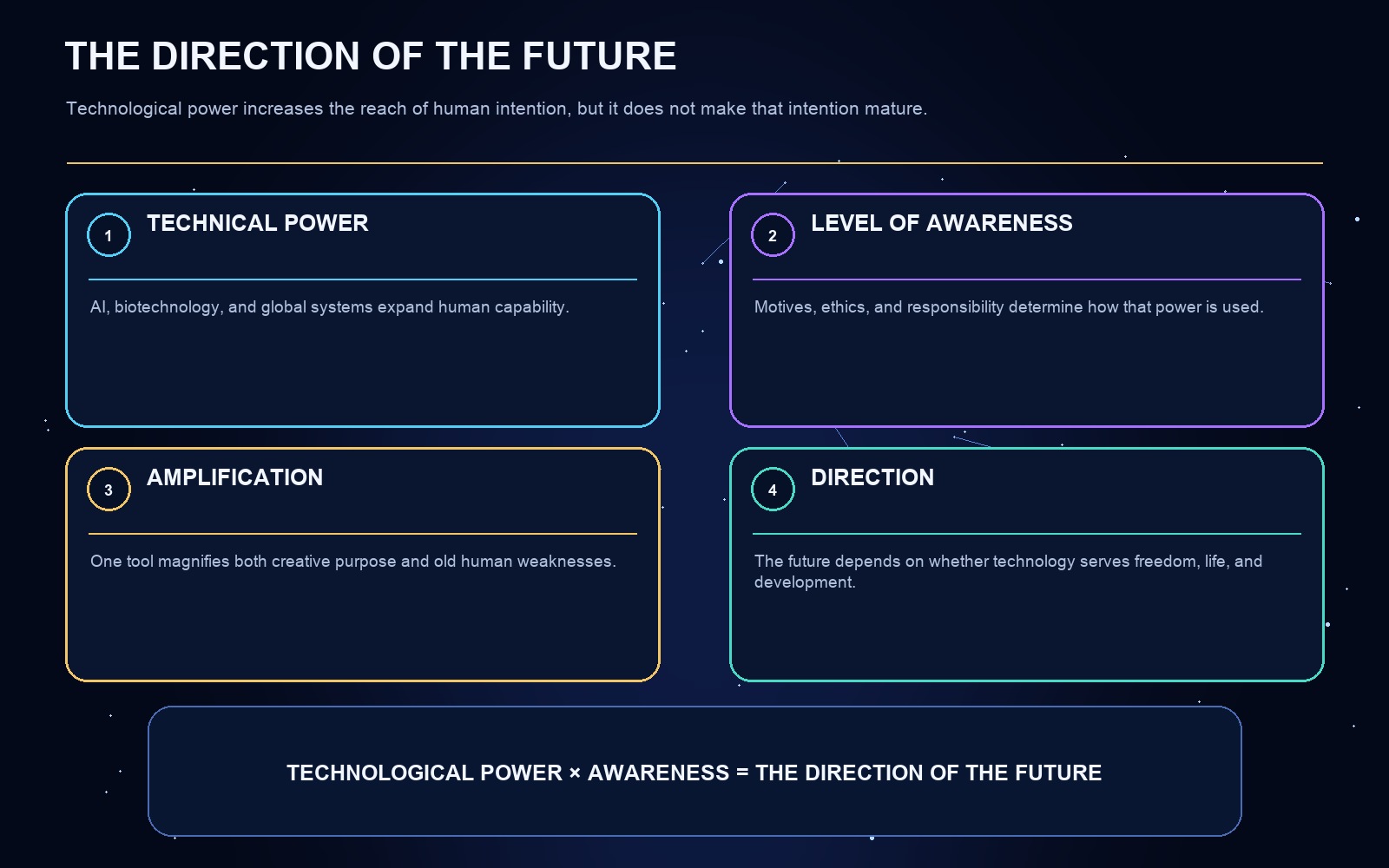
Technology does not automatically improve the person who uses it. It enlarges the scale of the intention already present.
An aware physician applies a new instrument to save a life. An irresponsible company uses the same data to exert hidden pressure. A researcher expands knowledge. A military system turns a discovery into a means of destruction.
The more powerful the instrument, the more important the moral quality of the person making the decision. A stone can cause limited harm. An error by someone directing a global technological system may affect millions.
We Develop Means Faster Than Purpose
Modern civilization answers the question “How?” extremely well. How can we produce faster, deliver farther, process more data, and hold attention longer? But the question “Why?” often remains unanswered.
Growth in production is declared a success regardless of whether it makes people happier. The amount of information grows faster than our ability to distinguish knowledge from noise. Communication becomes instantaneous, yet loneliness does not disappear.
Technological progress without a clear purpose begins to serve its own continuation. We create something new because we can, then try to understand the consequences later.
The Development of Consciousness Is a Practical Necessity
By the development of consciousness, I do not mean a rejection of science or a retreat into mystical ideas. I mean the growth of awareness, responsibility, and the ability to recognize oneself as part of a greater whole.
A developed person understands his own motives, can direct the stream of thought, does not mistake fear for truth, and can consider consequences beyond immediate advantage. He recognizes his connection with other people, nature, and the Source of life.
These qualities are not needed by spiritual seekers alone. Without them, artificial intelligence, biotechnology, energy systems, and global information networks cannot be managed safely.
The Future Does Not Require Us to Abandon Technology
I do not see a choice between the cave and the machine. Humanity should continue its scientific and technological development. The rejection of knowledge will not make us more spiritual.
Technology must, however, occupy its proper place. It is a tool of the soul embodied in the physical world. It helps us investigate, heal, create, and communicate. It cannot determine the meaning of human life for us.
When a machine takes over a calculation, human time is freed. The question is how that time will be used: for deeper development, or for yet another stream of entertainment and consumption.
Education Must Unite Knowledge and Self-Knowledge
The school of the future cannot limit itself to preparing workers for the labor market. Many technical skills will change quickly or be transferred to machines.
People will need qualities that cannot be reduced to a single set of instructions: the ability to ask questions, work with uncertainty, understand emotion, cooperate, verify information, and accept responsibility for a decision.
A child should study the external world while also learning to observe his inner process. Who is directing my attention right now? Why am I reacting this way? What consequences will my action create? Where does another person's opinion end and my own conclusion begin?
Education then becomes preparation for a free life rather than merely preparation to perform a function.
Science Must Include Consciousness in Its Picture of Reality
As long as consciousness is treated only as a byproduct of the brain, our study of the human being remains incomplete. We can examine the electrical activity of the nervous system, but measuring the operation of the interface does not explain the source of inner experience.
Out-of-body states, near-death experiences, regression work, and other unusual phenomena require serious methods, repeatable protocols, and independent verification. They cannot be declared proven solely because a personal account is powerful. They also cannot be excluded from investigation merely because they do not fit the accepted model.
The science of the future will become stronger when it learns to study not only the material object, but the observer as well.
The Economy Must Serve Life
If endless growth in consumption remains the economy's only goal, technology will be used to create new dependencies. Human behavior will be understood with ever greater precision so that more can be sold.
Aware development changes the measure of success. The question is not only how much was produced, but what happened to the person, society, and nature. Did the technology free time? Did it improve health? Did it expand access to education? Did it reduce meaningless labor? Did it preserve dignity and freedom?
Money remains a necessary means of exchange. But profit must not be the only argument when a decision changes the lives of millions.
Two Possible Directions
In one future, people are surrounded by extraordinary systems but gradually lose the ability to choose for themselves. Health, work, information, relationships, and acceptable opinions are directed by external algorithms. People receive comfort and security at the cost of inner dependency.
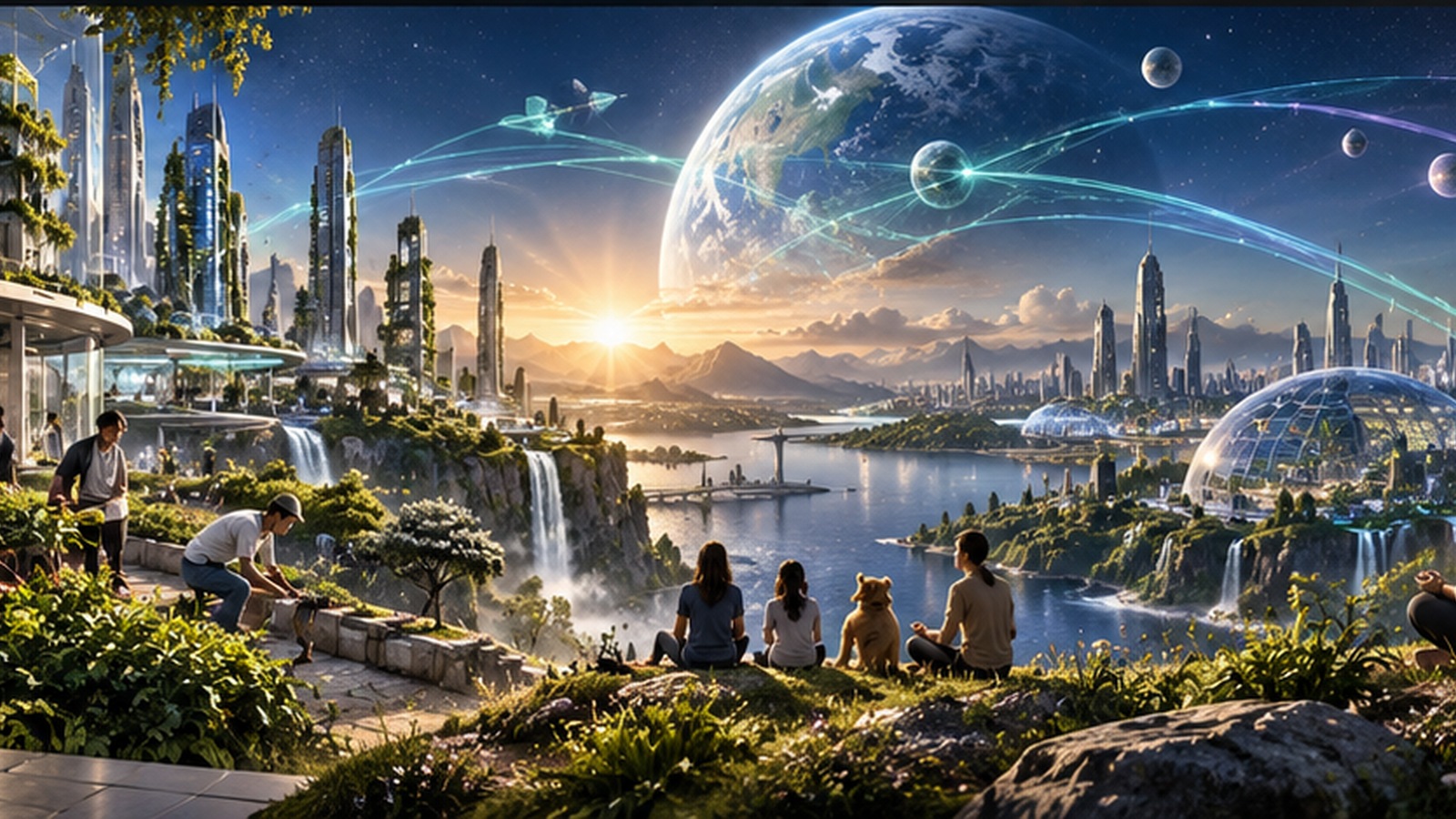
In another future, technology performs difficult and repetitive work while people gain more opportunity for creativity, investigation, family, and spiritual development. Systems remain transparent and accountable. Education strengthens independence. Science investigates consciousness without doors that were closed in advance.
Both directions are technologically possible. The difference between them will be created by the level of public awareness.
Humanity Must Grow Up
We often expect a new technology to solve problems created by old patterns of thought. But a more powerful tool in the hands of an unaware person does not eliminate greed, fear, or the desire for control. It only magnifies their consequences.
The future requires maturity. That means the ability to refuse immediate advantage for the sake of long-term life, recognize the interdependence of people and nature, see human value beyond usefulness, and preserve the freedom to ask questions.
The development of consciousness will not occur instead of technological progress. It must become the foundation and direction of that progress.
A Measure of Real Progress
I propose a simple test: after a new technology appears, does a person become freer, more responsible, and better able to understand the world—or more dependent, more easily directed, and more disconnected from himself?
If a technology strengthens life and helps reveal the potential of the soul, it serves development. If it turns a person into a predictable element of a system, technical refinement conceals spiritual regression.
Machines will not create humanity's future. It will be created by the people who decide what those machines are meant to serve.
In The Phenomenon of Consciousness Beyond the Body, I describe consciousness as the foundation of personality and explore awareness as an essential condition of human development.
Leave a Reply