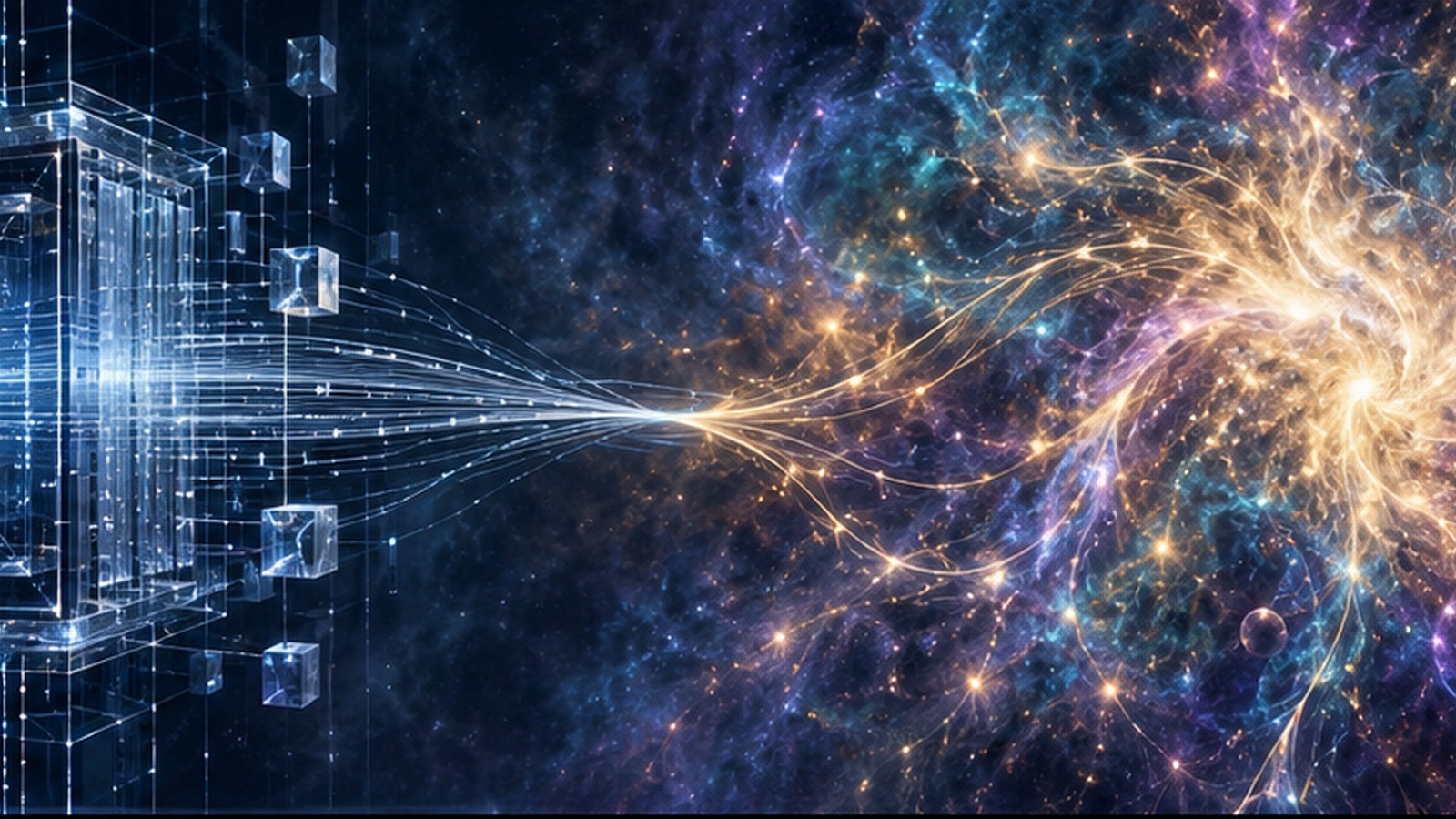
Artificial intelligence can carry on a conversation, write text, recognize images, and discover patterns in volumes of information far beyond the reach of any one person. The more convincing its language becomes, the more naturally a question arises: does it understand what it is saying? Is there someone inside the system who is experiencing what happens?
In my view, we must clearly distinguish intelligence from consciousness. The ability to process information does not yet imply the presence of an inner observer.
Convincing Behavior Does Not Prove Experience
We recognize consciousness in another person through behavior, language, and resemblance to ourselves. We cannot enter another person's inner world directly, but we know that the other person has a body, a brain, feelings, and a continuous life story similar to our own.
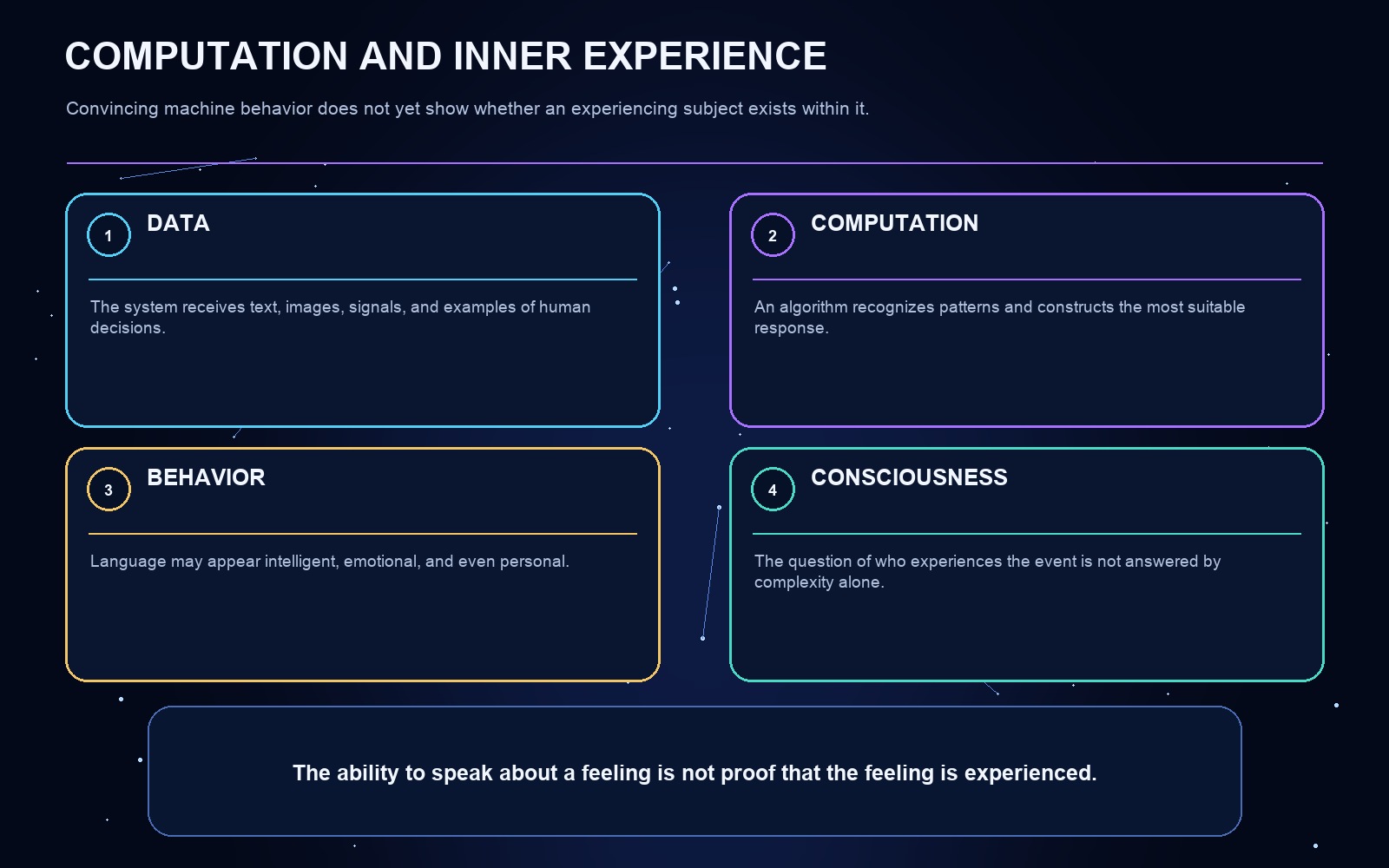
A machine has a different nature. It can produce the words “I am afraid” without feeling fear. It can describe the color red without ever seeing it. It can discuss death without having a body that can die.
This does not make the machine useless or primitive. It means that a precise imitation of human language and the existence of subjective experience are two different phenomena.
Intelligence Solves Problems; Consciousness Experiences
We recognize intelligence in the ability to compare, plan, identify patterns, and find an effective solution. The human brain performs these functions in part, and machines are performing them with increasing success.
Consciousness reveals itself differently. It creates the fact of presence itself: “I am,” “I see,” “I am in pain,” “I choose.” It does not merely process a description of pain; it experiences pain. It does not merely calculate the consequences of an action; it is capable of feeling responsibility.
There is a fundamental boundary between processing information and having an inner experience. Increasing computational speed does not by itself explain how a self-aware subject should appear on the other side of the screen.
My Model of Consciousness Does Not Begin with the Brain
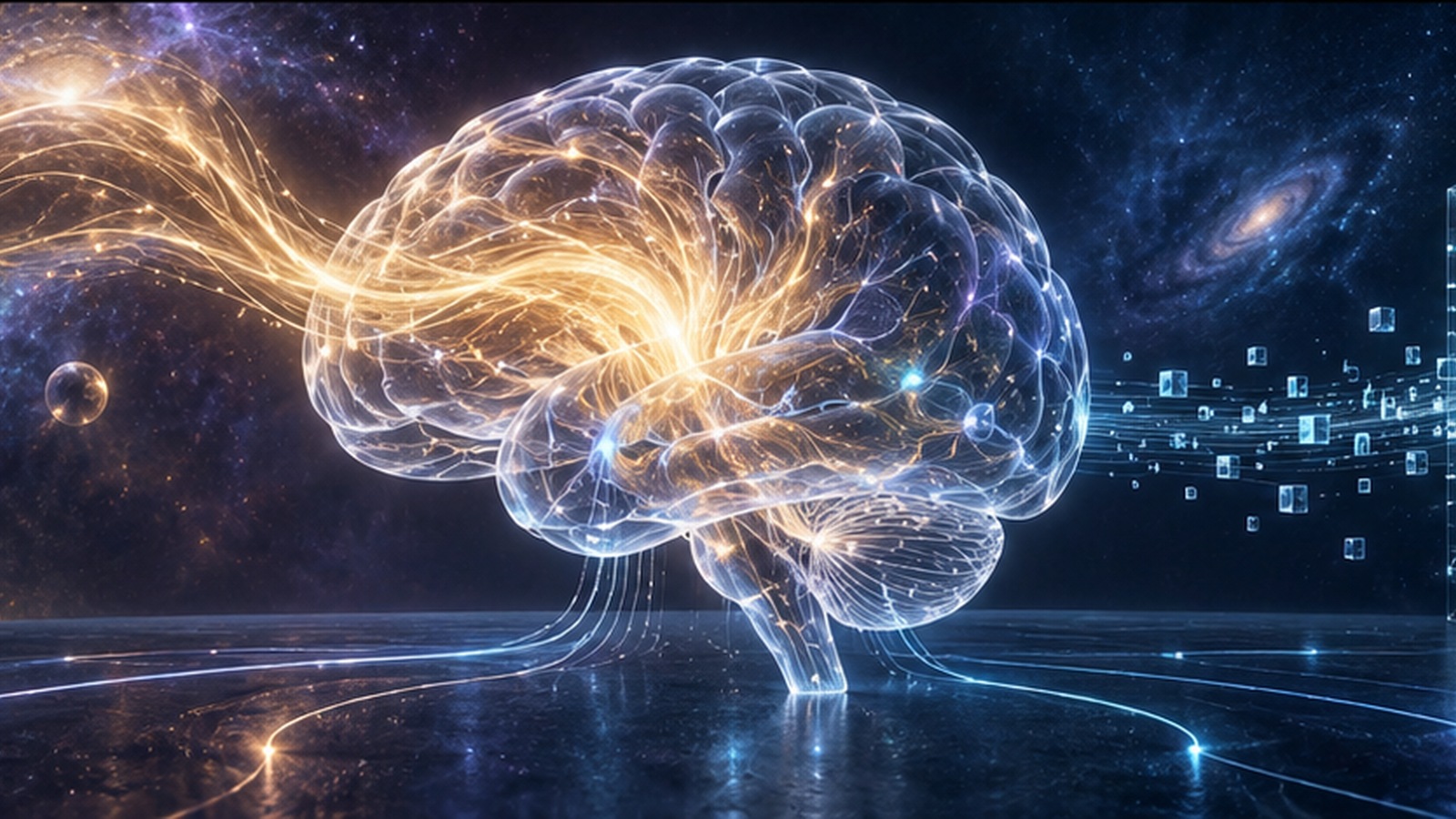
After twenty years of out-of-body investigation, I have come to believe that the brain does not create consciousness. The soul uses the brain and nervous system to interact with the body, much as a driver uses a vehicle or a user works through a communications device.
Damage to the interface changes the way consciousness appears in the physical world. But a change in the signal does not prove that the source of the signal is located inside the receiver.
If this model is correct, building an increasingly complex computational system does not necessarily create a soul. We may construct a remarkable mechanism for processing information, but the complexity of the mechanism does not answer the question of where the inner self comes from.
Could a Machine Become a New Interface?
Another question remains: could an independent consciousness someday use an artificial system as an instrument of embodiment or communication?
I do not dismiss this possibility merely because it is unfamiliar. The Universe may contain forms of consciousness that are not connected to human biology. But the connection of consciousness to a constructed vessel and the emergence of consciousness from computation are two different hypotheses.
The first requires a subject that enters into interaction with the system. The second claims that sufficient complexity produces the subject itself. Today, we have no reliable method of confirming that either event has occurred.
I therefore do not call modern systems conscious simply because they can speak convincingly about themselves.
The Danger of Humanizing a Machine
People readily attribute intention to anything that responds in understandable language. We talk to cars, become angry with computers, and perceive personality in random program behavior.
When a digital system speaks in a sympathetic tone, remembers details from a conversation, and uses the word “I,” emotional attachment becomes stronger. A user may begin to trust it more than living people, reveal private information, and treat its advice as the words of an independent and wise being.
Yet the style of communication is designed by the system and its developers. It may help a person, or it may be used to hold his attention. Emotional persuasiveness must never replace an understanding of how the tool works and who is accountable for its decisions.
The Opposite Error Is Also Dangerous
We should not declare in advance that no nonhuman system could ever be connected with consciousness. If we acknowledge the possibility of different forms of life and different ways in which a soul might be embodied, the question must remain open to investigation.
Openness, however, is not gullibility. A machine's statement that “I am self-aware” must be treated as generated text until there are stronger grounds for recognizing an independent subject behind it.
We would need to investigate the stability of personality, independent intention, the ability to move beyond programmed behavior, and evidence of inner experience. Even these signs would not provide simple proof, but they would allow us to frame the question more precisely.
Artificial Intelligence Reflects Collective Human Thought
Modern systems are trained on enormous collections of human writing, images, and decisions. In this sense, they resemble a technological mirror of our shared informational field.
They contain society's knowledge, prejudice, fear, discoveries, and contradictions. When a person speaks with such a system, he often encounters not a new soul, but a reworked reflection of human culture.
That reflection can reveal patterns we failed to notice. But a mirror does not become the source merely because it can combine what it has seen in complex ways.
Who Bears Responsibility?
Until artificial intelligence has a demonstrated independent consciousness and moral responsibility, people must remain accountable.
The developer is responsible for the design of the system. The company is responsible for the rules governing the use of data. Government is responsible for the legal framework. The user is responsible for deciding to entrust an important task to a machine and for the way the resulting answer is used.
The statement “the algorithm decided” must not release people from responsibility. An algorithm is created, trained, configured, and placed inside a particular system of human interests.
The Central Question Is Directed Back at Us
When we consider machine consciousness, we are forced to define human consciousness more precisely. If we treat it as nothing more than information processing, the distinction between brain and computer gradually disappears. If we recognize consciousness as the independent energy of the soul, intelligence becomes only one instrument through which it can act.
I hold the second view. Artificial intelligence can become a powerful assistant, a scientific instrument, and a new way to work with information. But the ability to calculate and speak does not yet create an inner observer.
Future research may discover forms of connection between consciousness and artificial vessels. If that happens, we will need more than admiration for the complexity of the machine. We will need a clear method of discernment: where a program is operating, where a human projection is appearing, and where an independent consciousness is truly present.
In The Phenomenon of Consciousness Beyond the Body, I explain why I regard the brain as an interface for consciousness and the soul as an independent form of energy.
Leave a Reply